
Sudan’s government rejects exam delay as Nyala signals flexibility
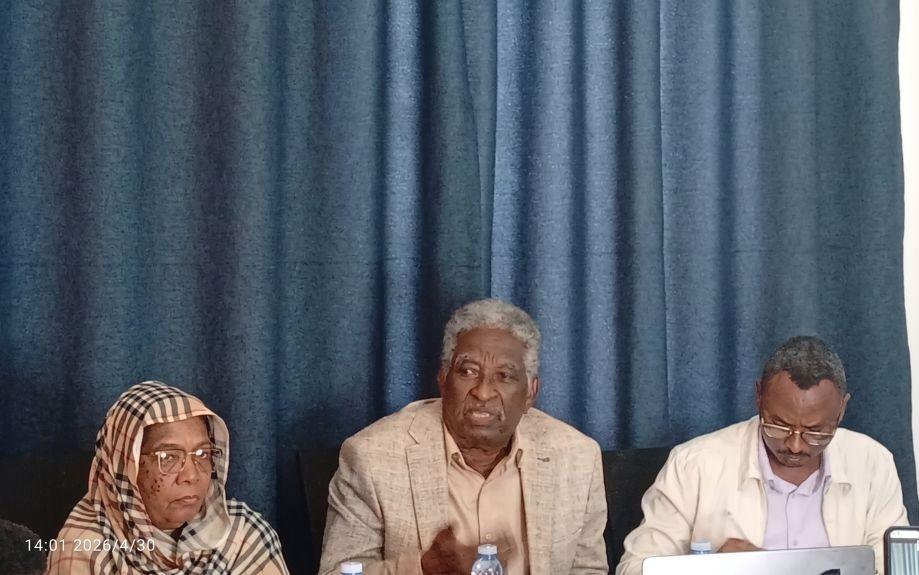
April 30, 2026 (KAMPALA) – The National Initiative to Save Sudanese Certificate Students announced on Thursday that the Port Sudan government has rejected a proposal to postpone exams, while the “Peace Government” in Nyala expressed readiness to freeze parallel exams pending a comprehensive national agreement.
The initiative was established last February amid a deepening educational crisis following the outbreak of war in April 2023. The conflict led to a widespread collapse of the educational system and prevented national exams from being held in several states.
The initiative emerged as a civilian effort to address the examination crisis and push for consensual solutions that guarantee the right to education while mitigating the war’s impact on an entire generation of Sudanese students.
Speaking at a press conference in the Ugandan capital, Kampala, initiative member Dr Shams al-Din Daw al-Beit stated that efforts since February included intensive contacts and official correspondence with senior state leadership. This included the President of the Sovereign Council, the Prime Minister, several ministers, the Governor of the Darfur Region, and advisors and public figures. However, these efforts were met with “silence and political rejection.”
Daw al-Beit attributed the lack of political will in Port Sudan to the presence of “separatist and racist” currents within its institutions. This was despite the presentation of integrated technical proposals aimed at organizing unified, politically neutral, and geographically inclusive exams.
He explained that approximately 750,000 students sat for the Sudanese Certificate exams annually before the war. In the December 2024 session, only about 200,000 students in army-controlled areas were able to take the exam. Meanwhile, nearly 370,000 students have been deprived since the war began, a number expected to rise to 400,000. This includes 280,000 students this year, 65% of whom are female.
The affected students are concentrated in Darfur, with 150,000 to 200,000 students annually, in addition to 80,000 in Kordofan and Blue Nile, alongside large numbers of displaced persons across the country.
Daw al-Beit reported that contacts with the “Founding Alliance” government were conducted in parallel using the same documents. These led to direct meetings in which those authorities showed full cooperation, expressing readiness to freeze parallel exams planned for next June if a unified national agreement is reached.
Communications also included the Sudan Liberation Movement led by Abdel Wahid Mohamed Nur, which welcomed the proposals and expressed full readiness to coordinate without conditions.
Daw al-Beit warned that the continued exclusion of hundreds of thousands of students could lead to serious social consequences. These include dropping out into marginal labour, rising rates of irregular migration, increased early marriage among female students, and a total educational gap for an entire generation.
Initiative member Madiha Abdalla said that while the primary goal has not yet been achieved, the initiative succeeded in highlighting the education crisis and revealing the scale of societal demand for the right to education and peace. She warned that the current situation threatens to deepen national division.
The initiative called on international and regional bodies to intervene urgently to press for a “humanitarian and educational truce” to ensure all students can sit for exams, emphasizing that education must be at the heart of any peace process rather than its victim.