Sudan’s summer agricultural season at risk as funding and fuel shortages worsen

May 10, 2026 (KHARTOUM) – Sudan’s summer agricultural season is facing severe threats as ongoing conflict, high input costs, and a lack of financing continue to jeopardize the country’s food security, experts and officials warned.
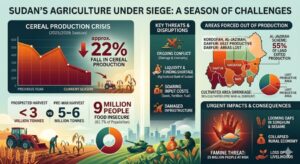
A report by the Food and Agriculture Organization (FAO) released earlier this year projected a 22% decline in cereal production for the 2025/2026 season compared to the previous year. The decline threatens the food security of 28.9 million people—approximately 61.7% of the population—due to damaged infrastructure and soaring costs for seeds, fertilizer, and fuel.
The ongoing war has forced vast productive areas in Kordofan and Al-Jazirah out of service, placing unprecedented pressure on agricultural projects in northern and eastern Sudan.
Sources at the Agricultural Bank of Sudan told Sudan Tribune that a critical shortage of liquidity and funding has paralyzed efforts to provide essential supplies. While a department at the Central Bank is currently overseeing preparations, the sources said no practical steps have been taken to secure the season.
Agriculture Ministry officials expressed concern over a looming gap in sorghum and sesame production, admitting that the ministry is struggling to organize the current season effectively.
Ghareeq Kambal, an agricultural and economic expert, criticized the government’s policies as a “failure,” warning of a “bleak” outlook for both current and future seasons. He accused the Ministry of Agriculture of being detached from reality and failing to take concrete action.
Kambal specifically pointed to new government levies and the doubling of fees on production inputs. He noted that a barrel of diesel has exceeded 2 million Sudanese pounds in Kordofan and White Nile, questioning how farmers can operate under such extreme financial strain following several consecutive failed seasons.
He further criticized the Agricultural Bank’s delay in releasing financing policies, noting that while rain-fed sectors have worked hard with support from the military, the government is effectively “punishing” them with high fuel costs.
Agricultural experts estimate that the total cultivated area in Sudan has shrunk to 35% of its pre-war levels. Approximately 60% of previously used agricultural land has fallen out of production, leading to a drop in cereal production to less than 3 million tonnes, down from pre-war averages of 5 to 6 million tonnes.
In Al-Jazirah Scheme, once the backbone of Sudanese agriculture, 55% of the land has reportedly exited the production cycle. With 25 million people now facing the threat of severe famine, experts warned that irrigated agriculture lacks the capacity to bridge the food gap due to systemic policy failures and excessive taxation.