
Sudan’s balance of weakness: A fragile path to peace
By: Ali Trayo
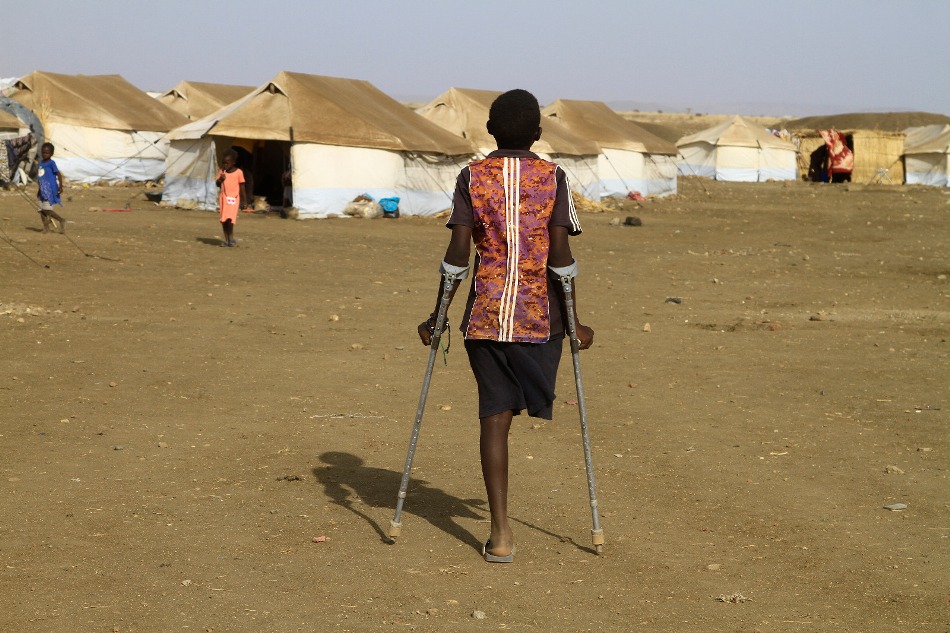
Sudan stands at an existential crossroads. Years of devastating conflict and mismanagement have left the country physically shattered, socially fragmented, economically exhausted, and politically weakened. Yet the defining feature of Sudan’s crisis is no longer only the war itself, but the profound fragility that now affects virtually every major political actor.
No political, military, or social force possesses the strength or organizational capacity to impose its vision on the rest of the nation. All are weakened by internal divisions, fragmentation, and competing interests. Sudan has thus become a political landscape defined by mutual vulnerability rather than political dominance.
At the heart of this fragility lies a deeper problem: the political exhaustion of Sudan’s elites. Civilian and military actors alike, whether Islamists, secularists, liberals, conservatives, traditionalists, or modernists, continue to operate within outdated political frameworks that no longer reflect the country’s realities. Deep mistrust among these actors has further compounded the crisis. The political system has become detached from society, resistant to change, and unable to learn from past failures. Old ideas are recycled, failed strategies are repeated, and political alliances are often shaped more by personal rivalries than by coherent national programs.
The result is a fragile equilibrium based on reciprocal weakness. Yet paradoxically, this condition may also represent Sudan’s best opportunity for peace. Since no actor can secure decisive dominance, stability can emerge only through mutual restraint, shared responsibility, and political compromise. Unfortunately, the political will required to pursue such a path remains largely absent.
A further tragedy is that Sudan’s internal fragility does not exist in isolation. The country has become increasingly vulnerable to the forces of creative anarchy. As a result, Sudan’s crisis can no longer be understood solely through a domestic lens. Increasingly, it has become a geopolitical laboratory in which local, regional, and international actors compete to reshape the political order by fragmenting, reconfiguring, and weakening existing state structures.
In this sense, Sudan is not merely a victim of regional instability; it has become one of its principal arenas. Many actors possess sufficient power to influence events, yet none possesses enough authority to establish a stable and lasting political order. Even humanitarian ceasefires and meaningful political dialogue have proven difficult because of the multiplicity of competing actors and centres of power.
Yet these same adverse conditions could be transformed into a source of strength, provided they are managed wisely, rationally, and constructively.
The inability of any domestic or external actor to achieve or impose a decisive victory makes compromise not merely an option or a matter of choice, but a necessity. Sudan’s balance of weakness, while inherently unstable, remains far less dangerous than any faction’s attempt to pursue unattainable domination.
With the alternative being continued fragmentation, prolonged warfare, territorial disintegration, and eventual state collapse, the central challenge is whether Sudan’s political actors can collectively rise to the occasion and transform this balance of weakness into an inclusive political settlement.
In this context, a genuinely inclusive Sudanese-Sudanese dialogue becomes imperative. Such a process should seek neither domination nor exclusion, but rather a new historical compromise that accommodates Sudan’s diverse political, military, social, and regional constituencies.
Make no mistake: any inclusive political arrangement must not come at the expense of justice. While reconciliation is essential, it cannot be built on impunity. The process must remain firmly grounded in accountability, justice, and genuine national reconciliation. Individuals responsible for war crimes, crimes against humanity, genocide, and other grave violations of international law must remain subject to legal accountability. The objective is not to preserve existing power structures, but to lay the foundations of a viable Sudanese state capable of accommodating diversity, managing political competition peacefully, and preventing the recurrence of violent conflict.
For Sudan’s political and social forces, managing a balance of weakness, though undoubtedly an uphill task, is no longer a choice; it is a necessity. As Sudan stands at an existential crossroads, and given that no actor possesses the capacity to govern alone while all retain the capacity to contribute to further national destruction, it must be recognized that an inclusive and negotiated compromise represents the only realistic path toward preserving the country’s unity and ending the war.
At the same time, Sudan’s diverse political and social actors must recognize that, amid growing external interventions, the country has become a testing ground for creative anarchy—a dynamic whose consequences extend far beyond Sudan’s borders. Containing both the internal effects of Sudan’s fragility and its wider regional spillover will require coordinated action by Sudanese, regional, and international actors aimed at preserving state cohesion, advancing an inclusive political settlement, and preventing instability from spreading across the Sahel and the Horn of Africa.
This is precisely why a genuine and inclusive Sudanese-Sudanese dialogue is of paramount importance. Equally imperative, however, is the careful management of the country’s balance of weakness, which requires a collective approach and collaborative action. Transforming a fragile balance of weakness into a stable balance of power demands political compromise capable of laying the foundations for national recovery, state reconstruction, and lasting peace. This is the historic challenge that Sudan must now confront.