
Prominent Eastern Sudan leaders warn of rising tribal polarization
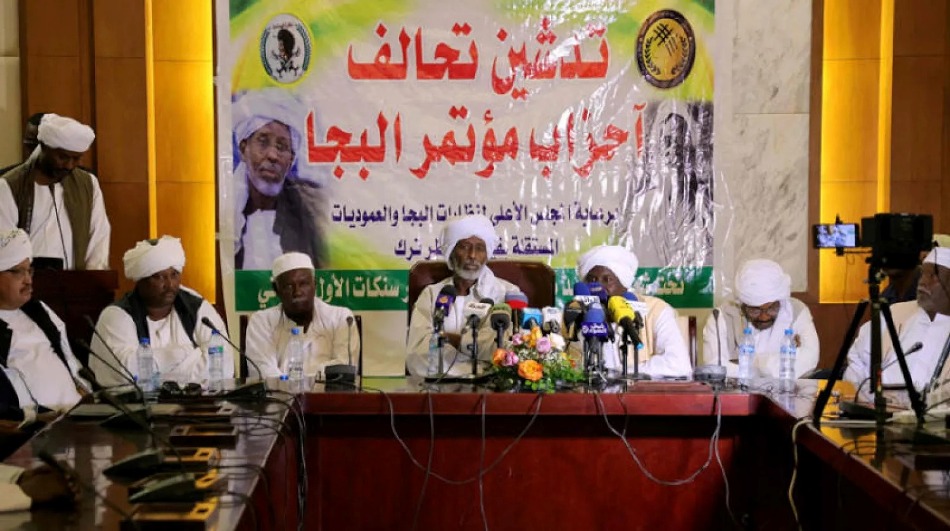
June 20, 2026 (KASSALA) – Prominent leaders in eastern Sudan warned on Saturday of the dangers of tribal polarization, which has gripped the region for weeks, expressing fears of future escalation.
Official sources told Sudan Tribune that the government is deeply concerned about the current tribal alignment. They stated that competent authorities are closely monitoring moves by entities broadcasting media and social discourse that inflame tribal strife and threaten national security and social peace in the region.
The eastern Sudan region has slid into a new security and political quagmire that puts its fragile social cohesion to the test, following a wave of rising tension in the city of Kassala.
These tensions emerged after controversial statements made in early June by Sayed Muhammad al-Amin Terik, the Nazir of the Hadendowa tribes and head of the High Council of Beja Nazirs. Broad local components considered his remarks an assault on their identity and an incitement of hate speech in the turbulent region.
Terik’s remarks were made during an official ceremony in Kassala attended by top executives and security leaders, led by Interior Minister Babiker Samra and Kassala Governor Al-Sadiq Al-Azraq.
The Hadendowa leader renewed calls to review and define the actual components of the “Beja” identity and demarcate boundaries between tribal directorates. He detailed the geographical borders of his clan relative to other population groups and called for the strict enforcement of the previously concluded “al-Qald” agreement in the Red Sea to contain civil disputes.
Angry reactions followed on social platforms, and the “Bani Amer” tribal leadership quickly held a massive press conference in Kassala, launching sharp criticisms at the ruling political and executive leadership.
The Bani Amer leadership directly requested Sovereignty Council Chairman Abdel Fattah al-Burhan to hold the interior minister accountable and dismiss him immediately. They argued that the silence of the minister and the governor of Kassala during the remarks represented an implicit endorsement by the state of exclusionary discourse.
Saleh Ammar, a leader in the Eastern Sudan Civil Forces Gathering and former governor of Kassala, accused the ruling authority of targeting the people of the East. He told Sudan Tribune that the authority led by Burhan has no resource left to save itself except mortgaging the vast, fertile, and mineral-rich lands of the East to pay its foreign debts, obtain more weapons, and cover massive corruption expenditures.
He argued that the social cohesion of Eastern tribes and their attachment to the land pose an obstacle to this goal. Therefore, security agencies in Port Sudan manufacture tribal problems to dismantle social cohesion and distract tribes with conflicts, facilitating deals and the looting of the region’s resources, he said.
Ammar emphasized that the civil forces continue to work with enlightened community leaders to educate the people of the East about the dangers of dismantling and division plans. They also aim to reach a consensus on the region’s issues, moving it from marginalization to freedom, peace, and the enjoyment of its wealth.
He added that most community leaders in the East, including native administrations, work for peace and align with freedom. However, they operate under forced conditions and the threat of weapons directed at their people.
Abla Karrar, Secretary of Gender Policies and member of the Political Secretariat of the Sudanese Congress Party, emphasized that there is a major flaw and a negative role played by the state and security agencies. She blamed elements of the former regime within these institutions for the hate speech in eastern Sudan.
Karrar told Sudan Tribune that sedition and hate speech currently dominate the peacebuilding efforts of civil forces because the government in Port Sudan does not support peace, fuels conflicts, and allows hate speech to be broadcast.
She noted that this discourse occurs in the government’s eyes and ears, involving calls to review the identities and national numbers of components that have been present in the region for hundreds of years.
Karrar warned against a single bullet being fired in eastern Sudan, noting it could lead to the explosion of the region into a war of all against all.
She highlighted an unprecedented and dense proliferation of weapons in eastern Sudan, as demonstrated by recent military parades by various groups. She also pointed out a complex security situation and the influence of the tribal native administration system on armed groups.
Using some native administrations as political leverage has been a continuous practice since the Salvation regime, through the military’s presence in the transitional government, the subsequent closure of roads and ports, Burhan’s coup, and the current era, Karrar said. She described what is happening in eastern Sudan as a state absurdity that gives the tribe political roles, adding that the ongoing sedition is deliberate by parties who see their interest in creating chaos and expanding the circle of violence.