
Sudanese pound plunges to 5,500 per dollar as gold prices soar
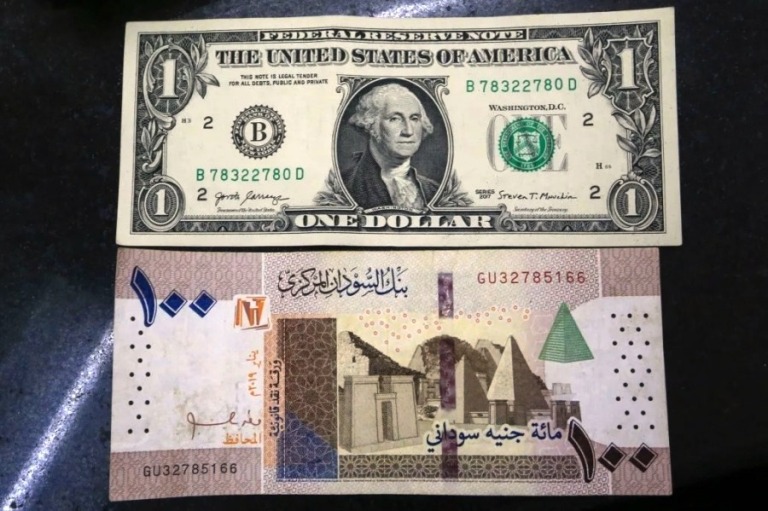
June 22, 2026 (KHARTOUM) – The Sudanese pound continued its sharp decline against foreign currencies on Monday, hitting a record low of 5,500 pounds to the U.S. dollar by the end of the day’s trading, while local gold prices surged.
The currency has experienced an unprecedented collapse in recent weeks, driven by a surge in demand for foreign exchange. Depreciation has pushed prices of essential goods to unprecedented levels across the country.
Parallel market traders told Sudan Tribune that the dollar opened at 5,300 pounds on Monday morning before closing at 5,500 pounds. The UAE dirham reached 1,490 pounds, while the Egyptian pound traded at 109 pounds.
Traders attributed the decline to a surge in foreign currency demand, partly driven by the seasonal need to import summer agricultural inputs, such as fuel and fertilizers.
However, one currency dealer, speaking on condition of anonymity, noted that the scale of demand was unusually high. He argued that agricultural needs alone could not account for the rapid pace of the pound’s depreciation, as these requirements are met annually without causing such drastic currency drops.
In tandem with the currency slide, local gold prices jumped sharply. Raw gold rose to 630,000 pounds per gram, up from 510,000 pounds in recent days. Worked gold exceeded 700,000 pounds per gram, compared to 675,000 pounds previously, while the global gold price stood at $4,190 per ounce.
Moatasem Mohamed Saleh, Secretary-General of the Gold Exporters Chamber, told Sudan Tribune that the domestic surge in gold prices is directly linked to the pound’s depreciation.
Saleh dismissed suggestions that the price increase was driven by fuel import companies purchasing gold to meet a central bank requirement to deposit 200 kilograms as a guarantee. He said the quantities required by these companies were not large enough to disrupt the market.
Instead, Saleh emphasized that the exchange rate has become the decisive factor in local pricing. He noted that even when global prices fluctuate moderately, a drop in the Sudanese pound immediately raises the cost of acquiring and pricing gold within the domestic market.
Gold remains critical to Sudan’s economy, accounting for more than 58% of the country’s total exports last year, according to central bank data. However, technical estimates suggest that between 48% and 60% of the gold produced in Sudan is smuggled across land borders or through unmonitored ports.