
U.S. sanctions networks supplying both sides of Sudan civil war
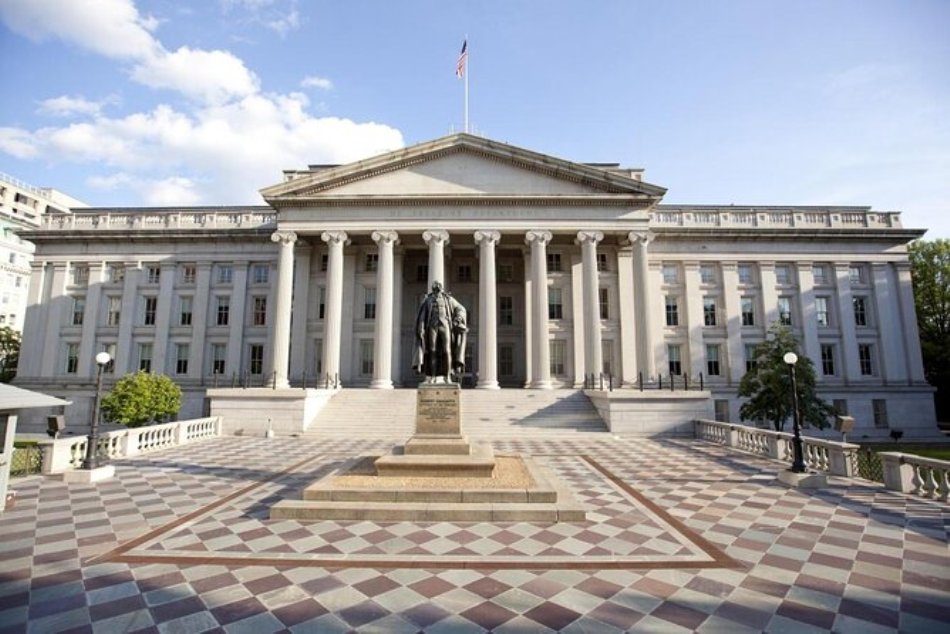
July 27, 22026 (WASHINGTON) – The United States on Friday imposed sanctions on parallel procurement and recruitment networks supplying both sides of Sudan’s civil war, targeting external pipelines that fuel the country’s military and its rival paramilitary faction.
The U.S. Treasury Department blacklisted eight individuals and entities for supporting either the Sudanese Armed Forces (SAF) or the paramilitary Rapid Support Forces (RSF), accusing both warring factions of expanding the scale of a devastating humanitarian crisis.
On the RSF side, the penalties targeted a transnational mercenary pipeline that hires former Colombian soldiers to fight for the paramilitary group, which Washington notes has committed genocide during the conflict.
The designations focused on three associates linked to Panama-based Talent Bridge SA, a company the Treasury said was utilized to hide connections between the RSF and the recruiting operation led by a retired Colombian military officer.
The U.S. blacklisted Panamanian nationals Enrique Daniel Palacios Quintanilla and Jack Peter Derman Guzman, along with Colombian national Fredy Alejandro Lopez Ocampo, for holding official leadership roles in the front company.
Palacios acted as a resident agent, director, and secretary for the firm, while Lopez served as a secretary, director, and subscriber.
Derman held multiple roles, including treasurer, and succeeded Oliveros as president in July 2025 when the network rebranded the entity as Talent Bridge SA to further mask its activities.
On the SAF side of the conflict, the Treasury hit supply networks feeding the Sudanese army’s conventional arsenal, blacklisting companies and executives involved in importing munitions and equipment.
The Treasury sanctioned Target Multiactivities Company Ltd, a Sudan-based firm controlled by the military-run Defence Industries System, for importing explosives from India-based SBL Energy Limited to be used in military aerial bombs.
SBL and its chief executive, Alok Choudhari, were also designated for their role in supplying the SAF network with over 200 shipments of explosives-related materiel since 2024.
State-owned Ports Engineering Company Ltd was also designated for importing military uniforms, footwear, and ammunition components for Sudanese intelligence from suppliers in the United Arab Emirates and Turkey.
“The networks profiting from the conflict in Sudan jeopardize the prospects for the humanitarian truce that the Sudanese people desperately need,” U.S. Treasury Secretary Scott Bessent said in a statement.
The financial measures coincided with a sharp diplomatic clash at the United Nations Security Council on Friday, where Washington accused Sudan’s military-led Sovereign Council of rejecting a U.S.-proposed nationwide humanitarian truce earlier that morning.
Massad Boulos, U.S. Senior Adviser to the President for Africa, Arab, and Middle Eastern Affairs, told the Security Council that both warring factions are dragging out a war of attrition at the expense of millions of civilians.
Boulos stated that the escalating deployment of unidentifiable drone strikes and airstrikes by both sides has devastated critical infrastructure, hitting hospitals, bridges, and humanitarian border crossings.
The U.S. envoy also announced that Washington would impose a separate, second round of sanctions on Sudan for the SAF’s alleged use of chemical weapons, which he called a flagrant violation of international law and the Chemical Weapons Convention.
Sudan’s permanent representative to the U.N., Al-Harith Idriss, strongly rejected the chemical weapons allegations before the council, stating that a year of bilateral investigations and field visits by U.S. technical teams had failed to produce any verified proof.
The Sudanese diplomat also denied that Khartoum had rejected the peace initiative, claiming that the presidency had sent a direct, formal response to Boulos, including a revised military withdrawal schedule, before the U.N. session began.
The U.S. Treasury sanctions freeze all U.S. assets of the designated individuals and entities and generally prohibit Americans or U.S. financial institutions from doing business with them.