
Addis Ababa talks must prioritize ending war over rewarding Islamists
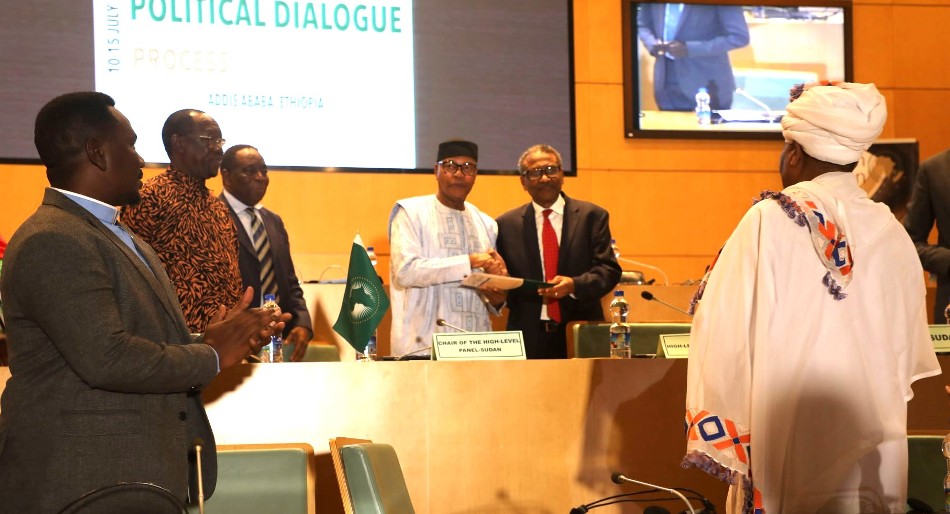
Without Stopping the War and Addressing the Humanitarian Catastrophe: A Preparatory Committee with an Islamist Flavour!
“One should make a spring out of everything.”
Yasir Arman

This is what the ancient Chinese philosopher Zhuangzi once said in addressing China’s spiritual elite. For our part, we must make an autumn for Sudan out of everything – an autumn that represents a direction and a countervailing force against the forces of war. The masses and ordinary people, despite their seeming weakness, are the strongest. Our country walks barefoot, sustained only by the faith and courage of its people, through a forest of landmines, drones, looted resources, and chaos. Meanwhile, the war continues to intensify in the deadly triangle of Al Abyad–Kadugli–Dilling, while it also looms over the city of El Geneina. The victims have become mere statistics, and the destruction of rural areas and once-great cities has yielded little more than statements of condemnation, denunciations, and hearings in Geneva and New York.
With patience and determination, we need a comprehensive approach to ending the war – one that addresses its root causes. We must not settle for quick and fragile solutions simply because they are presented as the only available or feasible options, accompanied by commemorative photographs. After all the devastation inflicted upon our people and the immense sacrifices they have made, we must reject such an approach. Good intentions alone are not enough; they may well lead us to hell. As the saying goes, the road to hell is also paved with good intentions.
The Quintet is currently preparing for the second Addis Ababa meeting, scheduled for July 27–29. In essence, it differs little from the first, except for a larger attendance, more international and Sudanese facilitators, and another attempt to accomplish what the first Addis meeting failed to achieve: agreement on a preparatory committee with the flavour of the old Islamist establishment. This is taking place without any joint commitment by the Sudanese Armed Forces, the Rapid Support Forces, or their respective allies to halt the war – the very objective that could fundamentally change the reality facing civilians and which the Anti-War Front identified from the earliest days of its formation as the central priority.
This path allows the forces of war to reap rewards and “eat from two bowls” – the bowl of war and the bowl of the political process – while their proxies claim the moral high ground instead of engaging directly with those carrying out the war and compelling them to stop it.
The current approach to the political process effectively turns that process into a cover for the continuation of the war, creating the false and misleading impression that we are moving closer to ending the conflict. What is urgently needed is a serious dialogue with both the Quintet and the Quartet to redesign the political process so that it is directly linked to ending the war and addressing the humanitarian catastrophe.
The Quintet’s current approach will ultimately reward the remnants of the former regime and Islamist forces, leading to a fragile peace, distancing Sudan from sustainable peace, and giving the war more time – much as occurred in Yemen and Libya – without making the cessation of hostilities the primary focus of international pressure. Some members of the Quintet have spoken of preventing attacks on strategic locations, yet the most vital target of all is the civilian population. Protecting civilians requires the immediate cessation of the war. Moreover, some members of the mediation effort are themselves involved in the conflict.
We must critically review political processes that have dragged on for more than a decade – and in some cases much longer – as in Somalia, Yemen, Syria, and Libya, and examine their outcomes despite extensive international sponsorship. The principal lesson is that a political process must never contribute to prolonging a war. Its true point of entry is not elite dialogue, but rather ending the fighting and protecting civilians through a humanitarian ceasefire. The right to life comes first, and humanitarian relief must precede politics.
Ending the war, alongside protecting and assisting civilians, should form the foundation of the political process, within a comprehensive framework that ultimately addresses the roots of the crisis, achieves sustainable peace, avoids rewarding Islamist forces, and ends the capture of the state. The Quintet’s current approach appears to contain visible connections that ultimately reward Islamist forces and perpetuate the continued capture of the state.
The formation of a preparatory committee will only entangle the political process in the failed experiences of Yemen and Libya, further distancing it from the urgent task of ending the war. Contemporary political processes increasingly focus on geopolitics, natural resources, and stability, while moving away from the aspirations of peoples for national renewal, democratic transition, justice, accountability, and state-building.
Our approach to the current political proposals must remain firmly rooted in the suffering of the Sudanese people and their aspirations for a sustainable peace. We must also remember that this war was launched to extinguish the dream of Sudanese women and men for a civilian democratic transition – a vision first articulated by the forces of the revolution.