
Khartoum faces drinking water crisis as Nile levels drop sharply
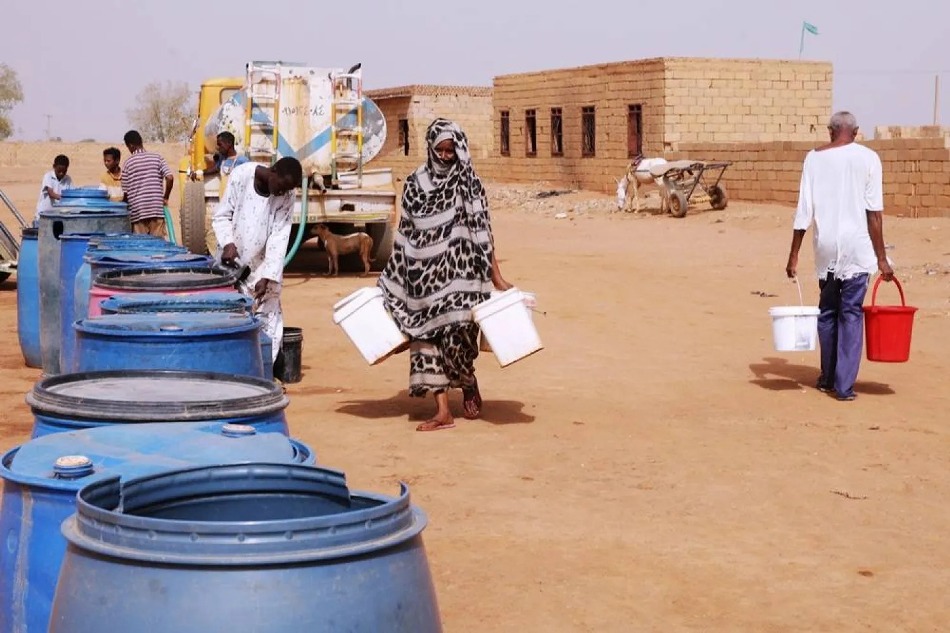
July 13, 2026 (KHARTOUM) – The Khartoum state government on Monday reported a severe drinking water shortage in the neighbourhoods and villages of southern Omdurman due to a sharp drop in the Nile River’s water levels.
Local authorities are scrambling to address the crisis, which threatens hundreds of thousands of residents in the Sudanese capital.
The announcement followed widespread social media activity, where activists shared photos and videos showing newly formed sand islands exposed by the receding waters of the Blue Nile.
The Khartoum state government said in a statement that the significant drop in water levels forced the shutdown of intake pumps at the Salha water treatment plant.
The stoppage has disrupted the water supply to several residential areas and villages in the southern part of the Omdurman locality.
Khartoum Governor Ahmed Osman Hamza visited the Salha station on Monday, accompanied by water utility officials, to oversee emergency efforts.
Workers are currently digging a new channel from the main river course toward the intake pumps to restore suction and get the plant running again.
Hamza ordered the immediate mobilization of all state-owned excavators and heavy machinery to work around the clock in coordination with the water authority.
The governor also instructed officials to immediately deploy water tankers to distribute emergency drinking water directly to affected neighbourhoods until the plant is back online.
While the Blue Nile typically experiences seasonal drops in May and June, a significant decline in July is highly unusual.
Officials attributed the unseasonal drop to delayed rainfall and a halt in the flow of seasonal feeding rivers.
Hamza called for proactive strategies to handle sudden disruptions in water production and distribution, urged relocating primary intake pumps closer to the river’s main channel, and demanded better coordination with the Ministry of Irrigation on reservoir gate operations.
The director of the Khartoum State Water Corporation, Mohamed Ahmed Awadh, said engineering teams are working to resolve shortages not only at Salha but also at other Nile-based stations experiencing similar issues.
Awadh noted that previous channel-clearing efforts were undone by the river’s continuous recession, which repeatedly stranded the pumps away from the water’s edge.
He estimated that the ongoing dredging, silt removal, and channel excavation would allow the Salha station to resume operations within 48 hours.
The water corporation has also begun drilling two high-capacity wells to augment production at the Salha plant and provide a reliable backup source during future emergencies.