
Sudan signs deal with Turkey’s Ergaz to build first gas terminal at Suakin port
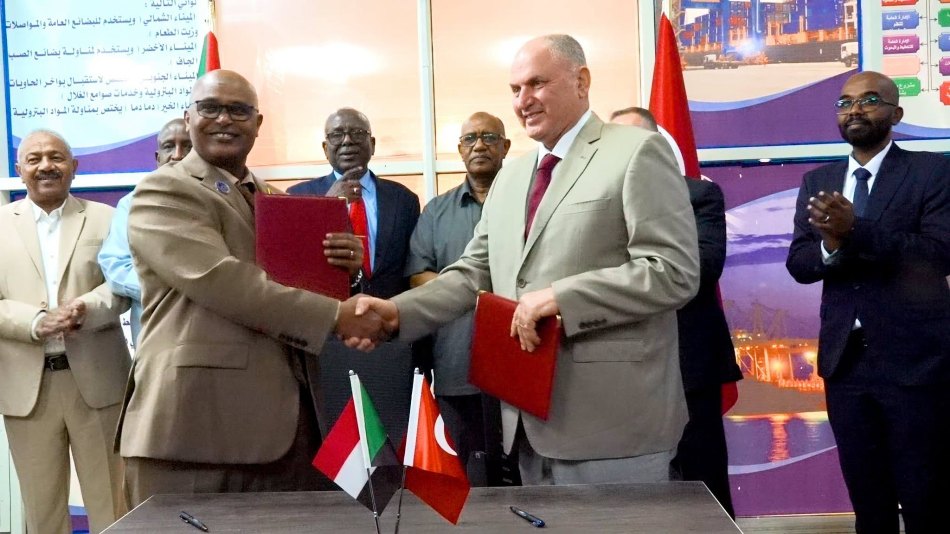
July 15, 2026 (SUAKIN) – The Sudanese government signed a memorandum of understanding (MoU) on Wednesday with the Turkish company Ergaz to construct Sudan’s first specialized gas terminal at the port of Suakin under a Build-Operate-Transfer (BOT) framework, officials said.
The project, which will feature a storage capacity of 28,000 cubic meters, aims to address critical infrastructure bottlenecks. Limited storage capacity for petroleum products and gas has historically caused severe fuel shortages across Sudan whenever imports or distribution is delayed.
The director general of the Sea Ports Corporation, Jilani Mohamed Jilani, signed the agreement with representatives of the Turkish energy firm at a high-level ceremony attended by Sudanese and Turkish officials.
Speaking at a press conference following the signing, Sudan’s minister of infrastructure and transport welcomed the growing bilateral cooperation with Turkey, noting that the agreement marks a significant step forward for investment in port infrastructure to drive economic growth.
Jilani said the terminal is the first of its kind in Sudanese maritime ports to be executed under the BOT system. The state-of-the-art facility will house modern gas storage reservoirs and will be capable of servicing up to three vessels simultaneously.
The project is expected to deliver substantial economic benefits, including reducing waiting times for gas vessels to zero and saving the cash-strapped country an estimated $200 million annually in foreign currency fees.
The director general added that the new terminal would help stabilize the domestic energy supply, alleviate fuel shortages for citizens, and help preserve the nation’s foreign exchange reserves to support the national currency.