
Sudan blames “temporary” Nile drop on Ethiopian dam cuts
July 17, 2026 (KHARTOUM) – Sudan’s Ministry of Agriculture and Irrigation on Friday blamed a “temporary drop” in Nile water levels on reduced discharge from the Grand Ethiopian Renaissance Dam (GERD).
The drop over recent days has visibly lowered river levels across Sudan, disrupting pumping stations that supply drinking water to several areas in Khartoum State.
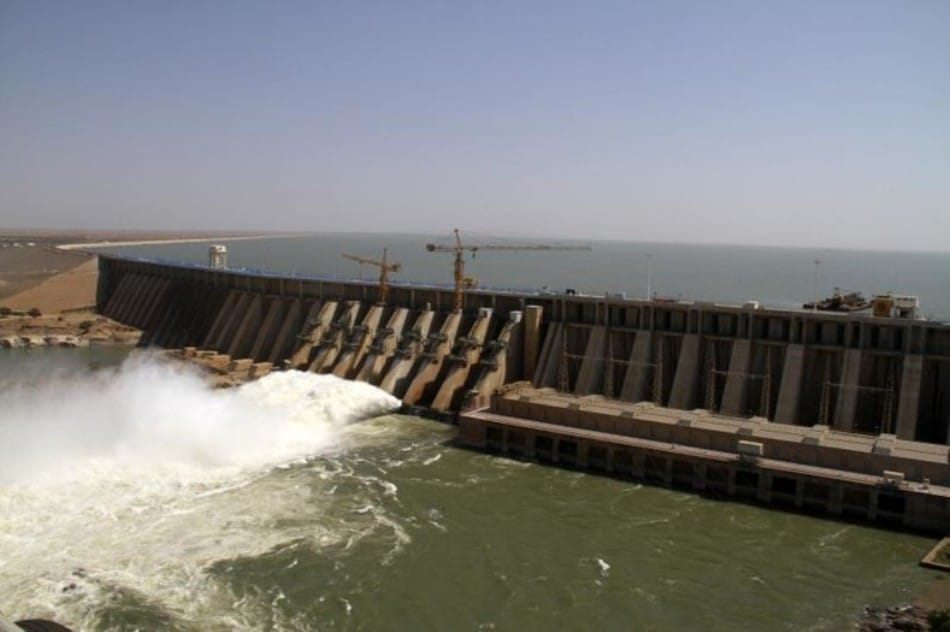
The ministry’s reservoir management department said the daily inflow to the Roseires Dam reservoir dropped to 129 million cubic meters per day between July 7 and July 9, down from 207 million cubic meters, representing a daily deficit of 76 million cubic meters.
This lower inflow reduced downstream discharge by 100 million cubic meters per day at the Roseires Dam and by about 82 million cubic meters per day at the Sennar Dam between July 7 and July 10.
Water levels consequently fell along main monitoring stations, dropping by 1.50 meters at Roseires, 1.70 meters at Wad al-Ais, 1.60 meters at Wad Madani, 1.08 meters in Khartoum, 94 cm at Halfaya, and 54 cm at Shendi.
The Roseires Dam on the Blue Nile River (BNR) in Sudan has a total height of 68 meters and a total reservoir capacity of 3,329 million cubic meters ($3329 \text{ Mm}^3$). It is located approximately 115 kilometres downstream of the Grand Ethiopian Renaissance Dam (GERD).
The statement explicitly attributed the decline to lower Blue Nile flows caused by reduced Ethiopian dam discharge during this period, noting that while water fluctuations are natural, the construction of the GERD has altered the river’s hydrology.
Engineers are managing the situation through reservoir technical adjustments to stabilize supplies and maintain required water levels, the ministry added.
Ethiopia completed construction of the GERD in July 2025 despite long-standing objections from Sudan and Egypt over unilateral moves. Both downstream nations continue to demand a legally binding agreement on the dam’s filling and operation to secure their water shares.
The ministry reassured that water resources are continuously monitored and that reservoirs are operated according to precise scientific guidelines to ensure the safety of water facilities and meet agricultural and domestic needs.
White Nile inflows and water levels through mid-July have remained above the general average and higher than last year’s figures, confirming that the overall water situation remains stable, the ministry said.