
Sudan inflation jumps to 51.28% in June as currency plunges
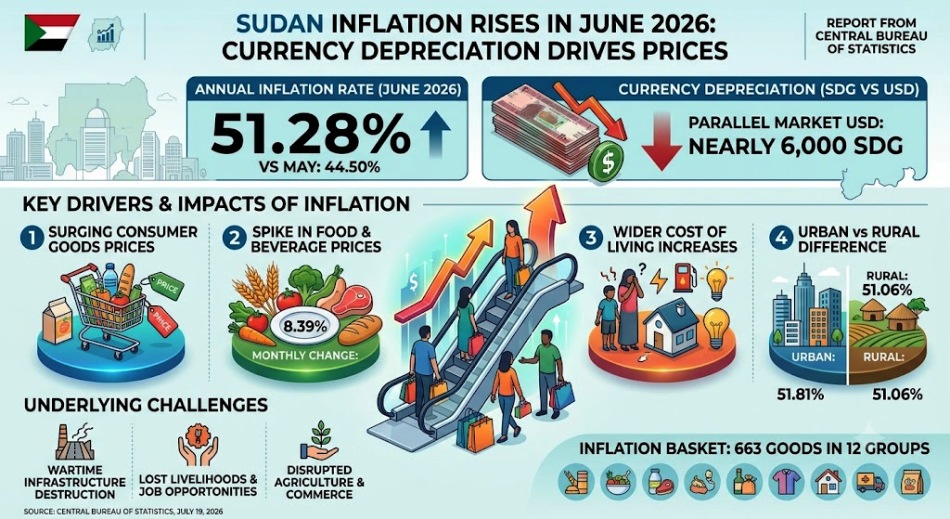
July 19, 2026 (KHARTOUM) – Sudan’s annual inflation rate rose to 51.28% in June 2026 from 44.50% in May, driven by surging consumer goods prices and the continued depreciation of the Sudanese pound against foreign currencies.
Markets witnessed broad price increases last month as the U.S. dollar exchange rate on the parallel market neared 6,000 pounds, directly impacting the cost of living.
The Central Bureau of Statistics said in a statement on Sunday that the annual inflation rate for June reached 51.28%, meaning the general price level rose by this percentage compared to June 2025.
The bureau explained that the annual rate of change measures the shift in the general price level for the current month compared to the same month last year. This is calculated by finding the difference between the consumer price index for June 2026 and June 2025, dividing it by the June 2025 index, and multiplying by 100.
The general consumer price index for the food and beverage group recorded a monthly rate of change of 8.39% during June.
Urban inflation reached 51.81% compared to the same period last year, while rural inflation was recorded at 51.06%.
The Central Bureau of Statistics measures inflation using a basket of 663 goods representing the consumption patterns of various economic, social, and geographical segments in rural and urban areas. These items are divided into 12 main groups, led by food and beverages, tobacco, clothing and footwear, housing, water, electricity, gas, health, transport, communications, and education.
The food and beverage group accounts for 52.89% of Sudanese household spending, followed by the housing, water, electricity, gas, and fuel group at 14.17%, and transport at 8.34%.
Sudanese citizens, many of whom have lost their sources of income and livelihoods due to the war, continue to suffer from the relentless rise in commodity prices. Job opportunities have dwindled following widespread destruction of infrastructure, commercial activities, and agriculture, compounding the living pressures on families across the country.