
Wilton Park dialogue on Sudan was a technical discussion, not a secret political deal
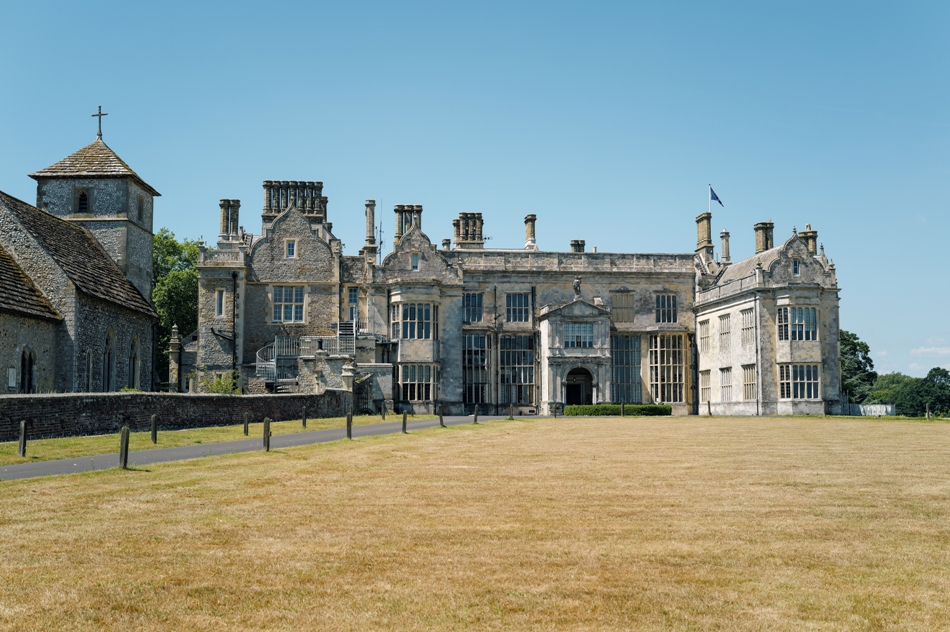
Wilton Park and Sudan: Correcting false claims without closing the door to dialogue
The Wilton Park dialogue was a three-day (22-24 July), off-the-record civilian technical retreat held in the United Kingdom to discuss future governance, fiscal federalism, and power-sharing frameworks for Sudan.
Elwathig Kameir
Kameir@yahoo.com

The Wilton Park civilian technical dialogue on Sudan generated controversy even before it took place. In the current atmosphere of war, polarization, and deep mistrust, it is understandable that any external initiative on Sudan will be questioned. Scrutiny is legitimate. Concern is legitimate. But there is a clear difference between serious criticism and claims built on inaccurate information or misleading assumptions.
I participated in the Wilton Park dialogue in my personal capacity. This point is important and should be stated clearly: participants were not attending as representatives of factions, political parties, armed groups, governments, or any other organized political platform. They were invited to contribute as individuals, drawing on their knowledge, experience, and professional backgrounds.
Without breaching the Wilton Park Protocol, I believe it is important to clarify what the meeting was, and equally important, what it was not.
The dialogue was not a political negotiation between Sudanese factions. It was not a mediation platform. It was not a forum to agree on a political settlement. It did not seek to define Sudan’s future constitution or political system. Nor did it claim to represent the Sudanese government, Sudanese political forces, or the Sudanese people.
Claims that the United Arab Emirates or the Rapid Support Forces participated in the meeting I attended are simply untrue. Official delegations from the Quad countries, including the UAE, did not attend. The RSF did not attend.
The meeting was not a dialogue between the Sudanese Armed Forces and the RSF, nor between the Sudanese government and any regional power. It was a civilian technical dialogue on possible future governance arrangements.
International participation was limited to technical experts and representatives connected to the Quintet framework. It should therefore not be presented as a hidden negotiation with regional powers, or as a parallel political process.
Such participation can help widen the circle of consultation and expose international and regional actors to Sudanese views beyond the narrow circles of formal political and military interlocutors.
The discussions focused on three main themes: the allocation of powers in a federal or decentralized system; fiscal federalism, including the sharing of resources and revenues; and representation, including how different regions, communities, and groups may be included in future governance arrangements.
These may sound like technical issues, but in Sudan they are deeply political. They relate to legitimacy, trust, historical grievances, centre-periphery relations, the viability of the state, and the conditions under which any future settlement may be accepted by Sudanese citizens.
The dialogue brought together Sudanese participants, including academics, researchers, public intellectuals, and people with experience in public affairs, alongside international technical experts with comparative experience from Africa and beyond. Some participants may have known political views or affiliations. That is almost unavoidable in any public discussion in Sudan. But this does not mean they were speaking on behalf of those affiliations.
The essential point is that participants attended in their personal and professional capacities, not as official representatives of political blocs, governments, or armed actors.
For a long time, I have argued that mediation efforts on Sudan need broader input. International and regional actors often hear mainly from political leaders, armed actors, and formal representatives. They also need to hear from Sudanese thinkers, professionals, researchers, and civic voices who can speak to the deeper questions of state-building, governance, representation, power-sharing, resources, and the future relationship between citizens and the state.
In that sense, a technical civilian dialogue is not a substitute for a Sudanese political process. It cannot end the war by itself. It cannot decide Sudan’s future. But it can inform thinking, sharpen questions, identify risks, and help mediators and policymakers better understand the complexity of the Sudanese crisis.
Some criticism has also dismissed the meeting on the grounds that it involved “the same old faces” and therefore could produce nothing new. This concern reflects a broader Sudanese frustration with repeated forums and familiar names. But it is not, by itself, a sufficient basis for dismissing the value of a discussion. The value of such a dialogue should not be measured by whether it produced instant solutions or dramatic new actors, but by whether it helped clarify options, risks, safeguards, areas of convergence and divergence, and unresolved questions.
The Wilton Park Protocol does not allow participants to attribute comments or positions to individuals or their institutions. I will therefore not discuss who said what, or what positions individual participants took. But the protocol does not prevent clarification of the general nature of the meeting or correction of false claims about it.
Sudan needs every serious effort that may contribute, directly or indirectly, to ending the war and opening a path towards a legitimate, Sudanese-owned political and constitutional process. Of course, Sudanese citizens have every right to question the role of Britain, the United States, the UAE, Egypt, Saudi Arabia, the African Union, the United Nations, or any other external actor. Such scrutiny is necessary. But serious scrutiny should be based on facts, not on allegations that turn every technical or civilian discussion into evidence of conspiracy.
Sudan’s future will not be made in Wilton Park, London, Cairo, Addis Ababa, Riyadh, Abu Dhabi, Washington, or New York. It must be made by Sudanese people through a legitimate and inclusive Sudanese process. But that does not mean that every structured discussion outside Sudan is illegitimate or harmful. Some can help widen consultation, improve understanding, and prepare more informed choices for a future Sudanese-owned process.
Correcting false claims about the Wilton Park dialogue is therefore not a defence of Britain, nor of any external actor. It is a defence of responsible public debate. It is also a defence of the Sudanese right to discuss, seriously and honestly, the difficult questions of governance, power, resources, representation, and peace without reducing every effort to accusation, suspicion, and political denunciation.
If Sudan is to move from war to peace, we will need more informed dialogue, not less. We will need more Sudanese voices in the room, not fewer. And we will need to distinguish between genuine vigilance against external manipulation and the destructive habit of closing every door before we have even examined what lies behind it.