
Sudan’s RSF turns to tribal leaders to stem losses after Kordofan defeats
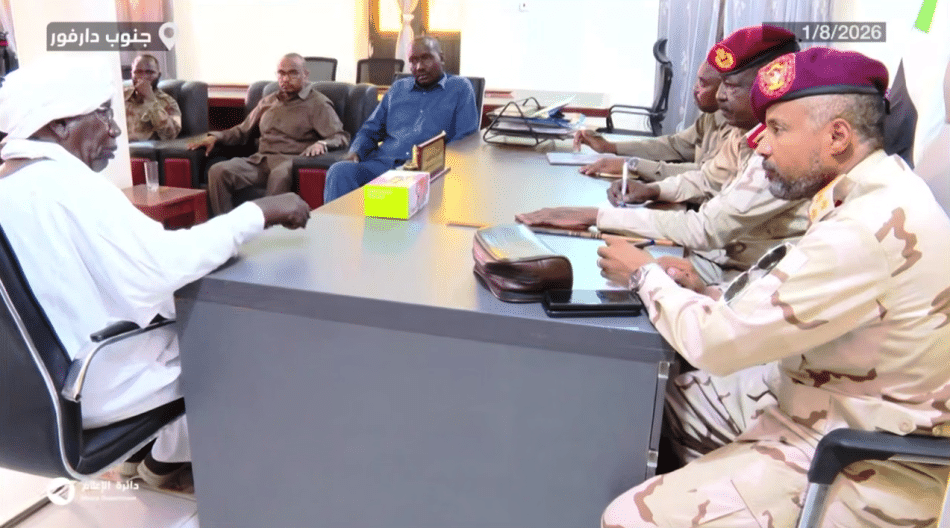
August 4, 2026 (NYALA) – The move by Rapid Support Forces Commander Mohamed Hamdan Dagalo, known as Hemetti, toward direct tribal mobilization in Darfur following the defeat of his forces in North Kordofan represents a strategic shift with new operational and political implications.
In a speech late last week, Hemetti announced the mobilization of his forces to liberate Khartoum, assemble fighters, and unleash what he described as “al-Rasan” for the forces in Kordofan.
The term “al-Rasan” is used exclusively in Sudan’s political and military context, particularly in the western region, and means untying a beast’s rope. Figuratively, it refers to unleashing certain tribal and community formations, serving as a slogan to signal heightened combat readiness and mobilization to join battlefronts.
Forced shift and funding crisis
Abdel Aal Bishara, a military and strategic expert, told Sudan Tribune that Hemetti’s recourse to tribal mobilization following defeats in Kordofan constitutes a forced strategic shift.
Bishara believes this aims to cover up operational setbacks and severe manpower attrition within RSF ranks after the force lost the battlefield initiative and saw its vital supply lines between Darfur and the capital retreat.
He explained that the shift away from recruiting foreign mercenaries stems primarily from a funding crisis and a shortage of hard currency and gold. Cross-border mercenaries require large, continuous budgets that have become difficult to secure amid tightening controls on funding sources and smuggling routes, making local tribes a less costly option to cover the numerical deficit.
The military expert added that this shift also aims to evade legal consequences and security concerns arising from UN and international reports. Documenting foreign mercenary participation places the RSF leadership under the scrutiny of strict international sanctions and criminal prosecution, prompting it to attempt to project an image of an internal popular movement by exploiting native administration to mask violations.
Bishara concluded that relying on tribal fighters will not achieve operational superiority or sustainable strategic gains on the ground, as they lack the military training and discipline required to face regular forces. Furthermore, thrusting tribes into the conflict threatens to drag the region into a full-scale civil war that could destroy the remaining social fabric.
Notable response and tribal mobilization
A group of tribes in Darfur announced their response to Hemetti’s mobilization call, with a notable response from members of the Fur tribe.
According to statements attributed to the RSF leadership and its social media channels, Shartai Ibrahim Abdallah Mohamed, a prominent leader of the Fur tribe’s native administration in South Darfur, announced his tribe’s participation with four combat brigades. The pledge came in response to the mobilization call, committing leadership loyalty to the RSF Presidential Council under the slogan “Unleashing al-Rasan.”
The RSF commander had visited Shartai Ibrahim at his home in Nyala in late June.
Conversely, a tribal delegation representing Arab tribes in West and Central Darfur announced early this week the preparation of a force comprising 11 battalions for the battlefronts.
The Central Darfur government also declared a mobilization, committing 10,000 fighters to the RSF leadership.
Additionally, the Beni Halba tribe announced the deployment of 1,000 fighters led by Brigadier Musa Al-Samih Qasi to the frontlines. Qasi is a tribal commander who previously operated with rebels in the Central African Republic before returning to Darfur.
Kordofan losses and declining capabilities
Rapid shifts on the ground in Sudan have unveiled a new operational reality, with the RSF’s offensive capabilities declining following a series of setbacks and losses in the Kordofan region and other strategic axes.
These setbacks were not merely a loss of territory, but a structural blow that weakened supply lines and paralyzed tactical movements. This prompted the RSF leadership to initiate intensive efforts to mobilize tribal bases and native administration to compensate for continuous human losses.
Kordofan, with its various axes, serves as the vital link connecting Darfur to the capital, Khartoum.
The RSF suffered severe blows that forced its retreat from several key positions, allowing the Sudanese Armed Forces and allied forces to regain the initiative. This shift has presented the RSF leadership with an operational dilemma that threatens to isolate its forces in the central battlefronts.
In this context, retired Lieutenant Colonel Omar Abdel Hadi, a military analyst, noted that recent setbacks in Kordofan were not temporary retreats, but exposed widespread depletion of equipment and manpower.
Abdel Hadi told Sudan Tribune that the loss of key positions in Kordofan severed rapid supply and mobilization lines, stripping the RSF of its usual operational flexibility. This has made it difficult for the group to launch large-scale attacks without rebuilding its manpower through direct reliance on tribes.
Tribal financial incentives and risks of fragmentation
Amid declining voluntary enlistment and rising human costs of the war, mobilization options have become more complex.
An informed source within the RSF familiar with native administration movements in Darfur and Kordofan told Sudan Tribune that the recent tribal mobilization process no longer relies solely on historical loyalties. Instead, it has been paired with financial injections and offers of weapons and equipment.
The source confirmed that influential RSF leaders held closed-door meetings with tribal figures and notables, offering large sums under the guise of “supporting local committees and securing areas” in exchange for pledges to send specific numbers of young men and fighters to the frontlines.
Mohamed Idris, a political science professor at Sudanese universities, highlighted the dangers of direct tribal mobilization led by Hemetti, emphasizing that relying on social bases reflects the shrinking capacity of the system for regular military recruitment.
Idris told Sudan Tribune that the RSF’s heavy reliance on native administration and tribal mobilization serves as a clear indicator of its manpower crisis.
He cautioned that this step carries immense risks, as arming tribes and turning the political and military conflict into tribal confrontations under clan names threatens to tear apart the region’s social fabric and drag it into an all-out civil war.
Limits of success and field reality
Regarding the ability of tribal mobilization to alter battlefield dynamics and allow the RSF to regain lost territory, retired Brigadier General Hafiz Mohamed Ahmed Abdel Nabi, a political and military expert, stated that the chances of this mobilization creating a genuine shift remain extremely limited.
Speaking to Sudan Tribune, Abdel Nabi cited the lack of professional military training as a primary reason, noting that tribal fighters and mobilized youth lack the operational and tactical training required to face regular forces reliant on coordinated infantry, artillery, and air support.
He added that growing awareness among local communities regarding the consequences of joining the war has rendered responses to mobilization calls weak and hesitant compared to earlier stages.
From a military standpoint, he pointed to weak command and control, explaining that pushing heterogeneous groups into the field under various brigade and battalion names weakens unity of command, leaving these forces vulnerable to dispersion during major engagements.
Abdel Nabi concluded that repeated announcements regarding the deployment of thousands of tribal fighters mostly fall within psychological and media warfare to cover operational setbacks. The reality on the ground reflects significant complexity, making it difficult to translate tribal mobilization into sustainable strategic gains.