
Sudan’s Quintet Mechanism sabotaged political consensus, politician says
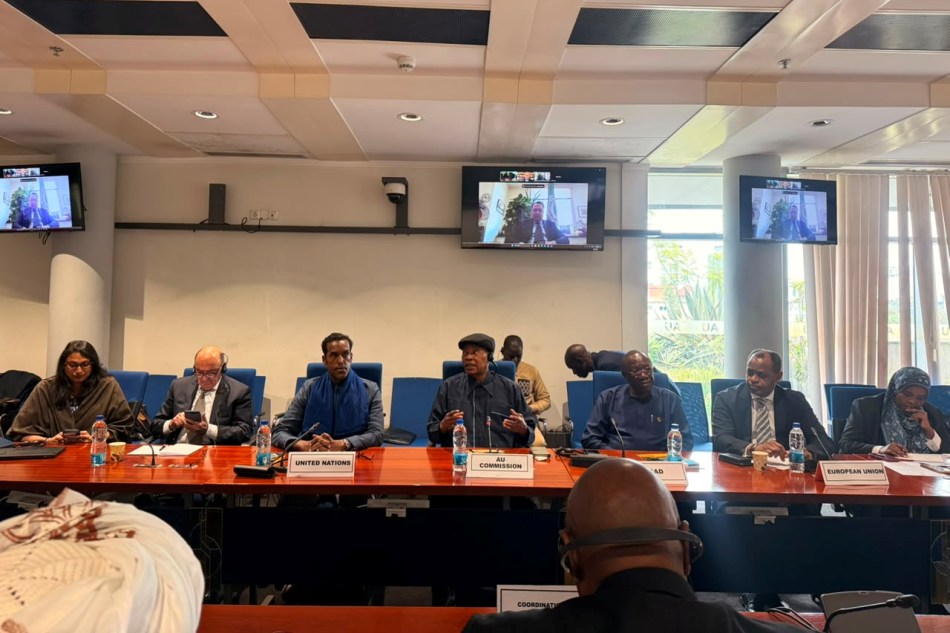
August 5, 2026 (KHARTOUM) – Babiker Faisal, head of the executive bureau of the Unionist Alliance—a key component of the “Somoud” coalition—said Wednesday that the Quintet Mechanism has undermined efforts to reach a consensus on forming a preparatory committee to launch the political process.
The Somoud and Tasis coalitions, alongside other parties and civil society organizations, boycotted consultations organized by the mechanism in Addis Ababa early this month due to disagreements over its approach and the choice of participants.
The Quintet on Sudan brought together the African Union, UN, EU, Arab League, and IGAD to bridge divisions among Sudanese forces, particularly regarding dialogue issues, venue, and participating parties.
Faisal said in an article published on his Facebook page that the Somoud, Democratic Block, and Tasis coalitions, along with other non-aligned parties, had agreed with the mechanism after a series of meetings to form a preparatory framework to address issues related to the political process.
He explained that the mechanism reneged on this agreement and deviated from its path by calling for consultative meetings that included coalitions with no presence on the political scene, as well as individuals and groups chosen without clear criteria, all representing the army.
He added that this violates the principle that warring parties should not control the political process, as outlined in the Sept. 12, 2025 statement of the Quad group, which includes the United States, Saudi Arabia, the United Arab Emirates, and Egypt.
Faisal noted that the agreed tasks of the preparatory committee were to design the political process, set its agenda, determine the issues to be discussed, identify participating parties, set the time and venue, and define regional and international roles, ensuring the process remains fully Sudanese-owned.
On June 5, the Somoud coalition, the Democratic Block, the Baath Party, the Popular Congress Party, and the Umma Party, alongside civil, women, and youth organizations, agreed to form a preparatory committee to launch dialogue following consultations hosted by the mechanism.
Despite this consensus, differences over participating parties persist. Somoud rejects the inclusion of the National Congress Party and the Islamic Movement, holding them responsible for igniting the war.
Conversely, the Democratic Block conditions its participation on civilian forces within the Tasis coalition disengaging from the Rapid Support Forces (RSF), dismantling the parallel government, and condemning violations.
Faisal stated that the principle of Sudanese ownership means the Quintet Mechanism has no right to decide which parties participate.
He added that the mechanism’s insistence on flooding the political process with coalitions and individuals aligned with one of the warring parties constitutes a clear violation of Sudanese ownership, stripping the mechanism of required neutrality and positioning it as an entity attempting to steer the process in favour of the army and its allies.
He said the mechanism’s direction aligns with the army leadership’s plan to buy time and create a fake, incomplete political process to gain regional and international support for its stance and vision for ending the war.
He explained that the army’s plan relies on preparing a major military offensive to retake vast areas in Kordofan and Darfur, forcing the RSF into a field retreat. This would reduce the RSF’s control to small pockets, redefining the war as a conflict between the central state and a limited rebellion in remote areas.
Over the past week, the army executed a swift military operation, capturing Bara, Jabrat al-Sheikh, Um Sayyala, and other sites along the export road connecting Omdurman to North Kordofan.
According to Chief of Staff Yasir al-Atta, the army plans to retake RSF-controlled areas in Kordofan and Darfur before the end of this year.
Faisal stated that a successful military offensive and the reduction of RSF field control would grant legitimacy to the army’s authority, paving the way for Sudan to resume its African Union activities and secure regional and international recognition for the military government.
He said granting legitimacy to the army’s authority would be accompanied by launching an internal political process in coordination with the mechanism, alongside appointing a legislative council composed of forces loyal to the army leadership. This council would be granted broad powers to alter current governance structures and establish new ones.
He added that the mechanism’s insistence on blatant interference and infringement on Sudanese ownership will ultimately lead to alignment with the army’s plan, stripping the mechanism of its neutrality.
Faisal called for resisting the army leadership’s efforts to establish a fake political process by unifying civilian forces into a broad front to intensify public, political, and diplomatic work aimed at ending the war and achieving sustainable peace through a genuine political process.