
Destruction and security fears stop displaced Sudanese from returning home
August 8, 2026 (EL OBEID) – Displaced Sudanese in the North Kordofan capital of El Obeid are refusing to return to towns recently recaptured by the army, citing widespread infrastructure destruction and fears of renewed attacks by the paramilitary Rapid Support Forces.
Residents who fled the nearby town of Bara say previous attempts to return ended in violence when RSF fighters unexpectedly retook the area following a brief period of army control.
The army and the RSF have repeatedly traded control of Bara since war broke out in April 2023. The cycle of fighting has exhausted the city and exposed remaining residents to retaliatory campaigns by RSF forces over alleged support for the military.
A major military offensive last week enabled the army to secure the strategic export road linking the national capital Khartoum to El Obeid. Army troops also established control over several key settlements along the route, including Um Sayala, Jabrat al-Sheikh, Um Qirfa, Jurayjakh, and Bara.
Despite those advances, displaced families living in camps around El Obeid say they prefer to wait until military operations clear neighbouring localities. RSF fighters pushed out of Bara have retreated deeper into the West Bara locality, including El Mazroob and Um Badr, while retaining control of nearby Sodari.
A female resident at the Khor Tagq displacement camp in El Obeid told Sudan Tribune she was unwilling to repeat her previous attempt to resettle in Bara. After returning home during an earlier lull, she witnessed RSF troops re-enter the town and launch severe reprisals against civilians, forcing her family to flee 60 kilometres back to El Obeid on foot.
A displaced schoolteacher now staying in El Obeid told Sudan Tribune that while farmers are anxious to plant crops during the current rainy season, security remains the primary obstacle. He noted that RSF units remain stationed near farming villages and retain the mobility to strike Bara again.
Military sources told Sudan Tribune that RSF mobile units equipped with combat vehicles operate from positions within a two-hour drive of Bara.
However, the same sources said RSF units in West Bara and Sodari currently lack the heavy armor and personnel required to launch a major ground offensive to retake towns along the export corridor. Instead, the paramilitary group has relied on localized drone strikes.
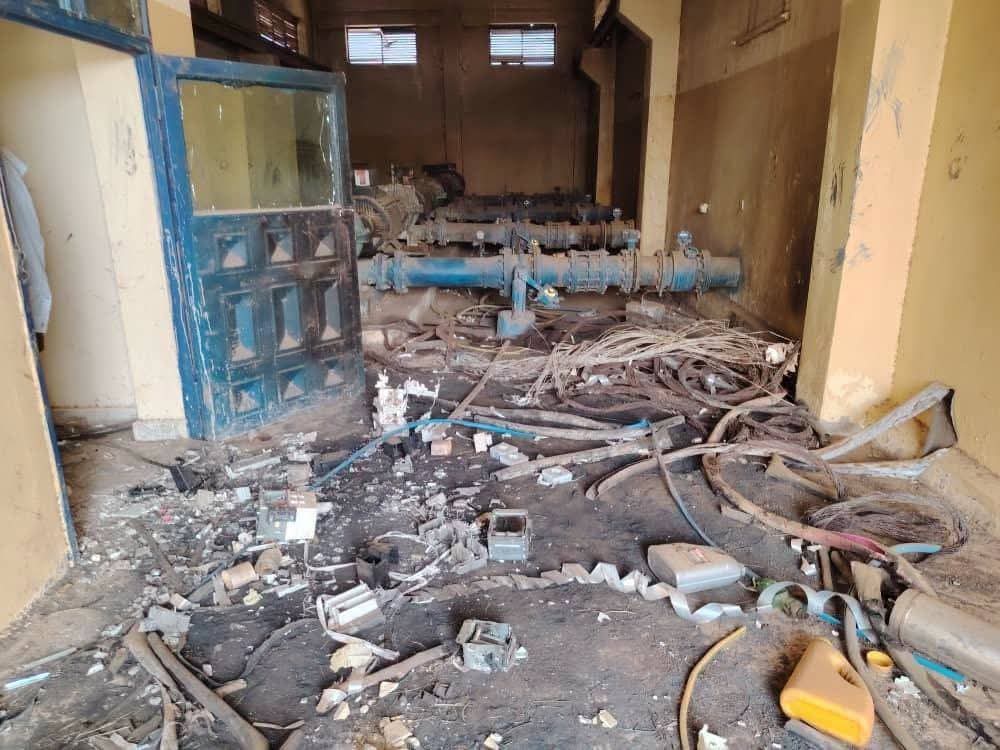
Return efforts are further complicated by severe damage to essential utilities across recaptured areas, particularly water infrastructure that suffered near-total destruction during the fighting.
Mohamed El Daw, executive director of Jabrat al-Sheikh locality, said municipal workers must clear and bury uncollected bodies and carry out broad decontamination campaigns before conditions are safe for civilian return.
Mohamed Ismail, humanitarian aid commissioner for North Kordofan state, said priority will be given to restoring clean water access, reopening healthcare facilities, and distributing food assistance for six to 12 months until communities regain agricultural self-reliance.
Water processing stations in Bara that supply both local residents and El Obeid sustained severe damage during the occupation, while solar power arrays driving municipal water wells were systematically looted.
Technical engineering teams accompanied by local officials arrived in El Sider, El Dankoj, Bara, and Um Sayala this week to assess damage and begin emergency repairs on primary water sources.
Assessments by the North Kordofan State Water Corporation revealed extensive destruction across the network, including the theft of copper wiring, electrical cabling, submersed pumps, and generator units. Repairs are underway in El Sider to restore water flow to both El Obeid and surrounding rural towns.