
Sudan’s Islamists tactical retreat creates dilemma for army generals
August 11, 2026 (KHARTOUM) — Speculation is growing that Islamists in Sudan are on the verge of major transformations, caught between the halls of military decision-making, the calculations of regional powers, and internal organizational challenges.
Observers report that groups affiliated with the Islamist movement are preparing to step back from the scene in a planned effort to reorganize. Field evidence and declining spheres of influence indicate that what is happening is a forced contraction dictated by the cost of war and shifting alliances.
Between these two scenarios, many questions open up regarding the future of the Sudanese Islamic Movement, raising the classic query: Are they making a calculated retreat, or fading away under the weight of reality?
RADICAL SHIFT
Field and political data reveal radical shifts in the nature and scale of participation by armed battalions and media groups affiliated with the Islamist movement in the ongoing war between the Sudanese army and the Rapid Support Forces (RSF). This comes following a series of strict Western sanctions and growing regional pressure to curb the influence of the former regime within state institutions and military bodies.
Estimates indicate the participation of 10 main and sub-units of battalions and formations affiliated with the Islamic Movement fighting alongside the army in its fierce war against the RSF, according to private sources who spoke to Sudan Tribune.
Among the most prominent military formations in the field are the Al-Baraa Ibn Malik Battalion, which is the largest in numbers and weaponry, and the Al-Bunyan Al-Marsous Battalion, alongside the former Popular Security groups and the previously dissolved Popular Defence Forces.
Military sources revealed to Sudan Tribune estimates that the total number of ideological fighters and loyalist mobilization forces participating on the front lines reaches nearly 20,000 fighters distributed across various battle axes.
The sources noted that these groups have suffered losses amounting to hundreds of dead and wounded since the outbreak of the conflict on April 15, 2023.
They confirmed that most of the casualties among these groups occurred during fierce clashes in Khartoum, El Gezira, Sennar, and Kordofan states, in addition to losses resulting from airstrikes and drones.
The most notable was the field targeting of their gatherings and leadership, as occurred during a bombardment in the city of Atbara in 2024, an incident alone that resulted in dozens of deaths and injuries among leadership and field personnel, though the organization kept the details completely secret.
The involvement of Islamists was not limited to the military field, but extended to managing a massive media apparatus and electronic operation rooms responsible for directing the media narrative. They managed news platforms on social media to shape public opinion, mobilize popular support for military operations, and disparage civilian political forces by labelling them as agents.
Despite this field and media influence, signs of retreat have begun to appear through the gradual decline of military displays and press statements by these battalions.

Sources within the Al-Baraa Ibn Malik Battalion confirm that the battalion’s commander, Al-Misbah Abu Zaid, left for China following an extended journey through several African countries.
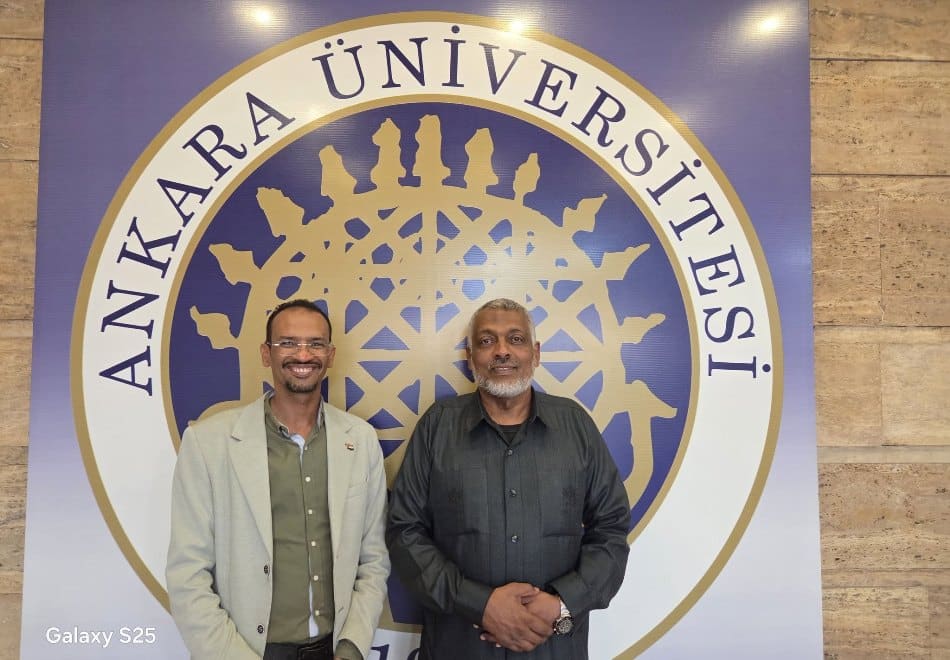
Meanwhile, reports indicate that Awais Ghanem, a prominent leader in the battalion, left for Turkey, where he was recently joined by al-Naji Abdallah and several young leaders from the battalion and other groups.
Al-Misbah Abu Zaid posted on Facebook, writing, “Praise be to God, we have returned to our civilian lives carrying in our hearts great gratitude for what has passed… and great hope for what is to come.”
Monitoring and sources related to the fighting Islamist groups told Sudan Tribune that there are individual withdrawals of fighters from the battles, though some leaders and groups remain present under the banner of the Popular Resistance.
In the ongoing battles in Kordofan, a varying degree of continued participation by these groups alongside the so-called Joint Force has been confirmed.
SIEGE OF SANCTIONS
Individual sanctions imposed by the U.S. Department of the Treasury and the European Union on the Al-Baraa Ibn Malik Battalion and several prominent Islamist leaders, along with sanctions on the Chairman of the Sovereign Council and Army Commander General Abdel Fattah al-Burhan and military officials, marked a pivotal turning point.
These sanctions placed the General Staff under intense international pressure due to fears that the military institution could be officially placed on lists of terrorism supporters or entities subject to automatic sanctions.
According to matching sources who spoke to Sudan Tribune, the General Staff issued strict instructions prohibiting the display of any slogans or flags of Islamist battalions in operational areas.
All fighters were required to join formally and organizationally under the umbrella of the Popular Resistance or mobilized forces affiliated with the military division in each state to avoid embarrassing the army leadership before the international community.
Ahmed Abdel-Nabi, an international relations specialist and former diplomat, said that this internal tightening coincided with the military leadership’s desire to maintain warm channels of communication with key regional allies, foremost among them Saudi Arabia, which is leading mediation efforts through the Jeddah platform to settle the Sudanese crisis.
However, he told Sudan Tribune that the army’s efforts face obstacles in securing regional political and economic cover while cadres of the old regime remain visible on the political and military frontlines.
This prompted the General Staff to make decisive decisions to remove controversial figures and formations from the media spotlight.
TACTICAL WITHDRAWAL
These transformations are reflected in the testimonies of former fighters who confirm a state of decline and gradual withdrawal of battalion elements following shifts in the military and political situation.
Ahmed Mustafa, a former fighter in the Al-Bunyan Al-Marsous Battalion, told Sudan Tribune that they fought out of national duty and to protect the military institution when Khartoum was on the verge of falling.
However, recent developments showed that the army leadership began to guard against their presence and work to eliminate their field weight to avoid international sanctions and absorb regional pressure, which prompted him to withdraw and stop participating.
Officials in the Al-Baraa Battalion did not respond to media inquiries, relying entirely on statements or comments published on its leader’s social media page.
For his part, Mohamed Abdel-Wahab, a former member of the Al-Baraa Ibn Malik Battalion, revealed his motives for leaving the front lines and returning to his agricultural work.
He pointed to the changing equation on the ground following the issuance of sanction lists and repeated airstrikes, as well as the absence of battalion leaders who used to urge steadfastness, most of whom left or went into hiding to secure themselves, prompting him to leave the mobilization camps.
ABSORBING THE SHOCK
Observers believe that the Islamists taking a step back does not necessarily mean their complete abandonment of the scene, but rather represents a tactic to absorb the shock and prevent the army from being fully targeted by international sanctions, giving the military leadership greater manoeuvrability to negotiate with international and regional parties.
Amid the swift changes on the battlefields and political developments, the current stance of the Islamist movement highlights a structural transformation in its political strategy, as developments indicate that active leaders are taking a step back, leaving the space for political expression and field leadership to the military institution.
Dr Mohamed Idris, a professor of political science at Sudanese universities, believes that this fundamental change is not the result of purely internal intellectual or political reviews, but rather the product of intersecting regional pressures and a package of international sanctions targeting figures and entities associated with the movement.
This has forced the Islamic Movement into difficult choices: either to recede and hide behind the army’s banner or to face complete political and international isolation.
Idris stated to Sudan Tribune that individual and institutional sanctions constituted a decisive turning point because they targeted prominent leaders, froze assets, and banned financial transactions, placing the movement under international scrutiny, stripping away its margin for foreign political manoeuvre, and turning its leadership into a diplomatic liability.
THE SOLID WALL
On the regional level, Sudanese Islamists faced a solid wall of rejection, according to observers.
Influential regional capitals made it clear that any future political settlement would not be accepted if it included reviving the front organizations of the Islamic Movement or the dissolved National Congress Party.
This placed the army in an embarrassing position requiring it to clarify its distance from the Islamists to ensure the flow of support and define paths of regional communication.
In this context, political analysis offers two hypotheses to explain this behaviour.
The first, according to Dr Mohamed Idris, sees a tactical isolation in which Islamists temporarily bow to the storm by joining the ranks of the Popular Resistance as ordinary citizens without raising movement banners, preserving their base and avoiding direct targeting while waiting for conditions to change.
The second hypothesis suggests a forced abandonment resulting from the movement’s realization that its project in its old form has reached a dead end, and that continuing to lead will accelerate the total liquidation of its existence.
He added, “Although retreating behind the military institution provides the Islamists with temporary protection, it imposes a high political cost in the long run. This is embodied in the loss of political independence, the subordination of decisions to the moves of the military leadership, and the erosion of organizational fronts due to the substitution of movement slogans with general national discourse, in addition to the difficulty of returning to the forefront of political power in the future.”
MASS DEPARTURES
The departure of prominent Islamist leader El-Naji Abdallah to the Turkish capital, Ankara, to resume his specialized studies in orthopaedic surgery emerges as evidence carrying deeper dimensions than a mere academic journey.
According to Dr Idris, this shift reveals the hidden dynamics and structural conflicts within the army’s allied front, particularly the ideological components that found themselves at the heart of the battle.
Al-Naji holds special symbolism within the Islamist movement as a model of a fighter who blends enthusiastic discourse with direct field presence.
However, the circumstances surrounding his departure carry an implicit admission that the role of these field leaders has reached a critical point requiring retreat or repositioning away from the heat of Khartoum and the direct battlefronts.
Political analyst and former diplomat Abdel-Azim Mohamed told Sudan Tribune that the timing of El-Naji Abdullah’s departure aligns with a calculated tactical retreat by the Islamist movement, driven by regional and international diplomatic pressures.
He considered that since the imposition of Western sanctions, the presence of Islamist figures on the front lines has become a strategic burden on the military institution, as the army seeks to avoid being listed on terrorism rosters and to maintain its relations with active regional and international blocs.
DRYING UP RESOURCES
On the other hand, sources within these groups who spoke to Sudan Tribune on the condition of anonymity link the military and media withdrawal to a shift toward securing funding, arms and shadow companies.
This comes after sanctions and restrictions moved toward drying up the financial resources of the battalions, with departures abroad aimed at managing these funds from safe environments.
At the same time, the sources noted that the boycott and departure of young leaders reflect internal frustration or an unannounced split, rather than merely a unified tactical retreat.