
Sudan’s Umma factions align on dialogue principles, diverge on handling Burhan’s call
August 20, 2026 (KHARTOUM) – Leaders across Sudan’s prominent Umma Party factions have agreed on foundational principles for national dialogue, though they remain divided over how to respond to an internal consultation initiative proposed by army chief Abdel Fattah al-Burhan.
In a rare convergence, a faction of the National Umma Party (NUP) led by Secretary-General El-Wathiq El-Bereir held talks with the Umma Party headed by Mubarak al-Fadil al-Mahdi. The meeting marked the first public rapprochement between the two leaderships amid deep wartime fractures across Sudanese political movements.
Following their meeting in Khartoum, El-Bereir and Mubarak al-Fadil issued a joint statement rejecting any internal dialogue under current conditions, warning that ongoing fighting, territorial division, and displacement preclude a credible and representative process. They stressed that talks must not be held under the sway of either warring party, nor serve to legitimize the status quo or reproduce pre-war governance frameworks.
The two leaders called for moving the dialogue to a neutral and secure venue abroad, insisting that a full cessation of hostilities and the restoration of public freedoms must precede any negotiations.
Mariam al-Mahdi reiterates call for trust building
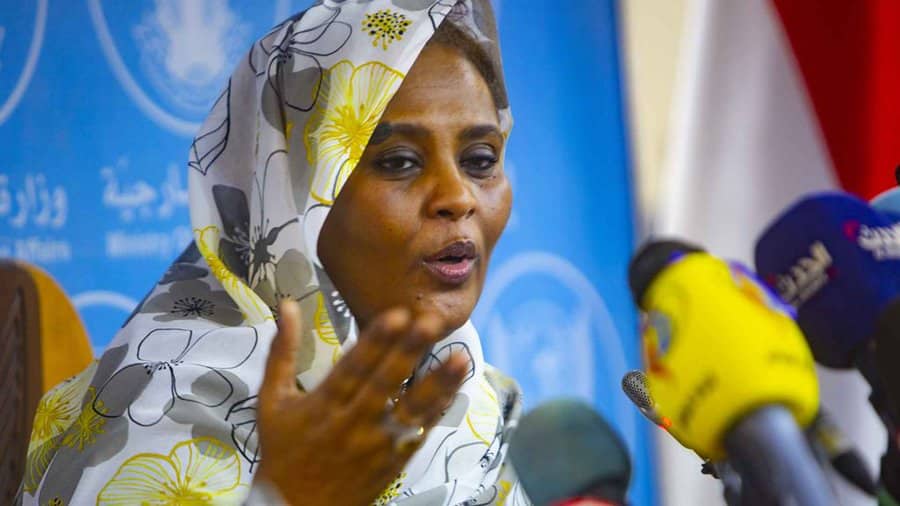
In a separate statement, NUP Deputy Leader Mariam al-Mahdi welcomed the joint meeting as a positive step toward mending rifts across Umma factions, though she warned against using bilateral engagements to bypass formal party institutions.
Al-Mahdi expressed full alignment with the core principles, affirming that dialogue must neither be dominated by combatants nor entrench territorial fragmentation, while emphasizing the inclusion of all regions, particularly Darfur and Kordofan.
However, al-Mahdi offered a contrasting approach to Burhan’s initiative. Rather than issuing an outright rejection or accepting the terms as presented, she advocated treating the proposal as an active political opening to push for strict conditions and enforceable guarantees.
“The goal is not to assume that Sudanese people have come to trust each other, but rather to build monitored guarantees that allow them to sit together despite the lack of trust,” al-Mahdi stated. “Therefore, the question that should concern us now is not just: When do we sit for dialogue? And who is on the committee that manages it? But rather: How do we prepare all Sudanese to sit together in a different way?”
The position builds on a trust-building proposal al-Mahdi advanced earlier this month, which urged a binding code of conduct and honour charter between military and civilian stakeholders.
Her initiative outlined confidence-building measures across four interconnected tracks, including dropping politically motivated charges, curbing military dominance in urban centres, halting incitement, and establishing verified monitoring mechanisms to enable negotiations despite deep public mistrust.
Al-Mahdi concluded that the transition to peace requires moving beyond political declarations toward actionable commitments, calling for broad consultations to culminate in a binding national charter to govern the transition.