
Beyond ‘no dialogue under fire’: Sudan needs parallel tracks for peace
Arguing “no dialogue under fire” creates a false dichotomy for Sudan. An enduring ceasefire and civilian political groundwork must reinforce each other.
Elwathig Kameir
Kameir@yahoo.com
A phrase has been recurring in current Sudanese debate that seems, on the surface, self-evident and compelling: “No dialogue under fire.” The moral and political motivation behind it is entirely understandable. Talk of dialogue must not become a cover for the continuation of war, nor should political and civil forces preoccupy themselves with crafting initiatives while artillery, warplanes, and drones continue to kill civilians, destroy cities and villages, deepen displacement and refuge, and tear apart what remains of the national fabric.
This issue was recently brought back to the forefront by an important article published by Professor Makki Madani al-Shibly, in which he urged the Dialogue Facilitation Committee to prioritize a ceasefire over arranging dialogue mechanics. The significance of his article lies not only in the force of its central premise—”No dialogue under fire”—but also in raising a broader question about the relationship between halting the war and the political track: Must one precede the other, or should they be conceived as two interconnected tracks?
Yet the validity of “No dialogue under fire” as an ethical warning does not necessarily make it an absolute political rule. The question is not: Do we stop the war or do we engage in dialogue? Posing it this way creates a false dichotomy. The more precise question is: How do we ensure that any political track serves and complements the cessation of hostilities, rather than substituting for it or covering its continuation?
Halting the war is an indisputable priority. Any talk of an intra-Sudanese dialogue loses its meaning if decoupled from a ceasefire, civilian protection, the opening of humanitarian corridors, and denying legitimacy to de facto authorities produced by the war. However, a ceasefire alone does not automatically produce peace. It may silence bullets temporarily, but it does not address the conflict’s root causes, answer the question of the state, determine the future of weapons, build new political legitimacy, or prevent the resumption of war if its underlying causes persist.
It is true that the war, in its direct military dimension, is fought between the Sudanese Armed Forces and the Rapid Support Forces. It is equally true that civilians do not possess artillery, warplanes, or the authority to order a ceasefire. Yet the war in Sudan is not merely an isolated military engagement separate from politics, society, civil division, and public discourse. It is also a war of visions, alignments, narratives, and contested legitimacies. Therefore, a ceasefire, even if signed by the belligerents, will not endure unless a political and civil environment anchors it and prevents it from becoming a brief respite before another round of fighting.
Sudan’s own history demonstrates this. Throughout the long years of the civil war between the North and South, despite differences in nature and context from today’s war, negotiations did not wait for fighting to stop entirely before they began. The Machakos Protocol was signed in July 2002, followed by the Naivasha talks covering governance, wealth sharing, power sharing, the Three Areas, and security arrangements, culminating in the Comprehensive Peace Agreement in January 2005. A comprehensive ceasefire was not a prerequisite for the entire political process; it was part of a broader negotiating framework.
Naturally, that experience cannot be mechanically replicated. Today’s war differs in its actors, nature, geography, the degree of state and societal collapse, the scale of violations, and the proliferation of foreign interventions. Furthermore, what took place in Machakos and Naivasha was a negotiation between the two political belligerents—the Salvation regime and the SPLM—rather than a broad civilian dialogue or a direct negotiation between the Sudanese military and the SPLA as entities detached from their political leadership.
Even so, the key takeaway remains valid: the political track did not wait for the guns to fall completely silent to begin, and a comprehensive ceasefire was not a prerequisite for the political process as a whole. The experience offers no off-the-shelf blueprint for today’s war, but it serves as a reminder of an essential truth: politics does not begin only after the guns fall silent; sometimes, serious politics is a prerequisite for silencing them.
Hence arises the need to distinguish between two interconnected responsibilities that should neither be conflated nor fully separated. The first is halting the war, primarily the responsibility of the warring parties through a humanitarian truce and a monitored, comprehensive ceasefire. The second is building peace, the responsibility of political, civil, and social forces through a serious national dialogue on the future of the state, a single unified army, justice, governance, the constitution, civil-military relations, and guarantees against a relapse into war.
It is an error to demand that civilians resolve all their differences before the belligerents stop shooting. The converse error is leaving the cessation of war strictly to military arrangements detached from politics, turning it into a deal between armed actors that rearranges power dynamics without tackling root causes. The goal is not a rigid sequencing of one before the other, but the creation of two parallel, interconnected tracks: a military-humanitarian track to stop the fighting, and a political-civilian track to prepare the conditions for peace and prevent the war’s reproduction.
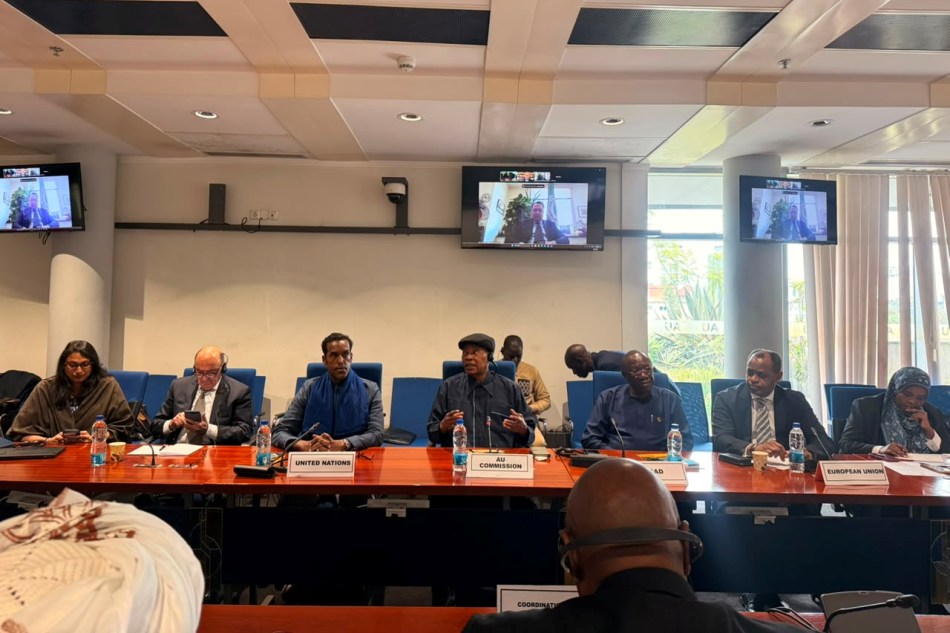
In this sense, any committee or effort facilitating dialogue must not become a substitute for ceasefire platforms, an umbrella for the authorities or any warring party, or a mill for redundant initiatives. If it respects its remit, however, it can operate in a space that external mediators cannot fill alone: engaging political, civil, and social forces, understanding their concerns and conditions, and forging common Sudanese ground on what makes both a ceasefire and subsequent dialogue viable and acceptable.
This is not a call for civilian forces to become self-absorbed while the war rages, nor for dialogue to serve as political cover for military realities consolidating on the ground. Quite the opposite: stopping the war must sit at the heart of any serious political groundwork. It must be clear from the outset that protecting civilians, opening humanitarian corridors, rejecting partition and de facto institutions, and building a single, professional national army are not secondary issues to be postponed until after dialogue; they are fundamental conditions for any process worthy of being called a national track.
Conversely, merely demanding that the belligerents cease fire, however necessary and legitimate, is insufficient. Scores of appeals, statements, and initiatives have demanded an end to the war; the shortfall has never been in the ethical framing, but in the capacity to translate it into an actionable political, military, and humanitarian framework. The practical question, then, is not only: Who engages al-Burhan and Hemedti? It is also: What political and civil environment makes a ceasefire possible, protects it if achieved, and prevents it from devolving into a fragile truce or a carve-up between two armed camps?
The more accurate formulation is therefore not “Prepare for a ceasefire before preparing for dialogue”, as if political preparation were a luxury deferred until the war ends. The precise formulation is: Place the ceasefire at the core of preparations for dialogue, and make political preparation an integral condition for ending the war, not a substitute for it.
Sudan needs neither a dialogue that evades the war nor a truce that evades politics. It requires two tracks that reinforce one another: stopping the war now, and undertaking the serious political preparation that prevents its return tomorrow.
A dialogue blind to the gunfire risks becoming an academic exercise detached from reality. A ceasefire blind to politics risks devolving into a fragile truce, a military carve-up, or an interlude between battles. Between these two perils, Sudan requires an approach that does not stop at morally righteous slogans, but charts a politically viable path: halting the bloodshed today and ensuring it does not return under a different name tomorrow.