
Clashes between SPLM-N and Otoro tribe kill over 500 in Sudan’s Nuba Mountains, leader says
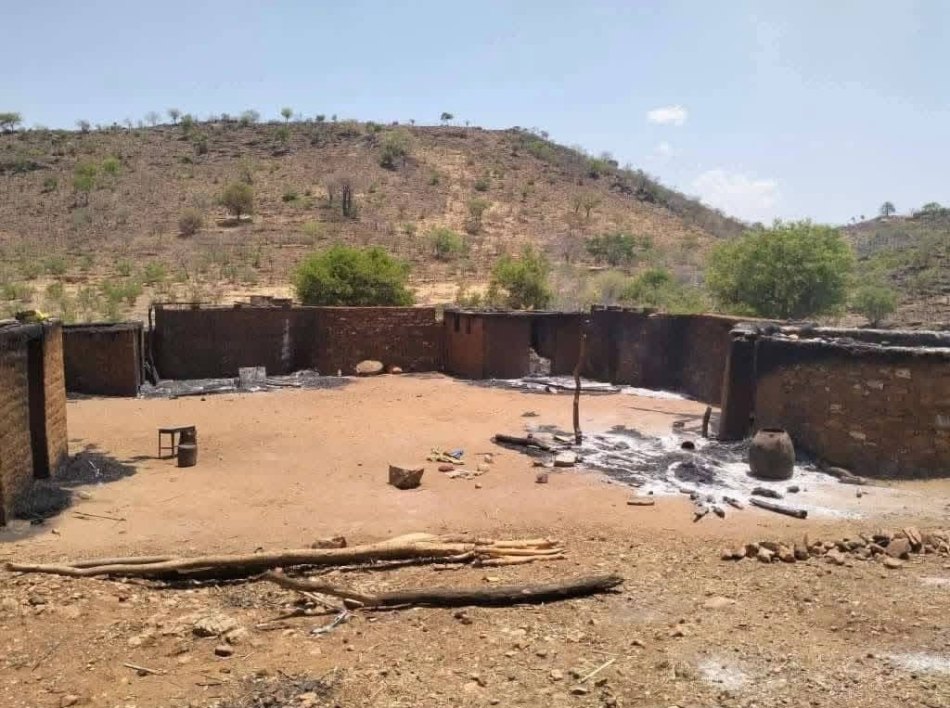
September 29, 2026 (KAUDA) — Deadly fighting across the town of Kauda and its surrounding areas has killed more than 500 people from the Otoro ethnic group and displaced over 25,000 others, a prominent Nuba Mountains community leader said on Tuesday.
Most of those displaced have taken shelter in caves and dense brush, facing harsh conditions without humanitarian relief.
The Kauda area, located in the South Kordofan/Nuba Mountains region, has witnessed armed confrontation for months between local fighters from the Otoro tribe and forces loyal to the Sudan People’s Liberation Movement-North (SPLM-N).
Hostilities intensified during 2026 amid conflicting claims over the root causes. While some observers trace the violence to disputes over native administration and border demarcation, others view it as an extension of deeper political and military rifts between SPLM-N commanders and the Otoro community.
Koko al-Degeil Damgala, the acting Mak (traditional chief) of the Otoro, told Sudan Tribune that fatalities continue to mount daily.
“We have verified information confirming that the death toll has exceeded 500 across all segments of the community over the past six months, alongside scores of missing and detained civilians,” Damgala said.
He rejected accusations of rebellion, asserting that the Otoro have not turned against the SPLM-N as an organization or political project. Instead, he said the community rose up against systemic marginalization and misrule, accusing senior commanders of fabricating a rebellion narrative to rally other Nuba groups against them.
Damgala, a former teacher in the rebel-held stronghold administered by Abdelaziz al-Hilu’s faction, noted that friction between the tribe and military commanders first emerged in 2016.
He explained that the Otoro were later accused of personal loyalty to al-Hilu, before tensions escalated sharply following the SPLM-N’s political alignment with the “Founding” coalition, an alliance dominated by the Rapid Support Forces (RSF).
Damgala said his tribe was then accused of aiding RSF elements entering rebel-held territory and dispatching local youth to RSF training camps.
The arbitrary arrest of several community elders by SPLA-N Chief of Staff Izzat Koko Angelo served as an early trigger for direct armed clashes, he added.
Nuba tribes did not agree on demarcation
Damgala dismissed claims that the Otoro were the sole Nuba group to reject a border demarcation plan, maintaining that the communities never formally agreed on internal boundaries.
He noted that the initiative was originally introduced by SPLM-N officials who convened traditional leaders for a land conference in the Heiban area following communal unrest between the Tira and Otoro in 2021.
During the conference, the Otoro requested postponing demarcation rather than rejecting the concept entirely, Damgala said. He rejected statements attributed to the SPLA-N Chief of Staff claiming 57 tribes had voted in favor of the boundaries with only the Otoro opposed.
Damgala questioned why military officials intervened in a civil administration gathering, arguing that the border issue was later weaponized to stoke ethnic mobilization against his people.
Denial of rebellion
Damgala insisted the Otoro never rebelled against the SPLM-N, its civil authority, or its armed forces, emphasizing that community members have fought on the movement’s front lines for nearly four decades.
He said the tribe rejected marginalization and arbitrary governance, warning that branding the Otoro as traitors is a deliberate attempt to isolate the group and fracture social cohesion across the Nuba Mountains.
According to Damgala, several Otoro military officers refused to appear before an inquiry committee Angelo convened after the chief of staff accused them of diverting local recruits to RSF camps rather than the SPLA-N.
Damgala alleged that Angelo told the officers the SPLM-N’s partnership with the RSF was tactical rather than strategic to leverage resources, before threatening them with demotion and imprisonment over their border stance.
The officers declined to report to the panel over concerns of arbitrary detention, Damgala said, adding that community sources linked the committee to the planning of a March 12 attack in Heiban County’s Dabi area aimed at framing Otoro commanders.
Dozens detained
Damgala accused the SPLM-N of launching a wide-ranging detention drive against the Otoro since April, sweeping up aid workers, civil servants, military personnel, and local traders.
He said the number of detainees is over 350, but cautioned that the count fluctuates because of arbitrary releases and unconfirmed disappearances. He added that the community received reports indicating several detainees were executed in custody.
The tribe has lodged formal criminal complaints against SPLM-N commanders and officers accused of orchestrating abuses against Otoro civilians, he said.
Control of Kauda
Damgala noted that Kauda has historically served as an Otoro ancestral homeland, rejecting suggestions that the SPLM-N had to “liberate” it from any external power.
He said the town turned into an active battleground following an SPLA-N offensive in May, and remains under the operational control of local Otoro youth.
The town itself is largely deserted and heavily damaged from fighting, with displaced families seeking refuge in the surrounding hills and valleys, he added.
Damgala accused the SPLA-N of utilizing garrisons based in Heiban tribal territories to shell Otoro settlements, while denying that his community initiated any attacks against neighboعring communities.
The Otoro were merely repelling assaults and pursuing attacking forces back to their staging posts, he said, stressing that no historical enmity exists between the Otoro and neighbouring groups.
Thousands displaced
The tribal leader estimated that over 25,000 people have fled Otoro territory, scattering across Heiban County and into neighbouring districts including Moro, Koalib, Tira, Lira, and Abul.
He confirmed that several villages were looted and burned to the ground, arguing that the massive civilian displacement demonstrates the conflict extends far beyond a simple communal feud.
Criticism of al-Hilu
Damgala criticized SPLM-N leader Abdelaziz al-Hilu for failing to intervene constructively despite repeated appeals from the Otoro, who provided vital military and political backing to al-Hilu throughout years of civil conflict.
Addressing potential political resolutions, Damgala denied that the Otoro rejected peaceful dialogue, emphasizing their acceptance of initiatives from the Council of Churches and South Kordofan/Nuba Mountains Governor Jagod Makwar.
He suggested that military commanders step aside to allow Makwar, who also serves as SPLM-N deputy chairman, to intervene directly alongside a conflict-resolution mechanism established by RSF Commander Mohamed Hamdan Dagalo in coordination with anti-war leaders.
Despite the bitter rift with senior SPLM-N commanders, Damgala reaffirmed his community’s dedication to the movement’s political vision, declaring: “We are the SPLM, and the SPLM is us.” He insisted the Otoro remain firmly committed to the “New Sudan” project despite efforts to push them off their ancestral land.
Warning of wider escalation
Damgala warned that protracted fighting risks inciting broader inter-communal bloodshed across the Nuba Mountains, accusing unidentified actors of using social media channels to stoke ethnic hatred.
He cautioned that unchecked incitement could lead to widespread disaster, calling on the SPLM-N command and the Founding coalition to urgently pursue a negotiated settlement.
Damgala reiterated that the Otoro welcomed Dagalo’s mediation initiative, adding that Otoro territory is currently secured by local fighters and remains open to the RSF and all members of the Founding alliance.