
Sudan central bank accelerates debt sales to fund deficit, absorb cash
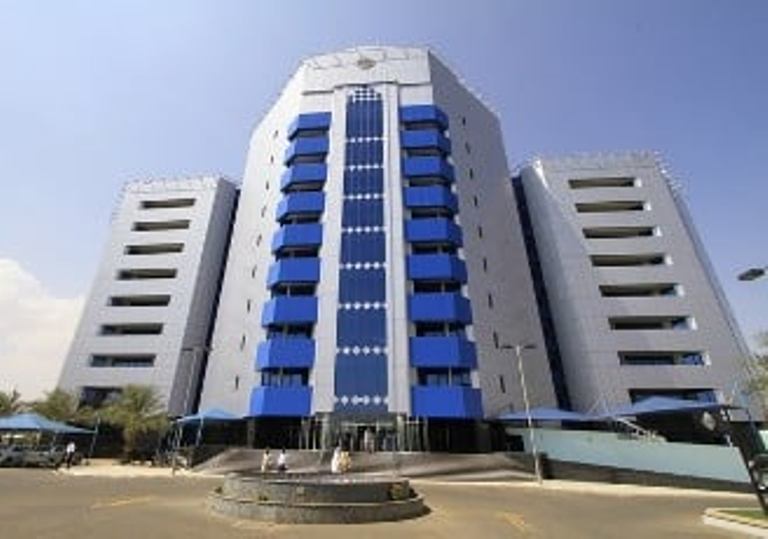
October 11, 2026 (KHARTOUM) – Sudan’s central bank is accelerating plans to issue new domestic government debt to finance a widening state budget deficit and mop up excess liquidity, reigniting debate over market appetite after wartime defaults shattered investor confidence.
The move comes as the authorities grapple with acute fiscal strain and macroeconomic dislocation caused by more than three years of conflict between the Sudanese Armed Forces and the paramilitary Rapid Support Forces.
Banking and debt capital market specialists say restarting local-currency debt sales could give the sovereign an alternative to direct monetisation, absorbing surplus physical cash while redirecting domestic savings into treasury operations and capital projects.
Analysts caution, however, that successful debt placement hinges on delivering positive inflation-adjusted yields, re-establishing sovereign credibility, and ensuring rigorous policy alignment between fiscal and monetary authorities.
Legacy defaults weigh on market
Domestic debt issuance ground to a halt after fighting broke out in April 2023, severely hitting the primary vehicle for government paper, Sudan Financial Services Company (SFSC), and its flagship Government Investment Certificates, locally known as Shahama.
Holders of the paper, including retail investors, widows and pension funds, suffered sharp losses and payment disruptions when the finance ministry and the central bank defaulted on coupon payments and principal redemptions as public revenue collapsed.
The Central Bank of Sudan owns 99% of SFSC, with the Ministry of Finance and Economic Planning holding the remaining 1%.
Board directs expedited debt rollout
The central bank said in a statement that SFSC’s board met on Saturday at central bank headquarters in Khartoum, chaired by Governor Amna Mirghani Hassan Al-Tom, to review technical preparations for new issues.
The board directed an expedited rollout of local-currency instruments to manage the money supply through open market operations and bridge the government’s fiscal shortfall, in coordination with the treasury.
Technical committees have concluded structural work on the debt pipeline, which includes bank-targeted asset-backed sukuk and gold-linked participation notes, the central bank said.
Board members also reviewed SFSC’s third-quarter balance sheet and cash flows through the end of September, recommending a capital increase for the issuer subject to general assembly approval.
Capital market revival and secondary trading
Former SFSC general manager Khamis Abu Amer told Sudan Tribune the restart marks a critical step toward reviving domestic capital markets and providing the central bank with indirect tools to influence interbank liquidity.
Abu Amer said structured borrowing from institutional lenders and the public could fund capital expenditure across health, water, power, and road infrastructure, provided the instruments avoid the structural design flaws of earlier issues.
He noted that secondary market trading on the Khartoum Stock Exchange would be vital to provide exit options and support price discovery, though secondary turnover remains contingent on regular coupon servicing.
Gauging money supply and forex pressures
Economic analyst Haitham Mohamed Fathi said the central bank’s priority is reasserting control over monetary aggregates and encouraging commercial lenders to mobilize domestic deposits back into the regulated banking perimeter.
Fathi warned, however, that hyperinflation and pervasive parallel-market currency speculation continue to impair monetary transmission mechanisms.
He emphasized that policymakers must accurately establish the volume of currency outside banks, particularly following the central bank’s rollout of large-denomination banknotes, to calibrate the absorption target and prevent unintended shocks to bank reserves.
Fathi urged authorities to consider offering foreign-currency-denominated certificates of deposit yielding competitive real rates, which could absorb remittance flows from the Sudanese diaspora and stem parallel-market demand for foreign exchange.
He added that while short- and medium-term notes can ease immediate treasury cash shortages, debt financing risks worsening financial instability if the government uses the proceeds for recurrent spending rather than productive outlays.
Real yields, crowding out and execution risks
Banking analyst Waleed Dalil told Sudan Tribune that returning to market-based liquidity management through open market debt operations is preferable to administrative credit curbs, reserve ratio adjustments, and money printing.
Monetising the fiscal deficit directly fuels severe inflation, whereas issuing sovereign paper sterilises liquid balances, Dalil said, provided public borrowing does not trigger aggressive crowding out of private-sector credit.
Dalil added that while Sharia-compliant sukuk and gold-linked notes offer exposure to physical collateral, structural risks remain elevated.
With domestic inflation elevated and the Sudanese pound under sustained downward pressure, debt paper offering negative real yields will struggle to attract voluntary retail or institutional subscriptions.
Dalil also pointed out that gold-denominated securities demand robust hedging mechanisms and transparent benchmark pricing to avoid transferring downside commodity-price volatility directly onto the central bank or investors.
Without strict fiscal discipline, regular debt-service capability, and an active secondary market, the analyst warned, new issuances risk functioning as a distressed debt roll rather than a sustainable funding mechanism.