
Sudan proposes Red Sea free economic zone to Russia during Moscow talks
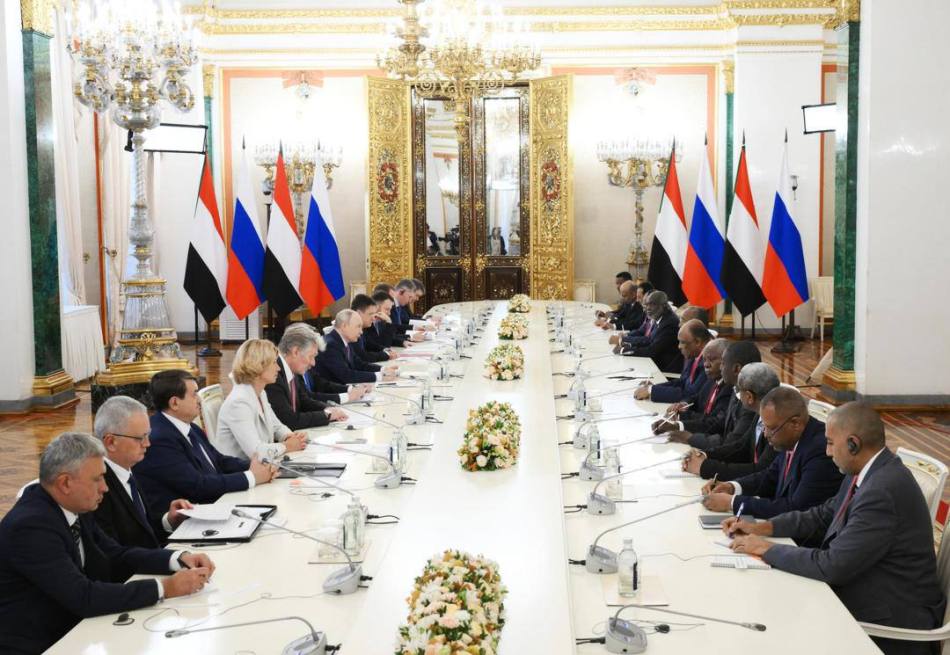
November 3, 2026 (MOSCOW) – Closed-door talks between Sudanese and Russian officials have reopened discussions on establishing a Russian logistics support point and naval base on the Red Sea coast.
During the Russia-Africa Summit in Moscow late last week, Sudan proposed creating a “free economic zone,” informed sources told Sudan Tribune.
The proposal serves as a civilian and logistical compromise to ease regional and international concerns over a Russian military base while ensuring Moscow a strategic foothold in the region.
Both countries have periodically denied new developments regarding a naval base in Port Sudan, stating that current talks stem from a 2020 agreement pending parliamentary ratification.
The potential base has raised concerns in the United States, European nations, Egypt, and Saudi Arabia due to its implications for Red Sea navigational security and global trade.
The Wall Street Journal reported last year that Sudanese military authorities had offered Russia its first naval base in Africa, overlooking vital maritime trade routes.
Separately, a high-level Sudanese delegation, including intelligence and defence industry chiefs, sought advanced Russian military supplies, including drones and air defence systems.
In exchange for the military equipment, ammunition, and spare parts, Sudan offered Moscow extensive concessions in gold, copper, and other mineral mining.
The Sudanese delegation urged Russia to take a stronger stance in support of the Sudanese army’s international legitimacy and praised Moscow’s backing at the U.N. Security Council.
Russian President Vladimir Putin, during recent talks with Sudanese army chief Abdel Fattah al-Burhan, emphasized the need to halt hostilities and transition to a political settlement.
Putin expressed Moscow’s readiness to act as a mediator or guarantor to help stabilize regional conflicts surrounding Sudan.
Burhan announced Sudan’s willingness to allocate the proposed Red Sea free economic zone for Russian facilities to store wheat, fuel, and other supplies.
The two sides also pledged to deepen cooperation in education, healthcare, infrastructure, and digital development, emphasizing the need for a Sudanese-led democratic transition once stability is achieved.