
Sudanese official briefs UN envoy on efforts to stabilize Abyei
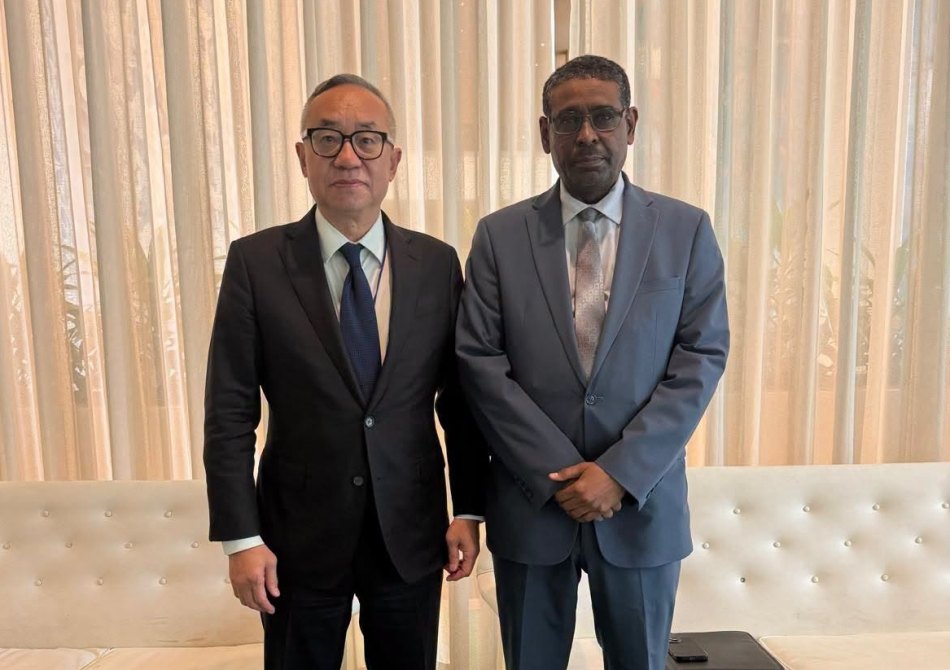
November 7, 2026 (UNITED NATIONS) – A Sudanese official on Saturday briefed the United Nations special envoy for the Horn of Africa on government efforts to promote stability in the disputed Abyei region.
The meeting followed an exchange between Khartoum and Juba at the U.N. Security Council regarding a report by the U.N. secretary-general on Abyei elections and the presence of armed forces.
Sudan’s acting chargé d’affaires to the U.N., Abu Zeid Shams al-Din, met with the envoy, Guang Cong, the Ministry of Foreign Affairs said in a statement.
The meeting addressed developments in Sudan and efforts regarding Abyei, including resuming Joint Political and Security Mechanism meetings, forming a higher committee, and appointing a new head of the Joint Oversight Committee.
The two sides discussed the Horn of Africa, de-escalation, and respect for international law and state sovereignty, the ministry said.
Cong praised the Sudanese government’s steps and emphasized dialogue as the best path to stability, according to the ministry.
In a Thursday briefing to the Security Council, Cong said he met with senior officials in Sudan and South Sudan to address tensions over Abyei’s participation in upcoming elections.
He said disputes over electoral constituencies have fueled tensions between the Ngok Dinka and Twic Dinka tribes.
Cong added that misinformation, hate speech, and the alleged mobilization of proxy armed groups are exacerbating the situation.
Increasing movements by the paramilitary Rapid Support Forces (RSF), the South Sudanese army, and other armed elements within Abyei threaten its demilitarized status, Cong said.
Sudan rejected a July 13 decision by South Sudan’s National Election Commission to include Abyei in constituencies for general elections scheduled for Dec. 22.
Khartoum and Juba have failed to agree on voter eligibility for a self-determination referendum stipulated in a 2005 peace agreement, after the Ngok Dinka tribe rejected Misseriya nomad participation. However, the agreement provides that Abyei remains Sudanese territory until the vote is held.
The U.N. Security Council established the United Nations Interim Security Force for Abyei (UNISFA) in June 2011 to support dialogue and restore stability along the disputed border.
UN warns of Abyei election risks
During a briefing to the Security Council, United Nations Under-Secretary-General for Peace Operations Jean-Pierre Lacroix stated that the security landscape in the Abyei region is evolving and becoming increasingly complex.
Lacroix highlighted growing political sensitivities surrounding Abyei’s governance arrangements and its potential participation in South Sudan’s planned elections.
He noted that the reported appointment of a representative to the Abyei Joint Oversight Committee by the Rapid Support Forces risks creating competing claims of authority and representation.
Such actions could undermine mechanisms agreed upon by Sudan and South Sudan, drawing Abyei further into the dynamics of the broader Sudanese conflict.
The Under-Secretary-General cautioned that parallel claims to representation could erode confidence in established institutions, complicate consensus-building, and elevate tensions among all actors.
The briefing also detailed severe recent incidents, pointing to violence in and around the Amiet Common Market on September 15 that resulted in 124 fatalities.
Additionally, drone attacks on October 19 introduced a new and concerning dimension to the region’s fragile security environment.
Despite these escalating challenges, Lacroix noted that overall recorded security incidents declined by approximately 32 per cent during the reporting period compared to the same timeframe in 2025.
He also affirmed that local peace mechanisms played an indispensable role in containing tensions, a contribution deemed particularly vital given the continuing uncertainty regarding Abyei’s final status.