
Ahmad Haroun’s Arrest: A genuine move or an act to contain embarrassment?

Faisal Mohamed Salih
Prominent Sudanese journalist
ٍFormer information and culture minister
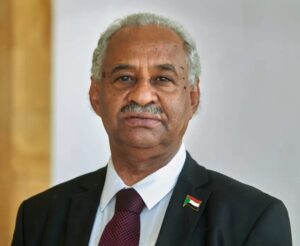 The arrest of Ahmad Haroun, Chairperson of Sudan’s National Congress Party (NCP), has raised questions about why it happened, who ordered it, and what may happen next.
Haroun was a leading figure in the Islamic Movement and the National Congress Party, which ruled Sudan for thirty years (1989–2019). He is known for his alleged role in war crimes and crimes against humanity committed in Darfur, western Sudan, which led to his indictment by the International Criminal Court (ICC) in April 2007.
Following the fall of the regime in the popular uprising of 2019, Haroun was arrested and remained in prison until the outbreak of war in April 2023, when prisoners were released.
While former President Omer al-Bashir faced trial, Ali Karti was chosen to lead the Islamic Movement, and Haroun was appointed Chairperson of its political wing, the NCP.
Haroun was both a political and security operative within the former regime. He played an important role during the Darfur war (2003–2019), particularly in recruiting and arming loyalist militias to fight alongside the Sudanese army. At the time, Haroun coordinated with Musa Hilal and Mohamed Hamdan Dagalo (Hemetti), leaders of local militias, as well as with army units in Darfur commanded by senior military officers, including Abdel Fattah al-Burhan.
Years later, Hemetti and al-Burhan would emerge as the leaders of the Rapid Support Forces (RSF) and the Sudanese Armed Forces (SAF), respectively. They are now the two central figures in the war that engulfed Sudan in April 2023.
During the transitional period (2019–2021), the ICC engaged in dialogue and consultations with the Sudanese government and the Sovereignty Council, led by al-Burhan and Hemedti, over handing over individuals wanted by the Court. These included former President Omar al-Bashir, former Defence Minister Abdel Rahim Mohamed Hussein, and Ahmad Haroun.
The civilian government announced its decision to hand over the wanted individuals to the ICC under the Juba Peace Agreement. The military component of the government did not openly reject the decision. Indeed, it met with ICC representatives in Khartoum but continued to manoeuvre around the issue without taking concrete steps toward implementation.
Since his release from prison, Haroun had apparently enjoyed considerable freedom of movement within Sudan, travelling between Kassala, Port Sudan and River Nile State, where he met with party leaders and supporters, while carefully avoiding media exposure, despite knowing that his movements and activities would be of considerable interest to the media.
Last week, he appeared in a rare interview with a podcast platform broadcasting from Turkey, although the interview itself was conducted in Khartoum. Haroun spoke with the confidence and tone of someone representing an authority with political influence and control. While he did not directly criticise al-Burhan, he outlined their perspective on how the war should end and what should happen afterwards.
His public appearance appears to have embarrassed General al-Burhan’s government, which has repeatedly denied having political or organisational links with the Islamists, while occasionally directing criticism at them. It is reasonable to assume that this embarrassment was a major factor behind Haroun’s arrest, although the next steps remain difficult to predict.
Al-Burhan is well aware of the political costs and international implications of his alliance with the Islamists. This may suggest he could use the opportunity to distance himself from them, at least politically, to reassure the international community and regional allies. However, the prospect of handing Haroun over to the ICC appears unrealistic, as al-Burhan still depends on the Islamists for political and military support.
The most likely course of action by al-Burhan would therefore be to keep Haroun in detention for a period of time, effectively silencing him and preventing other NCP leaders from making public appearances. This would give the General some breathing space while he seeks a way out of his increasingly difficult position and a solution to the ongoing war.
https://www.icc-cpi.int/darfur/harun
https://sudantribune.com/article/263338