
Ending Sudan’s war is not a mandate to rule
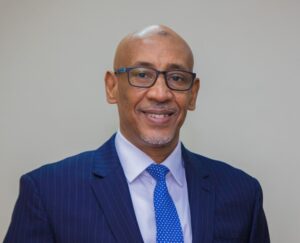
Dr Mohamed Elmunir Ahmed Safieldin
As international efforts intensify to end the war, foreign governments and mediators face an important choice: whether to help Sudanese build a genuinely national process or, in the understandable search for a manageable agreement, reduce Sudan’s political future to negotiations among a small number of familiar political actors.
A politically convenient settlement is not necessarily a politically legitimate one. And a settlement made easier by excluding important constituencies may prove much harder to sustain.
According to accounts circulating in Sudanese media and diplomatic discussions, the Sumoud coalition proposed during a meeting with the Quintet that a future political dialogue be structured around three principal blocs: Sumoud, Tasis and the Democratic Bloc. If accurately reported, the proposal deserves serious scrutiny.
The issue is not whether these groups should participate. They should. The question is why three political blocs, none possessing an electoral mandate from the Sudanese people, should become the principal framework through which the future of an entire country is negotiated.
Three blocs are not a national mandate
Sumoud, Tasis and the Democratic Bloc occupy sharply different positions today, yet all three have roots in the alliances and divisions that developed around the Forces of Freedom and Change, widely known as FFC/Qaht, during and after the transition.
Their differences are real. But if those differences concern fundamental questions of democracy, war, peace and the nature of the Sudanese state, why should these three formations suddenly constitute the principal architecture for determining Sudan’s future? Conversely, if their differences can now be set aside when discussing a new political order and the allocation of authority, Sudanese are entitled to ask how much of their earlier conflict concerned competing visions for Sudan and how much concerned competition for political influence.
No political formation currently possesses an electoral mandate to speak for the entire country. International recognition, diplomatic access and participation in foreign-sponsored negotiations cannot substitute for such a mandate. External visibility cannot confer legitimacy that the Sudanese people themselves have never granted.
Ending the war and deciding Sudan’s future are two different tracks
Any credible peace process should distinguish clearly between a Security Track and a Political Track.
The Security Track must focus on ending the war. It must be centred on the two warring parties, because they have the immediate capacity to continue or halt the fighting. Its priorities should be cessation of hostilities, protection of civilians, humanitarian access and the security arrangements necessary to move the country away from armed confrontation.
The Political Track, however, is fundamentally different. The parties that have the power to wage war do not, by that fact, acquire the right to determine Sudan’s political future. The Political Track should therefore bring together a much broader spectrum of Sudanese political and societal forces to confront the root causes that have repeatedly driven the country into conflict and to build agreement around the foundations of a peaceful, democratic and inclusive state.
This distinction is critical. The Security Track should answer: How do we stop the war? The Political Track must address the much larger question: How do we build a Sudan in which war is not repeatedly reproduced?
That requires discussion not simply of who governs during another transition, but of the deeper questions facing the Sudanese state: the relationship between civilian authority and the military; the establishment of a single national army; justice and accountability; the distribution of power and resources; relations between the centre and the regions; citizenship and equal rights; democratic institutions; and ultimately the restoration of the Sudanese people’s right to choose their government through credible elections.
The two tracks should reinforce one another, but they should not be confused. Allowing the participants in the Security Track to dominate the Political Track risks converting military power into political entitlement. Conversely, allowing a small group of civilian political actors to monopolise the Political Track risks replacing military exclusion with political exclusion.
International mediators should therefore resist the temptation to treat the actors needed to stop the fighting as the same actors entitled to design the post-war state. Their task should be to help the warring parties end hostilities while enabling a genuinely broad Sudanese political process to address the causes of the conflict and define the principles of the peace that should follow.
Ending the war requires negotiating with those fighting it. Building the peace requires engaging the society that must live with the settlement.
Revolutionary legitimacy is not a permanent political mandate
The same principle applies to the legacy of the December Revolution. The revolution is not the property of one coalition. Its legitimacy belongs ultimately to the Sudanese who made it and sacrificed for it.
FFC/Qaht acquired considerable political legitimacy after 2019 through its association with the revolution. But revolutionary legitimacy cannot become a permanent entitlement to political authority. It must be sustained by conduct consistent with the principles from which it arose.
Here the contradictions of the transition remain deeply relevant:
One of the revolution’s most powerful demands was that the military leave politics and the Janjaweed be dismantled. Yet the transition ultimately rested upon power-sharing with the armed establishment, with the commanders of both the Sudanese Armed Forces and the Rapid Support Forces occupying leading positions in the Sovereignty Council.
But perhaps the most painful contradiction concerned justice for the victims of the violent dispersal of the sit-in outside the military headquarters on 3 June 2019.
The protesters there stood at the heart of the struggle for civilian government. Their sacrifices helped create the moral and political foundation upon which civilian forces claimed the right to lead the transition. Yet after the massacre, political power-sharing with the military establishment moved forward while credible accountability for the victims remained unrealised.
This contradiction is difficult to escape: political arrangements for sharing power achieved a finality that justice for those whose sacrifices helped make the transition possible never did. For the victims and their families, justice could not reasonably be treated as merely one transitional objective among many. Without it, the revolution’s promise of freedom, peace and justice remained fundamentally incomplete.
This raises an uncomfortable question for FFC/Qaht’s continuing claim to revolutionary legitimacy: a political coalition cannot indefinitely derive legitimacy from the martyrs of a revolution while accepting political arrangements under which accountability for their deaths remains unresolved.
The point is not to deny FFC/Qaht’s contribution to Sudan’s democratic struggle. It is to establish a principle that should apply to everyone: revolutionary legitimacy must be preserved through fidelity to revolutionary and democratic principles. It cannot substitute indefinitely for renewed public consent.
The December Revolution is bigger than FFC/Qaht and bigger than its opponents.
Dialogue cannot outrun justice
That lesson is equally relevant to the political settlement now being contemplated.
Engagement between political adversaries may be necessary to end the war. But reconciliation cannot become another mechanism for distributing political power while postponing accountability.
This question becomes particularly sensitive when Darfurian movements within the Democratic Bloc contemplate participation alongside Tasis, given Tasis’s political association with the RSF and the grave allegations surrounding violence against civilians during the current war. The answer is not to reject dialogue. It is to insist that dialogue does not outrun justice.
Sudanese communities that have suffered in this war are entitled to know where accountability will sit within any settlement and what will prevent negotiations from becoming another elite bargain over political authority.
Sudan should not again accept a formula in which political accommodation moves faster than accountability, victims become secondary to negotiations, and justice is deferred in the name of political expediency.
International actors should facilitate, not select
Foreign governments and mediators therefore carry a particular responsibility. Sudan unquestionably needs international engagement. External actors can help stop the war, address humanitarian suffering, facilitate dialogue and eventually support reconstruction. But a crucial difference exists between helping Sudanese reach a settlement and deciding which Sudanese are entitled to negotiate that settlement on behalf of everybody else.
For international mediators, a compact agreement among familiar interlocutors may appear more manageable than engaging Sudan’s complicated political and social landscape. But convenience is not legitimacy.
International diplomacy should therefore facilitate, not select. Diplomatic access should not be mistaken for popular legitimacy. Participation in ceasefire negotiations should not automatically confer entitlement to political authority. Above all, any transitional arrangement should preserve a credible path toward restoring the Sudanese people’s right to decide who governs them.
Foreign governments should be particularly careful not to allow the understandable urgency of ending Sudan’s war to pre-determine the composition of its future political order. International support can help create the space for a Sudanese settlement. It cannot manufacture the domestic legitimacy that such a settlement ultimately requires.
A dialogue that does not fear its own people
Sudan therefore needs a sufficiently broad Political Track that brings political parties into dialogue with the country’s wider social forces: women and young people, displaced communities and refugees, civil society, professionals and academics, traditional and religious leaders, and other constituencies whose lives will be shaped by the political order that emerges from this war.
This does not require everybody to negotiate everything simultaneously. That is precisely the value of distinguishing the two tracks. The warring parties can negotiate an end to hostilities through the Security Track while a broader Sudanese process addresses the political and institutional failures that have repeatedly produced instability.
The Political Track must therefore go beyond the question of who occupies government positions during another transition.
Why has political competition repeatedly become militarised? How can Sudan establish a single national army and a state governed by institutions rather than armed centres of power? How can justice and accountability be secured? How should the relationship between the centre and the regions be reconstructed? How can citizenship and equality before the law become foundations of the state? And how can Sudan prevent the next political settlement from planting the seeds of another war?
These questions cannot legitimately be answered by three blocs, or any other limited collection of political organisations, on behalf of an entire nation.
After so much death, destruction and displacement, Sudan cannot afford simply to reconstruct the political arrangements that preceded the war under different names.
Nor should the international community, in its understandable urgency to end the conflict, help produce a settlement whose apparent stability depends upon excluding Sudanese from decisions about their own future. The central question should no longer be: Who gets to return to power? It should be: How do Sudanese recover their right to govern themselves?
Let the question of who governs Sudan be settled through the ballot box, not through military force, elite bargains or decisions made in foreign capitals.
Sudan is not a prize to be divided among political alliances. It is a nation. And the ultimate right to determine its future belongs to the Sudanese people.