
Sudanese children forced into adult roles amid war and displacement
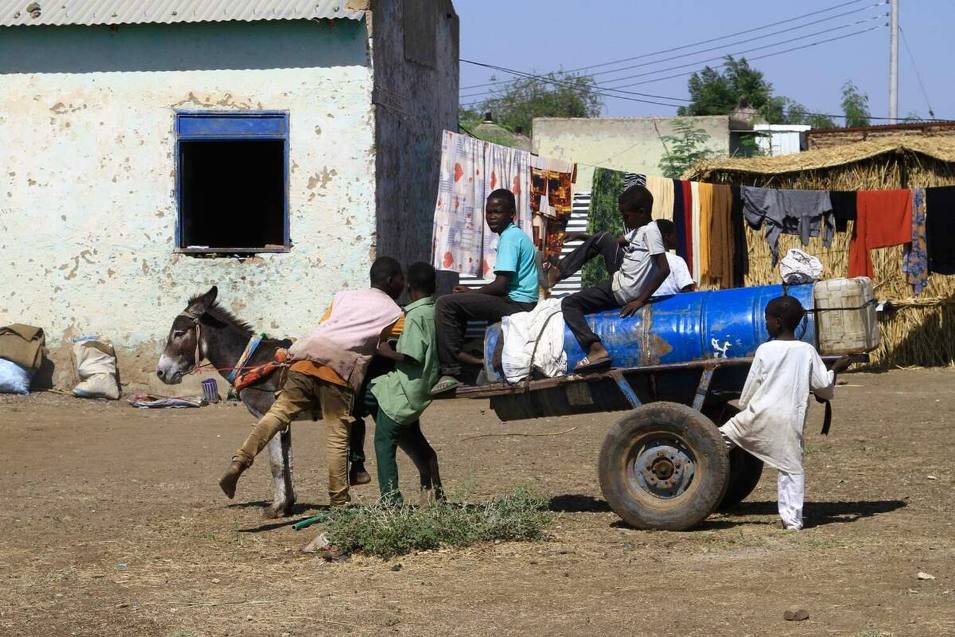
November 14, 2026 (KHARTOUM) – Fourteen-year-old Mujahid did not expect to become a man before completing his childhood.
Neither did 13-year-old Nemat imagine transforming from a child into a young mother caring for her siblings.
But the war in Sudan has imposed a harsh new reality on the country’s youth.
In many Sudanese homes, childhood is no longer a stage for play and learning.
It has become a period of early responsibility where children’s dreams are replaced by the daily struggle to survive.
Amid severe economic hardship and the profound social transformations caused by war and displacement, children are taking on roles unsuited for their age.
Some are forced to work to support their families, others must care for younger siblings, and millions have dropped out of school entirely.
Responsibilities beyond their age
In a residential neighbourhood in Khartoum North, Mujahid’s day begins before sunrise.
He organizes the household, then goes out looking for work to help his family.
He returns exhausted at the end of the day, his mind weighed down by the burden of living expenses.
“I dreamed like all children of becoming an engineer and spending my time with my friends, but circumstances made me think about how to help my family,” Mujahid told Sudan Tribune.
A young mother
Nemat, 13, found herself facing increasing household responsibilities after her mother was left to support the family alone.
“I wake up early to get my siblings ready and help around the house, and sometimes I have no time to review my lessons,” Nemat said.
She said she hopes to return to her old life, playing without worrying about household needs.
What she misses most is the time spent with friends, she added, dreaming of returning to school to continue her education.
Nemat’s case highlights a broader issue of delayed childhood across the country, where young girls bear the brunt of domestic burdens and unpaid care.
These responsibilities can severely impact their education, psychological well-being and normal development.
Dreams halted by displacement
For 15-year-old Ali, life changed rapidly.
He was a student who loved school and dreamed of continuing his education.
But displacement and the disruption to his family’s life made returning to the classroom nearly impossible.
Ali said the hardest part of the war is being away from his school and his friends.
His mind is now preoccupied with securing housing, food and basic needs, rather than his academic future.
As his family attempts to adapt to a new environment, Ali faces an uncertain path where educational aspirations take a back seat to daily survival.
His story shows how displacement extends beyond losing a home, leaving educational and social gaps that are hard to bridge without targeted intervention.
Childhood in hospitals
Twelve-year-old Maryam faces a different challenge.
She spends most of her time with her sick mother, managing household chores while also caring for her younger siblings.
Maryam said she loves her mother and cannot leave her alone, but admits she often feels tired and longs to play and attend school like other children.
“I hope my mother recovers and we return to our normal lives,” she said.
Millions at risk
Abdel Qader Abu, secretary-general of the National Council for Child Welfare, said about 71% of Sudan’s children live in dangerous situations due to the war’s humanitarian and security fallout.
Abu told Sudan Tribune that between 11 and 12 Sudanese states are classified as safe, with a safety rate exceeding 85%.
However, he noted that attacks by the Rapid Support Forces (RSF) and allied militias have damaged numerous schools and deepened poverty for Sudanese families.
Demographic tracking by the council shows that between 60% and 65% of school-age children are currently out of school, Abu said.
Many of these children now work as assistants on public transport buses, in artisanal gold mining, or in local markets and restaurants.
The council is working with national civil society organizations and U.N. agencies in safe states to convert estimated statistics into precise field data, he added.
The goal is to map children’s basic needs across the country, focusing on food, education and care.