
Sudan’s endless war: Why its leaders cannot survive without violence
By Tayfor Elamin
For decades, our country has faced tremendous political upheaval. When our government faces political challenges, it refuses to pursue political solutions and instead defaults to violence. From the 1955 mutiny to the events of 1983, 2003, 2011, and 2023, as well as the crackdowns on peaceful protests, the pattern remains the same. Extreme violence is the standard reaction to political disputes. When the ruling regime faces a choice between relinquishing power and spilling blood, it has repeatedly and consistently chosen violence. This is not just incompetence; it is a complicit reliance on brutality to maintain control.
President Jaafar Nimeiry, who came to power in May 1969 through a military coup, committed atrocities against his opponents—specifically supporters of the Umma Party—resulting in the deaths of thousands of Al-Ansar at Aba Island in his early years of governance, alongside the execution of Communist Party leaders. In September 1983, Nimeiry made the catastrophic decision to impose Sharia law, turning the state against non-Muslims, including Christians and Copts, and suppressing indigenous customs and traditions. In January 1985, he executed political leader Ustaz Mahmoud Mohamed Taha for apostasy over his political views. Omar al-Bashir’s regime later codified this in Article 126 of the criminal code. The September 1983 laws violated the 1972 Addis Ababa Agreement, which had previously brought peace to South Sudan. These decisions reignited a civil war that claimed over two million lives between 1983 and 2002. This was not a historical coincidence; it was a deliberate political choice by Nimeiry’s regime, a playbook followed by his successors.
Omar al-Bashir, who seized power via a military coup in June 1989 backed by the Islamic Front, targeted political opponents through torture, extrajudicial killings, and unlawful detention. He orchestrated the worst humanitarian crises in the world in South Sudan in 1998 and in Darfur in 2004. The reality is that since Sudan’s independence, our leaders have operated on the same calculation: violence is not a failure of governance; it is the governance. Thus, our leaders have never viewed violence as a problem to solve, but rather as an essential tool to stay in power. Each new regime has followed the same violent path, convinced that brutality would secure their throne.
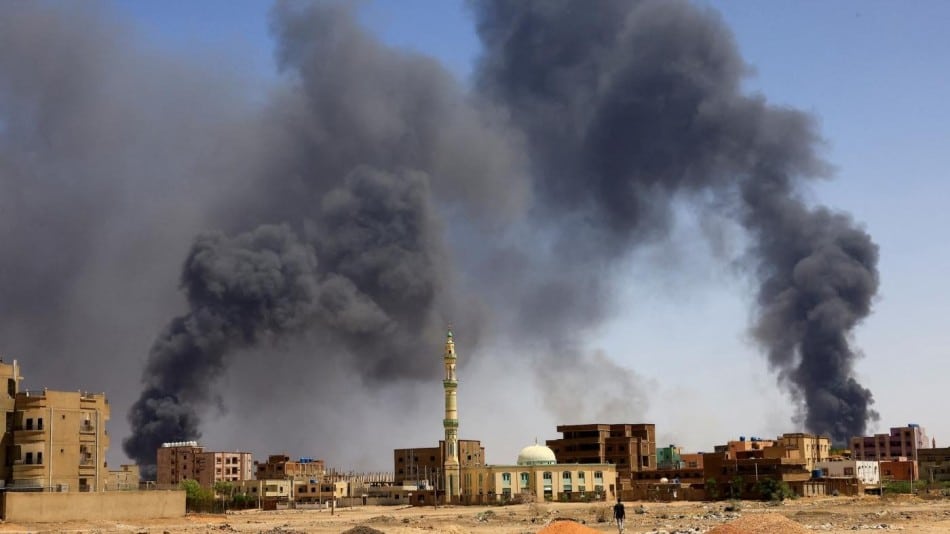
In the 2023 war, Abdel Fattah al-Burhan and Mohamed Hamdan Dagalo (Hemedti)—who had jointly overthrown the transitional government led by the Forces of Freedom and Change (FFC)—turned against each other. This triggered a devastating conflict between the Sudanese Armed Forces (SAF) and the Rapid Support Forces (RSF). This power contest has revealed a dark truth: our military generals would rather burn the country to the ground than let civilian elites rule it. They have become Sudan’s greatest threat, prioritizing their survival over the protection of the state. This is the logical outcome of a political culture that treats power as something to be maintained at any cost, allowing military generals to amass more influence than the political elites who are supposed to govern.
Following the 2021 military coup against the FFC government, the FFC made significant efforts to de-escalate rising tensions between the SAF and the RSF. The FFC and the Sudan Bar Association (SBA) facilitated the Framework Agreement, signed on December 5, 2022, by Al-Burhan and Dagalo. On April 8, 2023, leaders of both factions met, mediated by the FFC, to defuse the situation. They agreed to a follow-up meeting the next day. RSF representatives and FFC mediators attended, but SAF representatives and Al-Burhan did not appear. Later, after the war erupted, political leader Taha Osman publicly stated that Al-Burhan was unreachable. This was the final missed opportunity to prevent a seemingly inevitable war.
Dagalo has claimed he warned Al-Burhan that political tensions were pushing the country toward collapse, to which Al-Burhan allegedly replied, “Let it happen. It will come back to us.” While Dagalo shared this anecdote only after the war erupted, it is highly likely true. It perfectly illustrates a willingness to plunge the country into war, driven by a confident belief that power would eventually return to the military elite.
Sudan’s leaders understand that violence serves their best interests in preserving power. When conflict erupts, people spontaneously retreat into tribal identities to seek protection from their ethnic groups. Because our political elites consistently present themselves as ethnic protectors, they make themselves indispensable. In this way, violence operates as a deliberate strategy to maintain power.
This pattern is glaringly visible today. In the north, communities have largely united behind Al-Burhan, viewing him as the guardian of their ethnic interests. Meanwhile, in Western Sudan, many tribes have rallied around Hemedti and the RSF for the exact same reason. Political loyalty has devolved into ethnic loyalty. The state has effectively fragmented into competing tribal alliances, each fighting not for Sudan, but for their own group. People from marginalized areas are similarly divided: some join the RSF, viewing them as champions of the periphery, while a vast number fight alongside the SAF because they remember the RSF as the Arab militia used by Al-Bashir’s regime to displace them since 2004.
Numerous foreign actors are involved in the Sudan conflict, fueling the violence by funding warring parties to maintain leverage and protect their own interests. Reports indicate support for the SAF from Egypt, Saudi Arabia, Turkey, and Qatar, while the UAE has supported the RSF. Although regional and international actors have made significant efforts to negotiate a ceasefire, both sides have used the talks merely as tactical breaks to rearm and reposition. Al-Burhan has consistently acted in bad faith, refusing constructive dialogue, and while Hemedti has frequently expressed a willingness to engage, neither side has shown a genuine commitment to peace. To them, violence is a strategy to maintain, not a crisis to resolve.
Conflict and compromise are choices; our leaders have chosen conflict, making violence their most effective instrument of power. These generals have proven themselves to be both complicit in mass atrocities and fundamentally incompetent at governance. As long as these wars continue to serve our leaders’ interests, Sudan will remain trapped in this deadly cycle.
The question is no longer whether these leaders can maintain power without violence, but whether they can survive without feeding on it.
Tayfor Elamin is a Sudanese human rights advocate and recipient of the 2018 Civil Society Leadership Award from the Open Society Foundation. He holds a master’s degree in international social policy from the University of Nottingham, UK, and a bachelor’s degree in development studies from Cavendish University Uganda.