
Sudanese face starvation as most Khartoum charity kitchens shut down
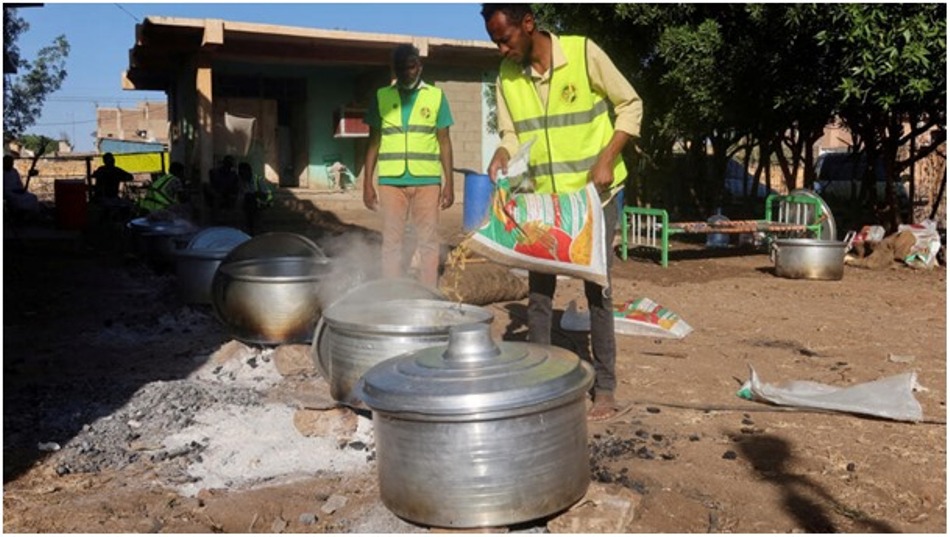
November 21, 2026 (KHARTOUM) – Millions of Sudanese are on the brink of starvation as a deepening food crisis and economic collapse force most community charity kitchens in the capital, Khartoum, to close their doors.
A sharp depreciation of the national currency, soaring prices for basic goods, and acute fuel and electricity shortages have paralyzed markets and wiped out household purchasing power. Hundreds of families who relied on communal kitchens, known locally as takaya, as a last resort are now being turned away.
Hiyam Mohamed Fadl, a humanitarian activist in southern Khartoum, said most residents who depend on the kitchens are returning empty-handed because many facilities have shut down or run out of food amid surging demand.
She said the closures reflect the scale of humanitarian deterioration facing families in the capital as the war drags on.
In the Al-Salha neighbourhood of Omdurman, a mother of young children said her family’s income no longer covers basic necessities. She said residents are no longer looking for regular meals, but for anything to stave off hunger.
Most children in the area have lost weight, and their health has declined, she said, adding that some families eat only one meal every two or three days.
“The charity kitchens that used to save us have closed their doors or run out of simple food before most people arrive, and exorbitant prices have made buying a loaf of bread an impossible dream,” she said.
United Nations agencies and the Integrated Food Security Phase Classification (IPC) say Sudan is experiencing the world’s worst hunger and displacement crisis.
According to 2026 estimates by the Food and Agriculture Organization (FAO) and the World Food Programme (WFP), between 19.5 million and 21 million people—nearly half of Sudan’s population—face acute food insecurity.
IPC data shows that between 5.1 million and 6.3 million people are in emergency or catastrophic levels of hunger, with 14 areas at direct risk of famine, mainly in North Darfur, South Darfur, and South Kordofan, as well as Khartoum.
UNICEF and the WFP estimate that about 825,000 children under five suffer from life-threatening severe acute malnutrition, while more than 4 million women and children overall. The WFP said in November that severe funding shortfalls have already cut 900,000 people off from life-saving food aid, warning it urgently needs $520 million to cover humanitarian needs through April 2027.
Sudan’s government denies there is a famine or food shortage in safe areas. Agriculture and Irrigation Minister Esmat Qurashi said food security indicators remain strong, noting that cultivated areas rose to about 31 million feddans after secure localities in North and South Kordofan resumed production.
According to the government’s 2026 Sudan Food Security Report, production of main cereals in the 2025/2026 season reached about 5.25 million metric tons—a 27% increase compared with the start of the war—with a sorghum surplus of roughly 717,000 tons. The Agriculture Ministry attributed an overall cereal deficit of about 2.955 million tons to a historic wheat gap typically covered by imports.
Qurashi accused the paramilitary Rapid Support Forces (RSF) of disrupting about 20 million feddans in Darfur and Kordofan by blocking farmers from planting, looting harvests, and refusing seed distributions. In a meeting with the WFP last week, he reiterated the government’s rejection of any food security assessments published without the participation of state institutions in data collection and verification.
Political science professor Mohamed Idris said the crisis is man-made rather than the result of natural disaster or resource scarcity, accusing warring parties of turning food into a weapon of war.
Idris criticized the prioritization of military spending and battlefield victory over humanitarian truces and agricultural support. He said the warring parties bear direct legal and moral responsibility and urged an unconditional ceasefire, unhindered humanitarian access, and urgent international funding to close the aid gap.