
Chemical weapons watchdog urges states to share evidence on Sudan allegations
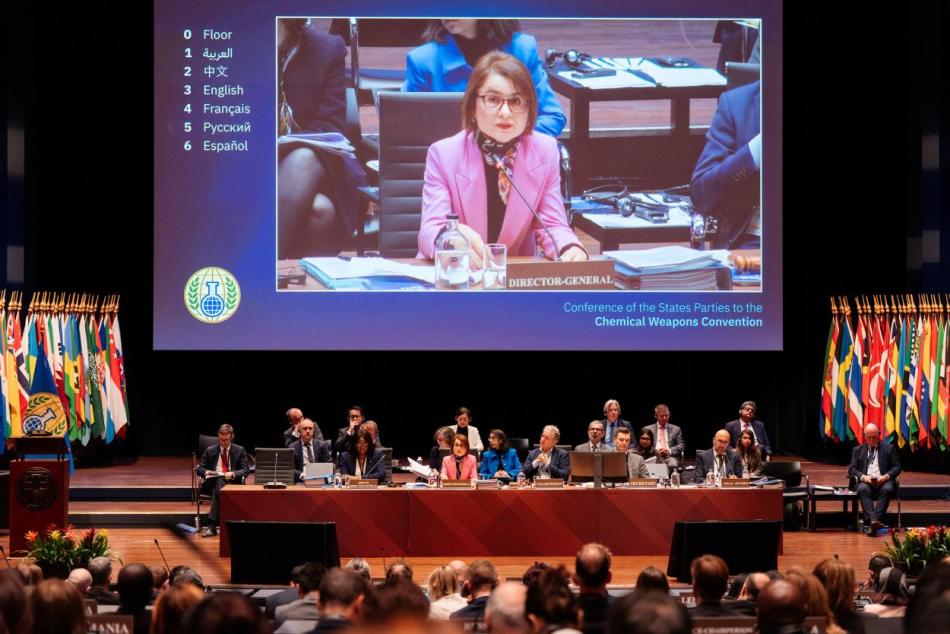
November 25, 2026 (THE HAGUE) – The head of the global chemical weapons watchdog urged member states on Wednesday to share any evidence regarding allegations that banned arms were used in Sudan’s civil war, expressing disappointment that no detailed information has been submitted to the agency.
Speaking at the 31st Session of the Conference of the States Parties in The Hague, Organisation for the Prohibition of Chemical Weapons (OPCW) Director-General Sabrina Dallafior said the agency’s Executive Council is reviewing the file after states requested clarifications from Khartoum under Article IX of the Chemical Weapons Convention.
“It is disappointing that despite concerns being raised in the OPCW and media reporting of the allegations, so far, no detailed information has been shared with the Secretariat,” Dallafior said, urging states holding relevant material to submit it to the agency, confidentially if necessary.
The remarks come amid heightened scrutiny over Sudan’s conflict between the Sudanese Armed Forces (SAF) and the paramilitary Rapid Support Forces (RSF), which began in April 2023. The United States formally determined last year that the Sudanese military had used chemical weapons and imposed sanctions, while recent media investigations have detailed allegations of chlorine production and deployment.
Sudan has specifically faced accusations that its military deployed chemical weapons against the RSF in Khartoum in April 2024. Khartoum has consistently denied the claims and called for international verification teams to investigate.
Dallafior said she had met with Sudanese representatives to offer technical assistance from the OPCW Technical Secretariat to support a national investigation, adding that she looks forward to the findings being circulated among member states.
During Wednesday’s session, a high-level Sudanese delegation reaffirmed Khartoum’s commitment to the convention’s principles and international security.
A government statement read to the conference said authorities had treated the allegations with seriousness and responsibility, noting that a specialized national committee had begun verifying the claims in accordance with Sudan’s treaty obligations.
The latest developments follow earlier diplomatic pushback from Khartoum. On June 27, Sudan’s Permanent Representative to the United Nations, Al-Harith Idris, rejected the accusations against the military, stating no evidence had been presented to substantiate them.
Idris argued that investigations into chemical weapons must be handled by specialized bodies, primarily the OPCW.
He added that Sudan had formed a national committee to coordinate with the United States on the matter, noting that a U.S. team had previously visited Sudan, inspected four alleged sites, and collected samples without producing any proof of chemical weapon use by the military.