
Machar calls on nations to help reconcile communities in South Sudan
January 9, 2012 (MOMBAI-INDIA) – The Vice President of the Republic of South Sudan, Riek Machar Teny, has appealed to international organizations to help his country reconcile its various communities.

According to the Vice President’s Press Secretary James Gatdet Dak, Machar said in his keynote speech at the conference on Monday that his country was facing a lot of challenges in the area of reconciliation between communities.
Since gaining independence from the main homeland Sudan in July last year as a result of the 2005 Comprehensive Peace Agreement (CPA), the government of South Sudan has struggled to assert authority and control over its territories, with cattle raids and counter attacks killing hundreds and displacing thousands of people.
South Sudan has in the last week plunged into an episode of violence that saw two tribal communities in Jonglei State exchanging attacks that led so far to the death of more than 3000 people.
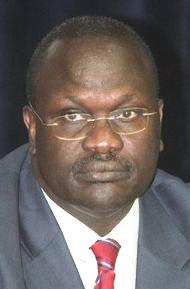
Machar said his country was developing better ways to move towards democracy and good governance, pointing out that a constitutional making process has already kicked off with participation of various political parties and other stake holders.
On corruption, he said the government has developed a zero tolerance policy to combat it by introducing legal and institutional measures to fight it while applying to join the Extractive Industries Transparency International (EITI) in order to assist South Sudan in fighting corruption.
In the last six years, billions of dollars are believed to have been lost in corruption scandals. Despite efforts to address the issue, no South Sudanese official has ever been prosecuted for graft.
Machar told the conference that South Sudan has made a lot of achievements for the last six years of interim period of the CPA, saying one of the legacies of the CPA period is the successful conduct of the January 2011 referendum that gave birth to the new nation.
Machar said the country is trying to manage the expectations of the people in and invited the countries to invest in South Sudan in order to help meet the expectations of the people.
(ST)