
Burhan’s embrace of the Quad: A ploy to restore the old regime?
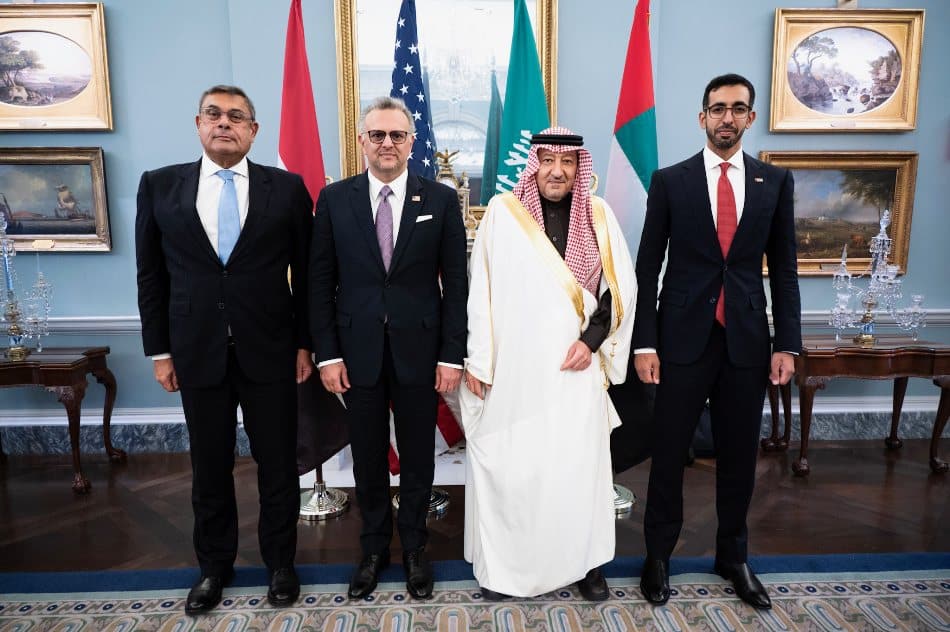
Acceptance of the “Quartet”… and Emptying It of Its Substance!!
“And do not be like she who untwisted her spun thread after it was strong, taking your oaths as means of deception among yourselves.” Qur’an 16:92
by Dr Omer Elgarrai
The first statement issued by the Quartet was met with unprecedented acceptance from the Sudanese people across all sectors. It was endorsed by Sumood, by Ta’sees, and by various political parties — except for those orbiting around the remnants of the former regime or influenced by their rhetoric, such as the Communist Party.
This widespread acceptance was due to the statement’s clarity in defining the problem and its honest, fact-based approach to proposing solutions — far removed from the media deception and political trickery that characterize the false propaganda of the Muslim Brotherhood’s media outlets.
It was also the first international document to explicitly name the Muslim Brotherhood, holding them responsible for prolonging the war and excluding them from any role in the transitional phase that would follow a ceasefire.
The Statement Included the Following Points:
• The sovereignty, unity, and territorial integrity of Sudan are essential for achieving peace and stability.
• There is no viable military solution to the conflict, and the current situation only generates unacceptable suffering and risks that threaten peace and security.
• The aspirations of the Sudanese people must be met through the establishment of an independent, civilian-led government with broad legitimacy and accountability.
• The Sudanese people themselves must determine Sudan’s future governance through an inclusive and transparent transition process free from the control of any warring faction.
• Sudan’s future cannot be dictated by violent extremist groups that are part of or clearly linked to the Muslim Brotherhood, whose destabilizing influence has fueled violence and instability across the region.
As these points make clear, the statement prevents the Muslim Brotherhood from returning to power — whether under Burhan’s umbrella or under the name of the National Congress Party. It also prevents Burhan, as one of the warring parties, from overseeing the transition process. Furthermore, it affirms the necessity of a civilian government — the very same principle enshrined in the earlier Framework Agreement, which the Brotherhood ignited this war to derail.
For that reason, the Muslim Brotherhood rejected the Quartet initiative, denounced it, and tried to incite public opinion against it. Abd al-Basit Abd al-Hadi declared: “We will not accept the Quartet settlement even if fires engulf the sands and trees of Sudan!”
Meanwhile, Naji Abdallah — one of the war’s chief instigators — claimed: “The Quartet led by America is planning to erase the religion of God from Sudan!”
Recently, President Abdel Fattah al-Sisi summoned Burhan to Egypt. The Egyptian side reported that the discussions focused on ending the war and persuading Burhan to accept the Quartet initiative, since Egypt is one of its members. It was also reported that Burhan met with Mossad Paulos, the U.S. presidential envoy, who likewise emphasized the importance of the Quartet, especially now that a growing international and regional coalition has joined it.
However, Burhan is not serious about accepting the Quartet. He is merely stalling until he finds an opportunity to backtrack — exactly as he did with the Framework Agreement. He may continue with talks to buy time, using Egyptian, Iranian, and Turkish support to strengthen his military position.
The plan is for him to publicly declare acceptance of the Quartet while allowing the Brotherhood’s media to attack it — and attack him — so that observers inside and outside the Quartet will believe he is at odds with them, when in fact they are coordinating roles.
His aim is to eventually bring Brotherhood elements into the Quartet framework — through the army and through political parties loyal to them.
He has already begun deceiving the American envoy. Mossad Paulos stated:
“Our main concerns with the Sudanese army relate to extremists, to the Iranian connection, and to arms supplies from Iran. We know the Sudanese army severed those ties some time ago and took commendable measures against some remaining extremists from the previous regime. These are good steps toward improving relations.”
In truth, none of that is accurate. The army has not severed its ties with Iran, nor has it taken any measures against members of the former regime. On the contrary, Burhan has further entrenched them within the state’s key organs.
If he truly intended to do what Mossad Paulos described, he would have handed over the individuals wanted by the International Criminal Court, rather than allowing them to run the state right under his eyes. And if he genuinely wished to distance himself from extremists, he would have dissolved their militias and confiscated their weapons.
These militias include:
• The Al-Baraa Ibn Malik Militia
• The Bright Dawn (Al-Fajr Al-Sati‘) Militia
• The Solid Structure (Al-Bunyan Al-Marsus) Militia
• The Lightning Strike (Al-Barq Al-Khatif) Militia
• The Al-Mu‘tasim Billah Militia
• The Popular Defense Forces
• The Popular Security Forces
• The Student Security Forces
• The Popular Police
• The Community Police
• The Sons of Ali Osman Militia
• The Sons of al-Bashir Militia
• The Sons of Nafi‘ Militia
• The Awad al-Jaz Militia
• The Ahmad Harun Militia
• The Ali Karti Militia
• The Salah Gosh Militia
As for President Abdel Fattah al-Sisi, his mission is not to convince Burhan to accept the Quartet — but rather to convince the Quartet to accept Burhan.
He has begun persuading Mossad Paulos that Burhan must remain in power to ensure that the Quartet can achieve a ceasefire and deliver aid to those in need.
Sisi wants the United States and the other Quartet countries to convince Sumood, Ta’sees, and all the civilian political forces that they need Burhan’s presence to make the army agree to end the war.
After that, political negotiations would take place to arrange a transitional setup — resulting in a civilian government, possibly headed by Hamdok, in partnership between the army and those political forces, while excluding the Rapid Support Forces (RSF) as a group “rebelling against the state.” The RSF would then be crushed militarily with overt Egyptian assistance under the pretext that it rejects peace.
The plan, therefore, is to reproduce the October 25, 2021 coup under the label of the Quartet Peace Agreement — and to bring the Muslim Brotherhood back to power under the cloak of the Quartet.
Egypt is playing this role out of direct self-interest. It seeks to secure more Nile water than the current treaty allows. This can only happen if Sudan is too distracted by war to develop or to consume its water share — or if it is ruled by a weak, fearful dictator totally subservient to Cairo, dependent on Egypt’s support against any armed faction or popular uprising that might threaten his rule.
Egypt wants a ruler it can blackmail — one who will surrender his country’s land and resources without protest, just as al-Bashir did when he gave up Halayeb, and as Burhan did when Egypt took gold, livestock, camels, and purchased Sudanese crops with counterfeit local currency without any reaction from him.
Now, Burhan has already reserved for Egypt massive postwar reconstruction projects in Sudan, estimated at $100 billion, without tenders, bids, or competition.
We saw an example of Egypt’s so-called “reconstruction” when engineer Abdel-Ghaffar Ahmed al-Amin protested their inflated cost estimates for maintaining the Halfaya and Shambat bridges. The amount they requested, he said, was enough to build three new bridges!
When he confronted them with undeniable facts, security agents intervened, arrested this patriotic and honest engineer, and took him to an unknown location. Who knows what they did to silence him? He may well have been assassinated, as hundreds of other honourable Sudanese have been.
It is the duty of patriots and honourable citizens to reject any attempt to distort or water down the Quartet Agreement and to empty it of its substance.
Sumood, Ta’sees, and all political parties must insist on the principles stated in the Quartet’s original declaration.
Any talk of peace that sacrifices justice, accountability, and the removal of criminals, extremist brigades, and the Muslim Brotherhood from the political scene must be rejected outright.
Despite their differences, Sumood and Ta’sees must stand together in any dialogue about Sudan’s political future — whether with the Quartet or with any regional or international body.
They must not fall for the Brotherhood’s attempts to divide them, thereby weakening the civilian front.
And they must raise high the banners of the glorious December Revolution and bring its memory back to the hearts of the Sudanese people.
omergarrai@gmail.com