
Human Rights Council demands urgent inquiry into alleged atrocities in El Fasher
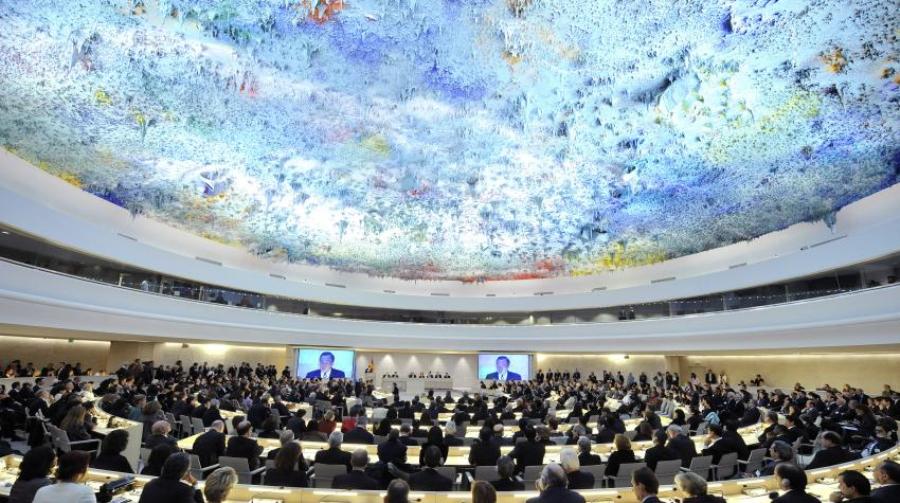
November 14, 2025 (GENEVA) – The United Nations Human Rights Council (HRC) held a special session on Friday to address the escalating human rights crisis in and around El Fasher, Sudan. The session adopted a resolution without a vote, mandating an urgent inquiry into alleged violations of international law committed in the area.
The resolution specifically requested the Independent International Fact-Finding Mission for the Sudan to immediately investigate recent atrocities, naming the Rapid Support Forces (RSF) and associated forces as responsible parties.
The Council’s resolution strongly condemned the escalating violence and reported large-scale atrocities following the RSF assault on the North Darfur capital. These acts include ethnically motivated killings, torture, summary executions, and the widespread use of sexual and gender-based violence as a weapon of warfare.
The Fact-Finding Mission was requested to identify all those believed to be responsible for the alleged abuses and support efforts to ensure the perpetrators are held accountable. The Council also requested an oral update from the Office of the High Commissioner for Human Rights (OHCHR) before its sixty-first session.
Atrocities foreseen and preventable
Volker Türk, the United Nations High Commissioner for Human Rights, opened the session with a stark address, stating that the atrocities unfolding in El Fasher were “foreseen and preventable – but they were not prevented.” He noted that since the RSF took control of the city, his office had documented mass killings, ethnically targeted executions, and sexual violence, a pattern seen repeatedly throughout the conflict.
Türk implored the international community to stand up against the atrocities, ensure humanitarian aid access, and called on all parties to engage in meaningful peace negotiations and transition to inclusive civilian rule.
Adama Dieng, Special Envoy of the African Union on the prevention of genocide and mass atrocities, echoed the sentiment, demanding an immediate end to the flow of weapons and fighters into Sudan, which he said directly contributes to the systematic targeting of specific identity groups.
Mona Rishmawi, a member of the Independent International Fact-Finding Mission, described much of El Fasher as a “crime scene,” adding that the horrors were the direct result of decades of impunity. She stressed that those who “backed, financed and armed this machinery of brutality” had the duty to halt it.
Sudan denounces RSF as ‘terrorist’ militia
Speaking as the concerned country, Hassan Hamid Hassan, Permanent Representative of Sudan to the United Nations Office at Geneva, denounced the RSF as a “criminal, terrorist militia.” He warned that equating the Sudanese Armed Forces with the RSF was wrong and accused the United Arab Emirates (UAE) of supporting the militia.
Niemat Ahmedib, President of the Darfur Women Action Group, shared her horror at the plight of people in El Fasher, stating that the RSF “could not bring peace to Sudan” and called on the Council to take serious, effective action to hold the malicious group accountable.
During the subsequent discussion, many Member States expressed alarm and shock at the reports and video footage of violations by the RSF. While many supported the robust accountability mechanisms and the resolution, urging an immediate end to the war, other speakers condemned external interference, stressing the need to respect Sudan’s sovereignty and rejecting solutions not accepted by the concerned country.
At the conclusion of the session, both the UAE and Chad exercised their right of reply, denying statements made against them regarding the support or facilitation of arms to the RSF.