
Ethiopia heads to polls Monday as security challenges cloud vote in key regions
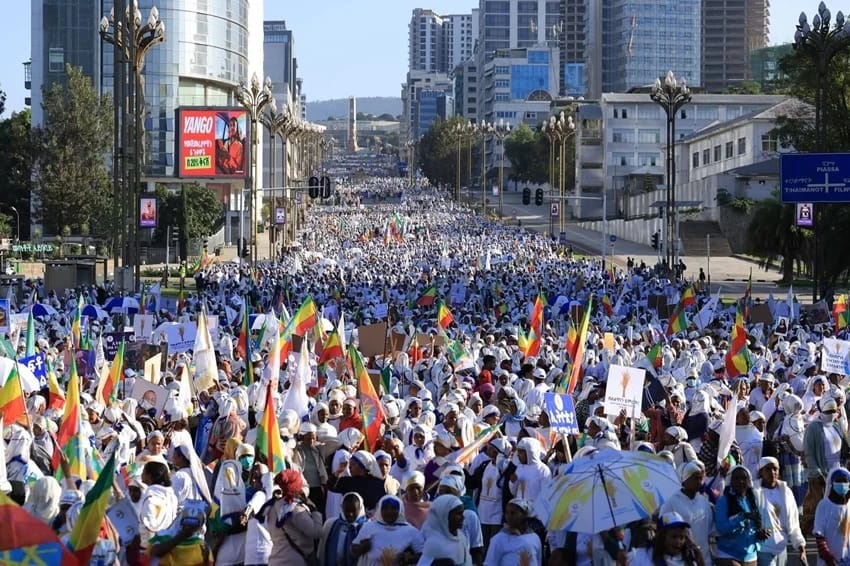
May 29, Addis Ababa — Ethiopia enters a campaign silence period ahead of general elections scheduled for Monday, with more than 50 million registered voters set to cast ballots in what analysts describe as one of the most politically sensitive elections since Prime Minister Abiy Ahmed came to power in 2018.
The National Electoral Board said all technical and logistical preparations are complete, with ballot papers distributed across 52,029 polling stations nationwide. Special centres have been designated for internally displaced people, military personnel, and students. Businesses will be closed on polling day, with the exception of essential services.
A total of 10,432 candidates are competing for federal parliament and regional council seats across 47 participating parties. Abiy’s ruling Prosperity Party leads the field with 3,041 candidates — roughly 29% of the total — followed by the Ethiopian Citizens for Social Justice party (Ezema) with 1,248, and the Coalition for Unity and Democracy with 1,053. At the federal parliament level, the Prosperity Party has fielded candidates for 461 of 547 seats, equivalent to approximately 84% of the total.
Tigray region has been excluded from the vote for the second consecutive election due to the ongoing security situation there, and six parties — most of them from Tigray — have withdrawn. The electoral board has accredited more than 220,000 party agents and 1,814 local and international journalists, and has deployed independent grievance officers at polling stations.
Ethiopian journalist Mohamed Abdelkarim told Sudan Tribune that the ruling party has, in an unusual move, conceded a number of constituencies to the opposition in an effort to bring more opposition figures into parliament — a concession expected to cover around 16% of seats. He said the opposition itself may win some additional seats through direct competition, though it remains hampered by weak funding, internal divisions, and limited popular reach compared to the ruling party.
Opposition forces have questioned the ability of electoral institutions to provide a genuinely competitive environment, citing continued armed conflicts in some regions and accusations that state institutions are being used to favour the ruling party.
Security conditions in Amhara region — where the government has been engaged in fighting with Fano forces — are expected to affect voting in one of the country’s largest regions. The process also faces challenges in parts of Benishangul-Gumuz and Oromia.
Observers say the seventh Ethiopian general election comes in a distinct context shaped by ethnic tensions, particularly between the Oromo and Amhara, and the unresolved conflict with the Tigray People’s Liberation Front.