
Bread prices soar in Sudan as severe fuel shortages paralyze Khartoum

October 25, 2026 (KHARTOUM) – Living crises in Sudan have worsened sharply amid severe fuel shortages in the capital, Khartoum, and several states.
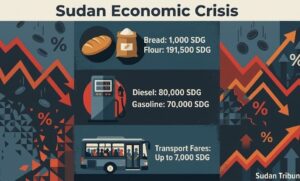
This comes amid expectations that the price of a loaf of bread will rise to 1,000 Sudanese pounds after new increases in flour and bread-making inputs.
Sudanese markets are seeing a surge in consumer goods prices, driven by the continued depreciation of the Sudanese pound and high inter-state freight costs.
The severe fuel shortage has also severely paralyzed the transport sector.
Several bakery owners told Sudan Tribune that flour companies applied new price increases starting Sunday due to rising bread-making costs.
Issam Okasha, deputy head of the Bakeries Union, told Sudan Tribune that flour prices have soared to 191,500 pounds.
He said the increase affected all companies and directly raised the prices of other bread-making inputs.
Okasha expects a single loaf of bread to reach 1,000 pounds amid successive increases in production costs.
He explained that the prices of other manufacturing supplies, including yeast, cooking oil, diesel, and cooking gas, have also spiked.
Meanwhile, Khartoum experienced a severe transportation crisis on Sunday due to the fuel shortage, with long lines of vehicles queuing outside gas stations.
Citizens were forced to wait hours to reach their destinations.
Citizens from various parts of the capital complained to Sudan Tribune about the scarcity of vehicles on public transit routes, which led to a significant increase in fares.
Ahmed Taha, a local resident, said transport fares from the East Nile Hospital area to the Arab Market rose to 5,000 pounds, up from 3,000 pounds.
Fares from the Wadi Al-Akhdar area to Market 6, and on to the Central Market roundabout, reached 7,000 pounds.
Khalida Abdelrahim, another resident, noted that the fare from the Bahri central station to the eastern station on Khartoum’s main Obaid Khatim street jumped from 3,000 to 4,000 pounds.
Several drivers attributed the transport shortage to a lack of fuel at gas stations and surging black-market prices.
Driver Ahmed Osman told Sudan Tribune that the fuel crisis has reached a critical stage.
He noted that a gallon of diesel on the black market hit 80,000 pounds, while a gallon of gasoline reached 70,000 pounds.
Osman called for urgent solutions to address the fuel crisis, which he said has severely impacted all aspects of life in Sudan.
These developments unfold amid mounting cost-of-living pressures in Sudan, compounded by the depreciation of the local currency and rising prices for goods, production inputs, and transportation.
The fuel shortage increases the burden on citizens by raising transport fares and freight costs.
Bakeries continue to face escalating pressure from surging prices for flour, yeast, oil, and the fuel needed for production.