
War accelerates destruction of Khartoum green spaces, experts warn
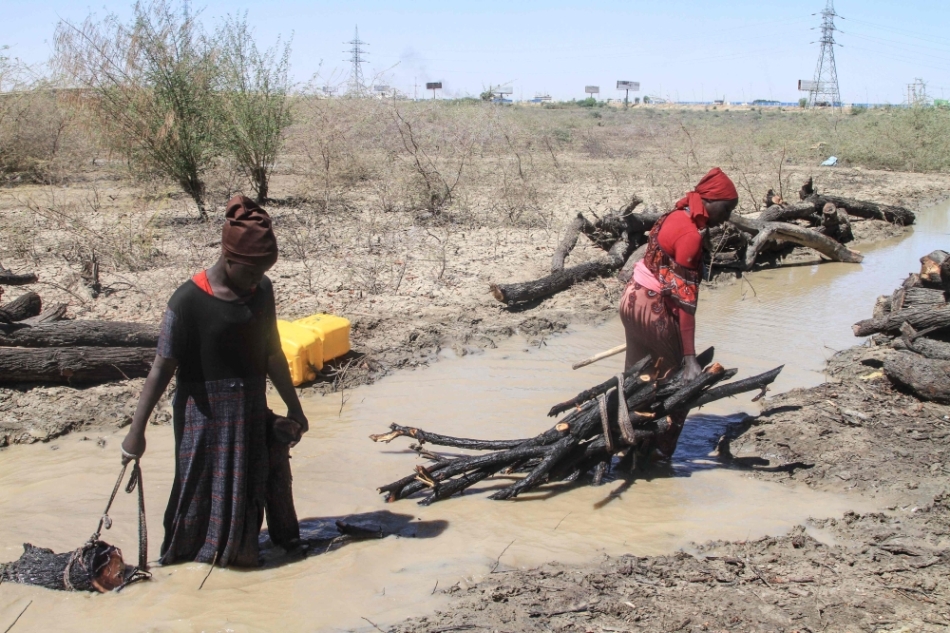
July 13, 2026 (KHARTOUM) – The ongoing conflict in Sudan has severely degraded vegetation cover in Khartoum State, prompting warnings from environmental experts that rapid deforestation and the loss of green spaces will accelerate desertification, raise urban temperatures, and worsen food insecurity.
The war, which began in April 2023, has devastated the capital’s natural resources. Public parks, historical forests, and botanical gardens have suffered extensive damage from military operations, unchecked logging for fuel, and a total collapse of maintenance and municipal protection services.
Environmental assessments show that the shrinking canopy has led to more frequent dust storms, reduced soil water retention, and a sharp decline in biodiversity. The loss of trees, which act as natural windbreaks and microclimate regulators, has also intensified the urban heat island effect across the capital.
To counter the ecological damage, the Khartoum State Ministry of Agriculture’s forestry department, in partnership with the Natural Resources and Livelihoods Sustainability Project, recently launched a seeding initiative in several rural communities across Omdurman and East Nile districts.
Under the program, workers will scatter 2.5 tons of improved seeds across 1,250 acres to restore degraded pastures, boost biomass, and support livestock-dependent livelihoods. Organisers also hope the project will help buffer the region against the adverse rainfall patterns linked to the El Niño weather phenomenon.
Mazaher Ali Said, director of agricultural affairs at Khartoum’s agriculture ministry, told Sudan Tribune that the conflict has severely scarred the local ecosystem. She said the ministry is also attempting to rehabilitate 173 rainwater harvesting basins damaged during the fighting to secure water for residents and livestock.
Economic analyst Adel Abdel Aziz said that successive droughts, combined with the pressures of war, have depleted the soil’s natural seed bank. He warned that unrestricted overgrazing in these damaged areas could permanently replace high-value forage plants with low-quality weeds, accelerating soil erosion.
Abdel Aziz said that pasture degradation directly harms livestock productivity, leading to higher rates of disease and malnutrition. This increases fodder costs and squeezes rural families, forcing many to sell their herds and migrate to cities, adding to urban economic strain.
He noted that the seed-scattering initiative would only succeed if paired with rainwater harvesting, grazing restrictions, and seasonal seed collection to ensure the project remains self-sustaining.
Dr. Taha Ahmed, an environmental expert, told Sudan Tribune that restoring Khartoum’s green canopy requires a comprehensive strategy beyond just scattering seeds. He said target areas must be strictly protected from logging and overgrazing, and require consistent monitoring over several seasons to ensure survival.
Ahmed described trees as the primary line of defence against desertification and dust storms, noting their role in carbon sequestration and urban cooling. Without sustained intervention, he warned, Khartoum’s environment will become increasingly fragile under the pressure of global climate change.
Local conservation groups report that Khartoum’s landmark Sunt Forest and the Mogran Botanical Garden, alongside various urban green belts, have been severely degraded by heavy combat and illegal logging since the war began.
Sudan was already highly vulnerable to desertification before the conflict due to climate change, recurrent droughts, and a heavy reliance on wood for fuel. The war has significantly compounded these baseline environmental vulnerabilities.
According to a 2026 report by the National Forestry Corporation and the UN Environment Programme, deforestation in Sudan releases more than 9.3 million tons of carbon dioxide annually, with forest degradation adding another 1.6 million tons, severely weakening the country’s natural carbon sinks.