
Comments
Is the UN Security Council managing Sudan’s war or ending it?
Before Wالعe Applaud the Security Council, is the Council and the Quad Working to Manage the War or to End It? And what is the Significance of the Joint Meeting of the African and International Security Councils?
Yasir Arman
 We have every right to welcome any effort that brings renewed attention to the war in Sudan and places it back on the agenda of regional and international forums. However, after Sudan’s painful experiences with wars, we must examine everything being proposed with depth and a critical mind.
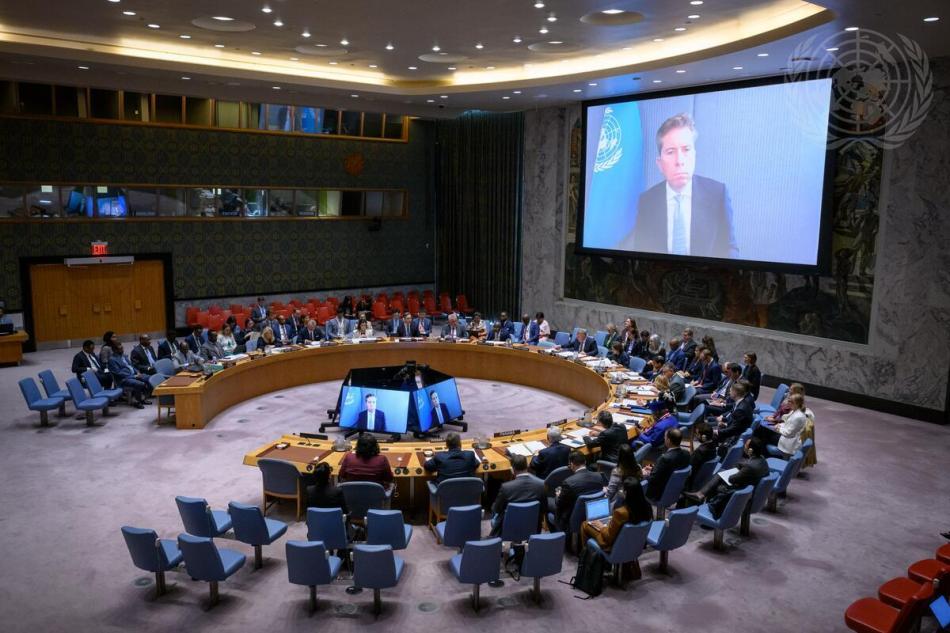
The meeting of the UN Security Council on the evening of August 24, 2026, and the partial proposals put forward fall within the framework of managing the war, rather than ending it. They have focused on the expiration of the ban on flights and arms in Darfur, which ends next month, and on the need to renew it while introducing partial measures to extend it to all of Sudan.
But if we return to the right questions regarding Resolution 1591, which remained in place for 22 years: Was this resolution actually implemented in Darfur? Did it succeed in protecting civilians in Darfur throughout those 22 years?
Did the international community’s partial solutions regarding Darfur contribute to ending the war there? Did flights and arms imports actually stop after the resolution was issued during Bashir’s era? Didn’t the war eventually spread to the rest of Sudan? Can temporary palliatives really be enough to address a catastrophe on the scale of the April 15 war?
Is what is currently taking place at the Security Council part of an effort to manage the crisis or resolve it? What is the practical value of Resolution 1591 in light of the continuation of the war? We know that some countries are prepared to use their veto against it, so what is the point of putting it forward amid international division? And what mechanisms would be available to implement it if it is adopted?
Why has the Quad abandoned what was stated in its Principles of Declaration of September 12, 2025, which called for an immediate humanitarian truce within three months and a transitional process beginning and ending within nine months, leading to a civilian-led government while excluding the Islamist movement? Does what is happening now at the Security Council not represent a retreat from all of that?
Does resorting to partial measures that fall short of ending the war not amount to a return to approaches that have already failed? Did such partial measures benefit Iraq in the past? And did they benefit Sudan itself, particularly Darfur?
The central issue is ending the war, not prolonging it by managing it, nor creating false hope among Sudanese people through measures that have been tried for 22 years without bringing an end to the catastrophe in Darfur or Sudan.
More than two years ago, I wrote an article recalling the experience of the Sudan People’s Liberation Movement and how it succeeded in convening a joint meeting between the African Union and the UN Security Council in Nairobi. The meeting was addressed by the great leader Dr John Garang and Ali Osman. The movement succeeded in pushing the issue of ending the war forward despite the National Congress Party’s procrastination.
Does the responsibility not now fall upon democratic forces to push for an initiative that requires a broad effort – beginning with Africa, neighbouring countries, and members of the African and international Security Councils – to present a comprehensive roadmap for stopping and ending the war, and to convene a joint meeting between the African and international Security Councils?
Such an initiative could help secure Russian and Chinese support, particularly if the African Union Peace and Security Council puts the proposal forward to the UN Security Council. The resulting resolution must be comprehensive, preserve Sudan’s unity and sovereignty, and stop and end the war rather than manage it.
The Quad’s Declaration of Principles is being abandoned, while partial measures take its place – measures that allow the regional and international community to ease its conscience over its failure to deal with one of the world’s greatest humanitarian catastrophes. Meanwhile, the catastrophe continues to grow every day, with no one mourning the victims of the ongoing war in Kordofan, Darfur, and Blue Nile, and with no assistance reaching those who have returned to their areas across Sudan.
Civilians cannot be protected without stopping the war, and no political process can be established for those desperately seeking one without first stopping the war.
The search for the paradise of a political process cannot take place in isolation from ending the hell of war, addressing the humanitarian catastrophe, protecting civilians, and safeguarding the right of everyone to life and dignity.
Without strategic consistency, we cannot build a weighty political bloc based on sustainable solutions – solutions that can only be achieved through an organized and committed front dedicated to the causes of change and the December Revolution, and determined to make this war the last of Sudan’s wars.
We must reject fragile solutions and work to build an alliance capable of attracting those affected by the war, while refusing to compromise with the warring parties by accepting power-sharing arrangements that ignore the need to address the root causes of the crisis.
Sudan has grown weary of the partial and fragile solutions for which its people and its unity have paid the price. We need to learn from past failures and turn toward a new path of renewal, recovery, and nation-building.