
Sudan rejects US effort to delegitimize army, says talks must not reward RSF
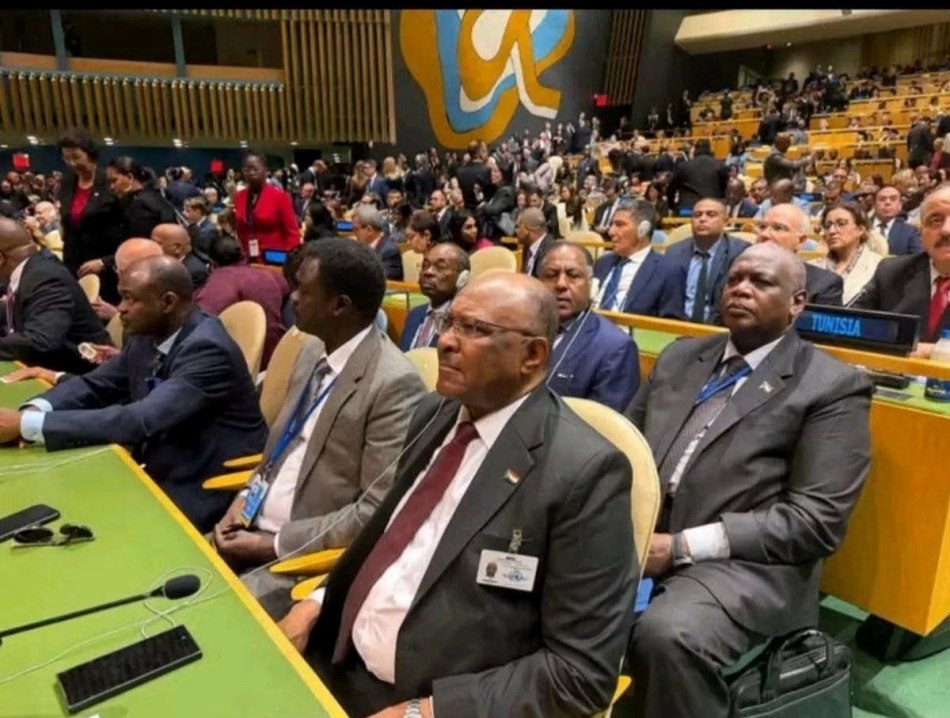
September 23, 026 (KHARTOUM) – Sudan’s foreign ministry on Wednesday rejected a U.S. assertion that neither side in the country’s civil conflict represents a legitimate government, saying peace talks must not validate territory seized by the paramilitary Rapid Support Forces (RSF).
The U.S. State Department said on Tuesday that neither the Sudanese army nor the RSF has constitutional legitimacy, asserting that both rule by force of arms and warning it could raise costs for the warring factions and their financing networks.
In a statement, the Sudanese foreign ministry said Khartoum “firmly rejects the U.S. State Department statement” and urged Washington to deal positively with the government, in line with past pledges to respect national sovereignty.
The ministry contrasted the State Department’s new stance with U.S. President Donald Trump’s stated commitment on November 19, 2025, to help end the war in coordination with Saudi Crown Prince Mohammed bin Salman. It noted that Khartoum still valued Trump’s stated desire to halt global conflicts, including in his recent address to the 81st U.N. General Assembly.
Any credible peace framework must respect Sudan’s territorial integrity and legitimate institutions while ending foreign meddling, the ministry said.
“No political or negotiation process should turn into a means to legitimise a reality created by the RSF, nor should it reward the rebellion for its crimes against civilians and state institutions,” the statement said.
The ministry added that any lasting settlement must entirely dissolve militias, ensure that arms remain exclusively under the control of state institutions, and lead to an exclusively Sudanese-led political process fulfilling demands for democracy and justice.
The diplomatic clash follows Washington’s decision to deny a visa to Sudanese Sovereign Council leader and army chief Abdel Fattah al-Burhan, preventing him from addressing the General Assembly on Thursday. Media reports indicated the visa was made conditional on Burhan accepting a 90-day truce, which he refused.
Khartoum said it had negotiated in good faith during earlier talks in Jeddah, accusing the RSF of violating agreements to serve foreign interests.
It added that it had engaged constructively with Washington’s Quad initiative despite objections over the inclusion of the United Arab Emirates, which Sudan accuses of supplying weapons and mercenaries to the RSF. The UAE denies the accusations.
The Quad, comprising the U.S., Saudi Arabia, Egypt, and the UAE, has pushed for an initial three-month humanitarian truce intended to lead to a permanent ceasefire and a transition to civilian government.
The foreign ministry affirmed that peace remains Sudan’s strategic objective, expressing readiness to work with Washington and other partners, including Saudi Arabia, Egypt, Qatar, Turkey, Russia, China, Pakistan, the African Union, the Arab League, the OIC, IGAD, and the A3 bloc in the U.N. Security Council.