
Expert Francis Deng links Sudan’s identity crisis to power and wealth struggles
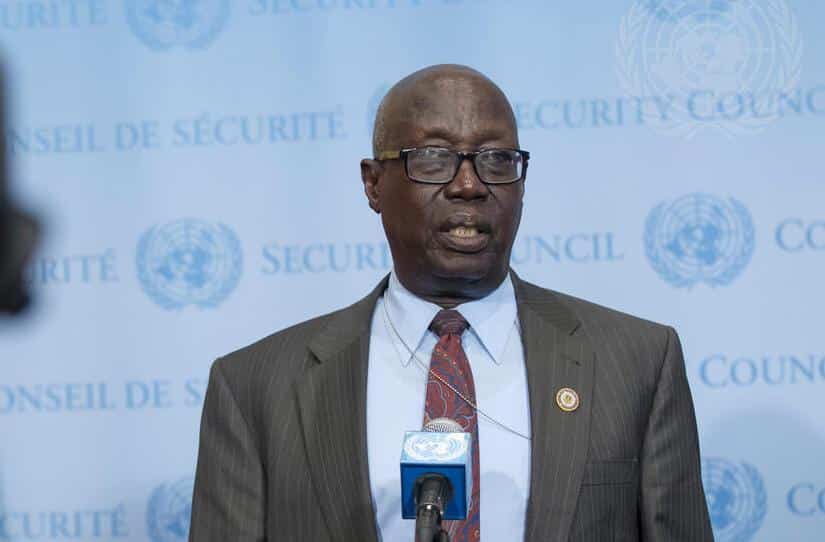
November 2, 2026 (KHARTOUM) – International expert Francis Deng affirmed on Monday that Sudan’s identity crisis is directly linked to the struggle for power, wealth, and social status.
He called for overcoming ethnic and cultural classifications that have historically entrenched discrimination and exclusion.
The discussions come amid the ongoing war and worsening social and political divisions, bringing issues of identity, citizenship, and the state’s relationship with its components to the forefront of the debate on Sudan’s future.
Deng spoke during the fifth forum organized by the Sudan Peace Call, in coordination with the Advocacy Group for Peace in Sudan.
Identity is not a personal matter that can be bypassed in peace negotiations, Deng said.
He noted that it represents a root cause of the Sudanese crisis and a starting point for understanding imbalances in power and wealth sharing.
The forum discussed identity, equal citizenship, and the roots of the crisis of belonging as part of its weekly dialogue series, featuring academics, writers, and political and civil actors.
Deng explained that Sudanese society’s historical structure was based on a hierarchy that granted Arab and Islamic identity privileges tied to social advancement.
Some individuals historically sought to purchase documents to prove Arab ancestry to avoid discrimination and exclusion, he noted.
The emergence of the modern state and expanded educational opportunities contributed to a gradual shift, with the Sudanese defining themselves as citizens, Deng added.
He considered this a positive step toward a shared identity of solidarity that preserves human dignity and allows for equality.
During an analytical presentation on Sudanese perceptions of identity, Dr Essam Abbas revealed that over 84% of respondents support equal citizenship as the foundation for rights and duties, while 3.4% disagree.
Abbas noted that more than 70% of participants believe the country needs a comprehensive national project.
Indicators showed that hate speech and declining trust are key factors deepening the crisis of belonging, accounting for 40% of responses.
Writer and researcher Saadia Dahab emphasized the importance of consolidating concepts of identity and belonging among new generations.
True belonging is not based on slogans or ethnic affiliation, but on the land and a sense of mutual recognition among society’s components, she said.
Dahab warned that the absence of protection, justice, and the equitable distribution of wealth and power exacerbates feelings of marginalization and creates an environment for conflicts.
Drawing on discussions in her book about racism and the history of state-building, the researcher raised questions about how social and political arrangements during the Mahdist Revolution shaped local identities.
She noted that the majority of the Mahdist Revolution’s supporters came from Darfur and settled in Aba Island, where each tribe was housed in an independent neighbourhood without integration.
Dahab questioned whether this distribution contributed to obscuring ethnic identities and transforming them into an Ansar ideology.
The forum affirmed it will continue discussing state institution reform, balanced development, recognition of linguistic diversity, and educational curriculum reform.
Organizers agreed to link the discussions to themes addressed in previous forums, particularly security and military reform, negotiations, and transitional justice, to build a national vision to address the roots of the Sudanese crisis.