
Female Journalists Network demands end to impunity for crimes against media
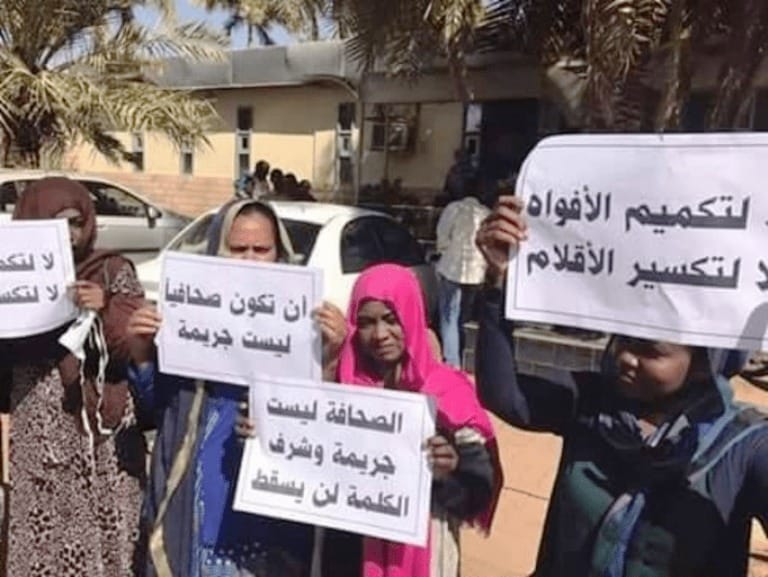
November 2, 2026 (KHARTOUM) – The Female Journalists Network (FJN) warned on Monday of escalating murders and violations against journalists in Sudan amid the ongoing war and the collapse of justice and rule of law institutions.
The FJN demanded independent investigations to prosecute those involved, ensure accountability, and bring justice to victims and survivors.
November 2 marks the International Day to End Impunity for Crimes against Journalists, recognized by the U.N. General Assembly in December 2013.
In a report released on Monday, the FJN said the proliferation of weapons, armed militias, and the declining role of state institutions have expanded immunity from accountability and obstructed victims’ access to justice.
Since the war between the army and the Rapid Support Forces erupted in April 2023, numerous journalists in Sudan have faced killings, arrests, forced disappearances, threats, and physical attacks.
Media institutions have been seized and disrupted, forcing hundreds of journalists to flee the country to escape targeted violence.
Statistics published by the Sudanese Journalists Syndicate in May 2025 showed that 31 journalists and media workers were killed during two years of war.
The syndicate also recorded 556 violations, including arrests, detentions, assaults, threats, and harassment.
The FJN stated that the war has deepened the crisis of justice and the rule of law.
Crimes against journalists indicate a broader flaw in the justice system, as law enforcement and judicial institutions lose their ability to function independently and effectively.
The militarization of litigation procedures following the outbreak of war has made filing criminal complaints and prosecuting perpetrators highly dangerous.
Ending impunity is a prerequisite for protecting press freedom, restoring trust in justice institutions, and preventing future crimes, the report affirmed.
Achieving sustainable peace in Sudan requires holding perpetrators accountable and ensuring justice for victims, the FJN added.
Displacement and forced relocation have deprived many female journalists and their families of the ability to file complaints and pursue legal action.
Social barriers, deteriorating economic conditions, and high litigation costs further limit victims’ access to the judicial system.
The report noted that the lack of effective protection mechanisms for survivors and witnesses increases the risk of impunity.
The FJN stressed that accountability and justice must be core pillars of any political or legal reform in Sudan.
It called for institutional guarantees to prevent justice institutions from falling under the influence of weapons, political interference, or security forces.
The FJN urged including journalists in peace processes and demanded that protecting press freedom be part of any future political settlement.
It also appealed to the U.N. fact-finding mission to intensify investigations into crimes against Sudanese female journalists and increase international pressure for justice and reparations.
The FJN demanded an immediate end to the war, the disarmament of militias, and the establishment of a single professional army, alongside reforms to ensure the independence of justice institutions and the protection of journalists.