
Sudan’s battered oil sector eyes Russian lifeline amid war and sanctions
January 25, 2025 (PORT SUDAN) – Sudan, its oil industry crippled by war and sanctions, is looking to Russia for a potential lifeline. Recent high-level talks have ignited hopes of reviving the nation’s energy sector but also raise questions about the geopolitical implications of Khartoum’s eastward pivot.
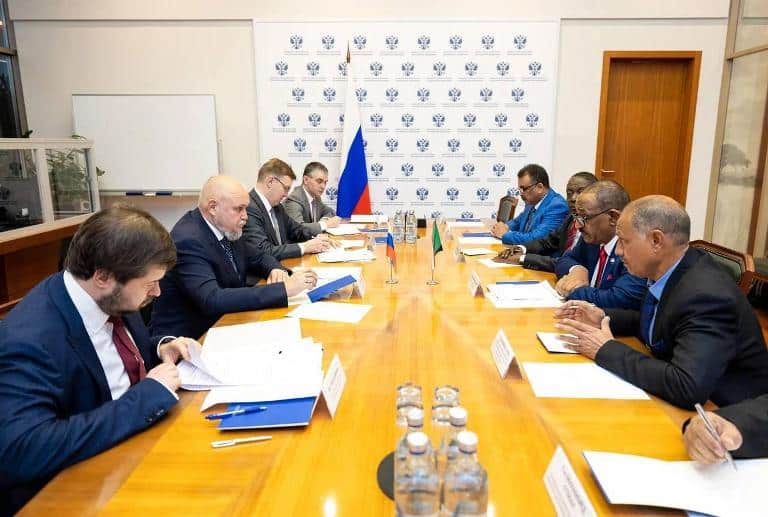
Behind closed doors last week, Sudanese officials and a Russian delegation, headed by Chamber of Commerce chief Viktor Nikolayevich Shmelyov, huddled to discuss the nuts and bolts of oil and electricity cooperation. The meetings, held in the relative calm of Port Sudan, a city that has become the de facto capital since fighting engulfed Khartoum, built upon a preliminary agreement inked in Yaroslavl, Russia, last November.
For Sudan, the stakes are high. The country’s once-promising oil sector has been decimated. Output has plummeted from 67,000 barrels per day to a mere 30,000, according to official estimates. The fighting has not only disrupted operations but also left behind a trail of environmental damage, with reports of oil spills seeping into the fertile lands of Al Jazirah state.
“The situation is desperate,” a Sudanese energy ministry official, speaking on condition of anonymity, told Sudan Tribune. “We need to get the oil flowing again, to power our homes, our hospitals, our future.”
The recent talks focused on practical steps: maintaining ageing refineries, repairing damaged pipelines, and training Sudanese workers. A deal with the Russian Chamber of Commerce promises a gradual overhaul of equipment, some of which dates back over two decades.
However, the potential Russian involvement goes beyond technical assistance. Economic expert Dr Haitham Mohamed Fathi told Sudan Tribune that the discussions also touched on the exploration and financing of new oil production. With 22 oil blocks lying idle, mostly due to security concerns, the lure of Russian technology and investment is strong.
“China was our partner for many years, helping us navigate a harsh sanctions regime,” Fathi explained. “But the war has changed the equation. We are exploring new partnerships, and Russia has the expertise, particularly in gas extraction.” Some observers are raising eyebrows about the potential for large-scale Russian investment. The Sudanese government under General Abdel Fattah al-Burhan had previously flirted with the idea of granting Russia a naval base on the Red Sea, a move that drew sharp rebukes from Western powers and some of Sudan’s Arab neighbours. While the base deal was ultimately shelved, the recent energy talks suggest that Khartoum is still willing to deepen its ties with Moscow.
The shift is not surprising. The United States slapped sanctions on al-Burhan following the military takeover in 2021, and the ongoing conflict with the Rapid Support Forces (RSF) has further isolated his government. Many in Port Sudan see Russia as a counterweight to Western pressure, a nation willing to do business without political baggage.
However, some Sudanese are wary. Critics point out that the government has bypassed standard tender processes for pipeline maintenance contracts, fuelling accusations of cronyism and a lack of transparency. A local activist in Port Sudan, who asked not to be named, voiced concerns: “We need investment, yes, but not at the cost of our sovereignty. These deals must be scrutinized.”
The coming months will be crucial for Sudan as it walks a diplomatic tightrope, balancing its urgent economic needs with the complexities of international relations. Whether the Russian overtures translate into a genuine revival of the oil sector or become another chapter in Sudan’s turbulent history remains to be seen. The deal could pump much-needed life into a struggling economy or further complicate the nation’s already intricate web of alliances.