
MSF halt activities as violence engulfs North Darfur camp
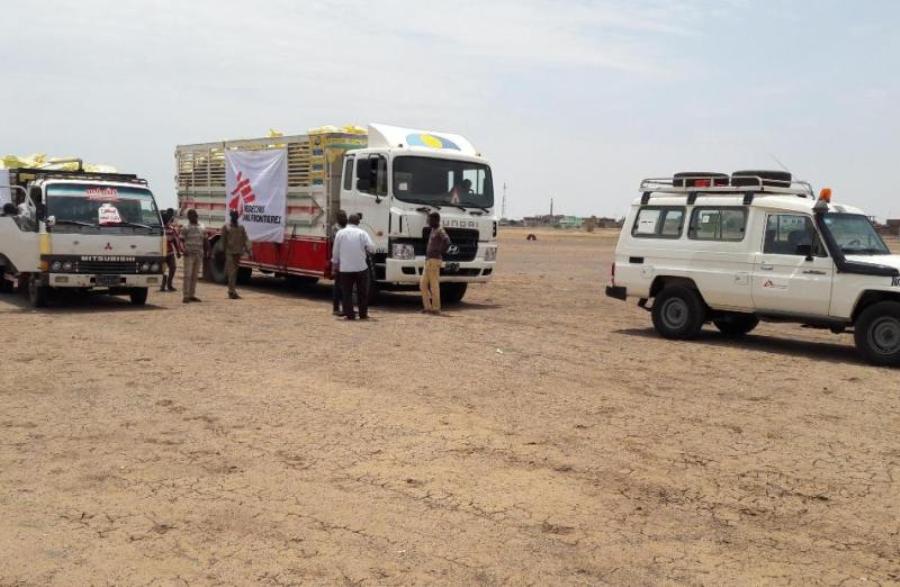
February 25, 2025 (EL FASHER) – The medical charity, Médecins Sans Frontières (MSF) said it has been forced to halt its activities in North Darfur State due to the escalation of attacks and fighting in and around Zamzam camp for displaced people near the North Darfur capital, El Fasher.
The attacks, MSF said, hinders provision of medical assistance in such dangerous conditions.
Despite widespread starvation and immense humanitarian needs, we have no choice but to take the decision to suspend all our activities in the camp, including the MSF field hospital, it further added.
According to the medical charity, it teams in Zamzam received 139 wounded patients in its field hospital, mostly suffering from gunshot and shrapnel injuries in the first three weeks of February.
“Eleven patients died while in the MSF hospital, five of them children, because we could neither treat them properly nor refer them to Saudi hospital, the only facility with surgical capacity in nearby El Fasher,” said Yahya Kalilah, MSF’s head of mission in Sudan.
He added, “In January and December, two of our ambulances carrying patients from the camp to El Fasher were shot at. Now it’s even more dangerous and as a result, many people, including patients requiring trauma surgery or emergency caesarean sections, are trapped in Zamzam.”
In recent weeks, however, the area has reportedly seen heavy fighting between the Rapid Support Forces (RSF) and the Joint Forces, a coalition of armed groups allied with Sudanese Armed Forces (SAF), with dreadful consequences on civilians. Besieging and shelling the town of El Fasher for the last 10 months, the Rapid Support Forces have reportedly stepped up their offensive in recent weeks and launched attacks against Zamzam camp, in particular on 11 and 12 February.
There are reports of people who were already struggling to survive now find their access to water and food even more compromised, as the central market has been looted and burnt down.
“Halting our project in the midst of a worsening disaster in Zamzam is a heartbreaking decision. During more than two years, our teams did their utmost to provide care against all odds, despite the siege, supply shortages, and multiple other challenges, calling and waiting for a scaled-up humanitarian response which never materialised,” said Kalilah.
“The sheer proximity of the violence, great difficulties in sending supplies, the impossibility to send experienced staff for adequate support, and uncertainty regarding routes out of the camp for our colleagues and civilians leave us with little choice,” he stressed.
Hosting about 500,000 people, Zamzam camp saw new arrivals fleeing from Abu Zerega, Shagra and Saluma who are now staying in schools, community buildings, or under the trees in the open.
MSF teams reported dwellings set on fire, looting, sexual violence, killings, beatings and other abuses in villages and on the roads of El Fasher locality. Some hundred families also reached Tawila, sometimes barefoot after leaving everything behind and escaping horrific violence on their way.
(ST)