
Former Sudan PM Hamdok calls for ‘London Action Plan’, says no military solution to war
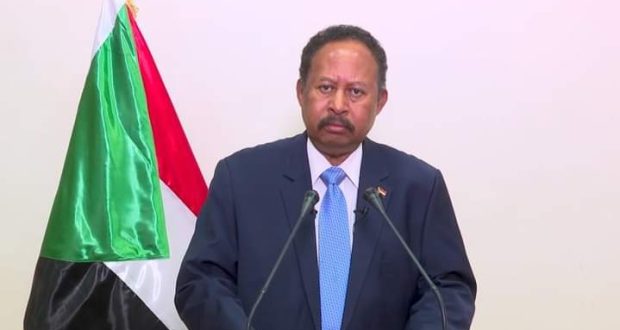
April 9, 2025 (LONDON) – Former Sudanese Prime Minister Abdalla Hamdok on Wednesday urged the international community to adopt a concrete “London Action Plan” to end Sudan’s devastating war, arguing there is no military solution and warning the country is at a “breaking point.”
Hamdok’s call comes days before a high-level humanitarian conference on Sudan scheduled for April 15 in London, co-hosted by the United Kingdom, the European Union, France, and Germany.
The conference is expected to call for a humanitarian ceasefire, the resumption of peace talks, and an end to external actors fuelling the conflict.
Writing in the Financial Times, Hamdok stressed that only a democratic, civilian-led government representing all Sudanese could preserve the nation’s unity and prevent its disintegration.
“There is no military solution to Sudan’s war,” Hamdok wrote, adding that recent army gains did not alter the reality that neither side could achieve a decisive victory without inflicting catastrophic civilian losses. He warned that prolonging the conflict would deepen suffering and risked fragmenting Sudan along lines dictated by competing interests.
His proposed “London Action Plan” includes endorsing civilian leadership as the foundation for peace while opposing any return to authoritarian rule or fragmentation. Hamdok also called for establishing a high-level contact group to coordinate international peace efforts and urged ministers to push all parties for an immediate, unconditional humanitarian ceasefire with guaranteed aid access and civilian protection.
He also called for a subsequent international pledging conference to address critical humanitarian funding gaps and plan for Sudan’s reconstruction, with active involvement from Sudanese civilian actors.
The former prime minister highlighted the war’s destabilising regional impact, fuelling arms proliferation and displacement in neighbouring countries like Chad and South Sudan.
Hamdok urged the African Union Peace and Security Council and the UN Security Council to convene jointly on civilian protection measures, and called on the AU and the regional IGAD bloc to facilitate an inclusive Sudanese civilian meeting to define a comprehensive peace process addressing the conflict’s root causes.
“Wars end when political will, diplomacy and collective action force a path towards peace,” Hamdok concluded, describing the crisis as a “test of the world’s commitment to peace, democracy and the protection of human life.”