
Drone attacks reshape Sudan war, targeting infrastructure and civilians
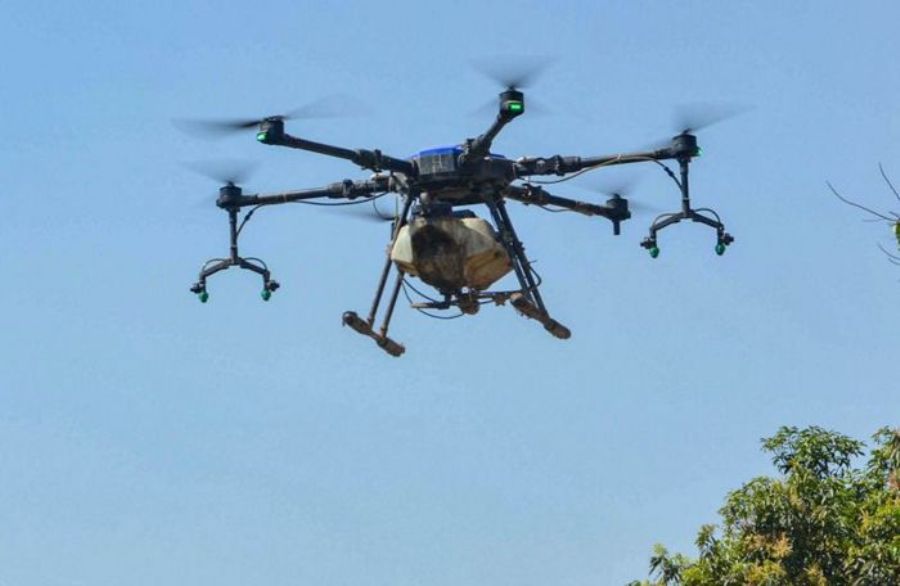
April 15, 2025 (KHARTOUM) – Escalating drone attacks by Sudan’s Rapid Support Forces (RSF) targeting infrastructure and civilian areas marked a new phase in the two-year conflict this month, worsening the crisis for residents in areas recently recaptured by the Sudanese Armed Forces (SAF), sources and witnesses said.
The expanded use of drones, particularly against targets in army-controlled territory, signals a shift in the conflict’s dynamics, compounding the suffering Sudanese civilians have faced since the fighting began.
An RSF source told Sudan Tribune the drone strikes were a “new tactic” against what he described as “Islamic Movement forces and allied mercenary movements.”
However, a military source countered that the RSF drone campaign follows significant battlefield losses, including losing control of the capital, Khartoum. The source told Sudan Tribune the attacks aimed to “create security disruptions” and suggest the army cannot secure recaptured cities.
Infrastructure Under Attack
Recent attacks highlight a focus on critical infrastructure:
* Atbara Power Station: An RSF drone attack last Monday hit the power station and a fuel depot in Atbara, River Nile state, causing blackouts in Atbara and Ad Damir, residents reported.
* Merowe Dam: The country’s largest hydroelectric dam sustained extensive damage after drone attacks last week, leading to widespread power outages. The dam was attacked twice last Tuesday, though the army’s 19th Infantry Division stated its air defences repelled the strikes. Reports suggest around 15 power stations nationwide have been damaged or destroyed by RSF attacks.
* Other Locations: Eyewitnesses reported hearing explosions consistent with anti-aircraft fire engaging drones near Dongola (Northern State) last Monday night and in Omdurman last Monday afternoon.
Expert: Drones Compensate for RSF Losses
Military expert Brig. Gen. Waleed Ezzeldeen told Sudan Tribune that the SAF and RSF initially anticipated a swift conflict. He noted the SAF had relied on air power and artillery against the RSF’s mobile ground forces.
Ezzeldeen observed that drone use emerged significantly as both sides sought advanced weaponry from allies to offset heavy losses. He highlighted the global effectiveness of drones for reconnaissance, precision strikes, and destructive power.
“This necessarily marks an evolution… from conventional fighting to drone warfare,” Ezzeldeen said.
Ezzeldeen stated the RSF appears to rely on Chinese and Belarusian drones, while the SAF uses Iranian and Turkish models, including strategic and suicide drones now available to both parties.
According to Ezzeldeen, the RSF intensified drone attacks after retreating from central Sudan (Khartoum and Gezira states). Targeting infrastructure and “safe” cities aims to “compensate for losses, distract the army, demoralise troops, and create civilian panic,” potentially facilitating displacement and allowing RSF entry into new areas with less resistance.
Ezzeldeen described this shift as a “dangerous direction” likely to prolong the war and spread it further, citing recent attacks in Debba and Atbara. He voiced alarm over unconfirmed reports that the RSF may acquire advanced Chinese fighter jets, warning this could lead to “destruction, ruin, and all-out war.”
Ezzeldeen called for national unity under a “No to War” banner and international pressure for negotiations and an arms embargo.
Analyst: Infrastructure Attacks Show Dangerous Shift
Political analyst Dr. Mohamed Idris told Sudan Tribune the war, now entering its third year [based on the article’s date], has taken a “dangerous turn,” possibly shifting towards avoiding direct clashes.
He noted drone attacks are now commonplace, raising public questions about how drones reach supposedly secure areas. Idris argued that targeting infrastructure serves political aims rather than military ones, with civilians bearing the cost through displacement and suffering.
Military Response and Drone Arsenals
A military source claimed SAF air defences intercepted three drones targeting Khartoum International Airport last Monday night, asserting the army command remains secure. The source dismissed the RSF drone strategy as an attempt to distract the SAF from a planned offensive into Darfur designed to “put an end” to the RSF.
The RSF has previously targeted power stations in Um Debaiker and Shawak, water stations in Omdurman, and military bases in cities including Rabak, Shendi, El Fasher, and Khartoum.
A military source in River Nile state told Sudan Tribune in January that 74 drone sorties, believed to be long-range suicide drones (potentially Iranian Shahed-136 or Arash models, though unconfirmed), had targeted the state recently.
The RSF is known to use commercially derived quadcopters capable of dropping mortars and possesses FN-6 portable air defence systems. SIPRI data indicates the SAF also acquired the FN-6. The SAF employs various drones, including Iranian Mohajer-6 and Zajil-3 models, and FPV drones.
Despite frequent RSF drone strikes, analysts believe the SAF retains an advantage due to access to more sophisticated drones from allies like Iran and Turkey. The RSF continues to target northern and eastern states, having previously threatened invasions of Northern and the River Nile states.