
Sudan’s only mycetoma research center destroyed in Khartoum fighting
Sudan Media Forum
KHARTOUM, May 31, 2025 (Al-Alaq Press Services Center) – Sudan’s sole mycetoma research center has been destroyed due to nearly two years of military clashes in Khartoum, the World Health Organization (WHO) office in Sudan announced, dealing a devastating blow to efforts to combat one of the most neglected tropical diseases.
The center, considered a global beacon for mycetoma studies, lost decades of vital data and biological content, threatening the lives of thousands of patients and hindering future research.
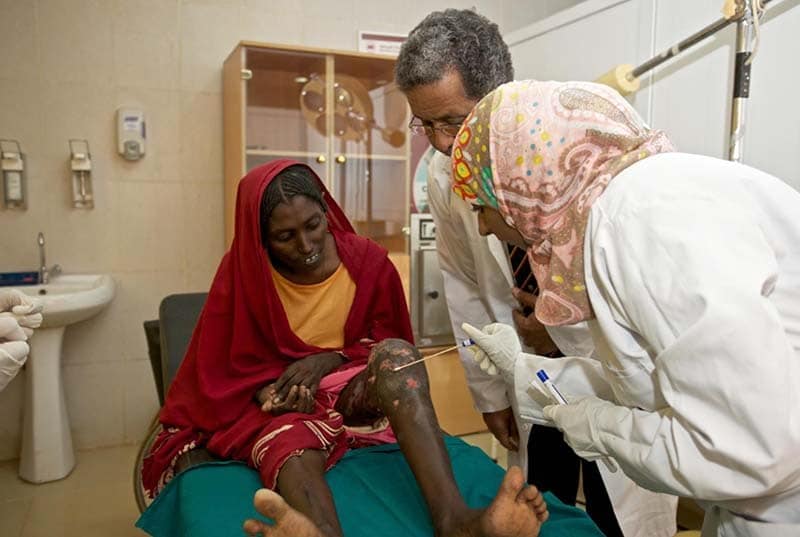
Mycetoma is an endemic disease in rural areas of Sudan, particularly prevalent in Sennar, Al Jazirah, White Nile, and North Darfur states. The disease results from bacteria or fungi entering the body, often through thorn pricks in agricultural lands, leading to severe destruction of skin, bones, and muscles. The WHO classified it as a neglected tropical disease in 2016 due to the lack of an effective and successful treatment and its devastating impact on the health of impoverished people, who often live in areas with limited access to healthcare.
Dr. Bakhita Osman, an agricultural expert, told Al-Alaq Press Services Center that this disease “affects the poor, rendering them unable to work, and patients face social isolation due to the accompanying ulcers.” She added that mycetoma typically affects the feet, leading to chronic infection that can develop into severe deformities, potentially resulting in disability or amputation. The disease also causes psychological complications, such as introversion, due to deformities and discharge.
Dr. Ahmed El Fahal, the center’s founder and director, confirmed that mycetoma “affects populations in remote areas, and those who travel barefoot are most at risk, mostly field workers and children.” He noted that its treatment is challenging due to expensive and unavailable drugs, which often have serious side effects. Treatment can last for months, and in severe cases, the disease can lead to death, with amputation often being the only solution.
Loss of 40 years of research
Ahmed El Fahal emphasized that the destruction of the center means “we lost all content in our biological banks, which contained data from over 40 years.” This data represents an invaluable treasure for researchers worldwide, and its loss will significantly impede the understanding of the disease and the development of new treatments. About 20% of these patients, among the poorest groups, have undergone amputation (foot, leg, or hand).
A comprehensive vision for mycetoma treatment and awareness
The Mycetoma Research Center was established in 1991 under the patronage of the University of Khartoum and was the world’s only center dedicated to the study of mycetoma. It was not merely a treatment facility but a comprehensive beacon for addressing mycetoma from multiple angles. Its main activities included:
- Healthcare and treatment: The center received 12,000 patients annually, providing free care to those affected by the disease, including diagnosis, treatment, and psychological and social support. Since its establishment, the center treated 9,000 patients free of charge from across the country and performed numerous surgical operations, including necessary amputations.
- Scientific research and development: The center conducted advanced scientific research in mycetoma, including pioneering clinical trials. It participated in global trials of promising treatments such as the drug “fosravuconazole” in collaboration with the Drugs for Neglected Diseases Initiative (DNDi) and Japan’s Eisai pharmaceutical company, reflecting its pivotal role in finding new therapeutic solutions.
- Advanced laboratory diagnosis: The center provided free diagnostic services, including advanced laboratory tests such as DNA analysis to identify the exact cause of the disease, which was available for the first time in Sudan at no cost.
- Awareness and community service: The center played an active role in educating the community about the seriousness of mycetoma, how to prevent it, and the importance of early treatment. It conducted continuous awareness campaigns through posters and educational films and organized treatment and educational trips to endemic areas across Sudan.
- Capacity building and training: The center contributed to training medical and science students and healthcare workers on mycetoma diagnosis and treatment, enhancing local capabilities to combat the disease.
- International cooperation and partnerships: The center established a wide network of cooperation and partnerships with international organizations and institutions such as the WHO, DNDi, Eisai, and Nagasaki University, enabling it to exchange expertise and contribute to global efforts to combat neglected diseases.
- Comprehensive care approach: The center adopted a multidisciplinary approach to mycetoma management, integrating medical, surgical, and rehabilitation interventions to provide a comprehensive and effective treatment strategy, with a focus on patient care as a core element.
Urgent call for reconstruction
This disaster highlights the difficult conditions faced by pastoralists and marginalized groups in Sudan, where there are insufficient hospitals to treat children, women, the elderly, and patients in general. A recent study by the United Nations Development Programme (UNDP) and the International Food Policy Research Institute (IFPRI) revealed the conflict’s impact on rural household incomes, exacerbating their vulnerability in accessing housing, infrastructure, and services.
Therefore, the loss suffered by the mycetoma center, with all its repercussions on patients and research, makes it crucially important to shed media light on this issue, to push for efforts to re-establish the center to continue its research work and provide life-saving treatment to patients from farmers, pastoralists, and children.
—-
This report is published by the Sudan Media Forum and its member media outlets, prepared by Al-Alaq Center, with the aim of highlighting the damage caused to the country’s health infrastructure due to the ongoing war.