
Babanusa: from a tropical hub to a city devoid of people
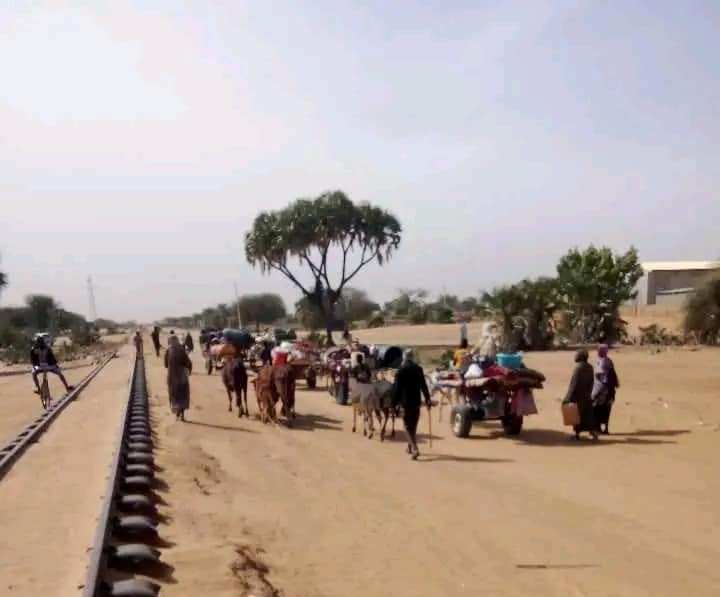
By Mohamed Badawi
Babanusa, a city located approximately 679 kilometres from Khartoum in West Kordofan state, sits within Africa’s tropical belt. Its very name is derived from the widespread ebony trees native to the region. The city was once home to an estimated 50,000 residents living across 24 distinct neighbourhoods.
Its strategic location and resources made it the ideal site for the Babanusa Milk Factory, inaugurated in 1960 by Yugoslavian President Marshal Josip Tito during the era of General Ibrahim Abboud. It was the first factory in Africa and the Middle East designed to produce powdered milk. However, it was shut down in 1990 by the Islamist government, a fate shared by many national projects. During the 1980s, the city also served as a headquarters for Chevron’s oil exploration operations, with a refinery located in the nearby Abu Jabra area.
Babanusa was also the second most crucial hub for Sudan Railways after the main headquarters in Atbara. Its lines connected the country’s north, east, west, and south. Today, the situation could be summed up in a metaphorical telegram from the Babanusa station master: “No one is left in the city; the train has stopped.”
Politically, the city has a rich history of peaceful protest. In 2014, a major sit-in lasted for three months, during which residents demanded improved services. They called for enhanced healthcare to address chronic diseases associated with oil extraction, which had also harmed the environment. They also demanded better education and employment opportunities in a state rich with livestock, oil fields, gum Arabic, and hibiscus. Inspired by this, another sit-in with similar demands took place in the city of Lagawa that same year. However, strict censorship at the time suppressed news of these events, and journalists who tried to cover them, such as Madiha Abdallah of Al-Midan newspaper, faced criminal charges.
The city’s economic importance grew during the long civil war between Khartoum and the Sudan People’s Liberation Movement (SPLM), serving as a vital trade link between the country’s northern and southern border regions. Militarily, its location made it the headquarters of the Sudanese Army’s 22nd Infantry Division.
Since the last week of January 2024, following an attack by the Rapid Support Forces (RSF), the city’s residents began a mass exodus in search of safety. The army targeted any potential RSF presence, including within civilian neighbourhoods. Meanwhile, the RSF subjected civilians to abuses to compel them to flee, branding anyone who remained a collaborator. The actions of both warring parties led to a series of violations against civilians, resulting in the complete evacuation of Babanusa’s 24 neighbourhoods. Its 50,000 residents have become internally displaced, with a smaller number seeking refuge across the border in South Sudan.
This bitter displacement is a familiar story for a population that has endured five decades of conflict, from the Anyanya I and II movements to the war with the SPLM. Civilians first fled to other towns in West Kordofan, such as Muglad and Dabbab, with Al-Fulah serving as the initial safe haven. When the RSF attacked Al-Fulah, a second wave of displacement began towards El-Nuhud. But safety there was short-lived, forcing a fourth journey to Al-Obeid, the capital of North Kordofan. This journey mirrors the repeated displacements of those in West Darfur’s camps between 2023 and 2024.
Like countless others, they left everything behind—possessions and memories—carrying only what they could. They abandoned a city with a deep love for football, which boasted over 25 clubs in three divisions and hosted the first local football association in West Kordofan.
Today, the army’s 22nd Infantry Division headquarters remains under army control, though it is under continuous attack by the RSF. The division has responded with shelling and by planting landmines around its perimeter. Babanusa now exemplifies the transformation of homes into military bases, raising profound questions about the futility of a war where, due to blood ties, the fighters on opposing sides are often brothers or cousins.
In conclusion, Babanusa is a stark example of the human cost of the military, political, and developmental policies that have marked Sudan’s post-independence history. It stands as a global case study of a city completely emptied of its civilian population by the war that began in April 2023, where the delivery of life-saving humanitarian aid continues to be obstructed.