
Sudan’s premier condemns international silence on ‘terrorist’ RSF crimes
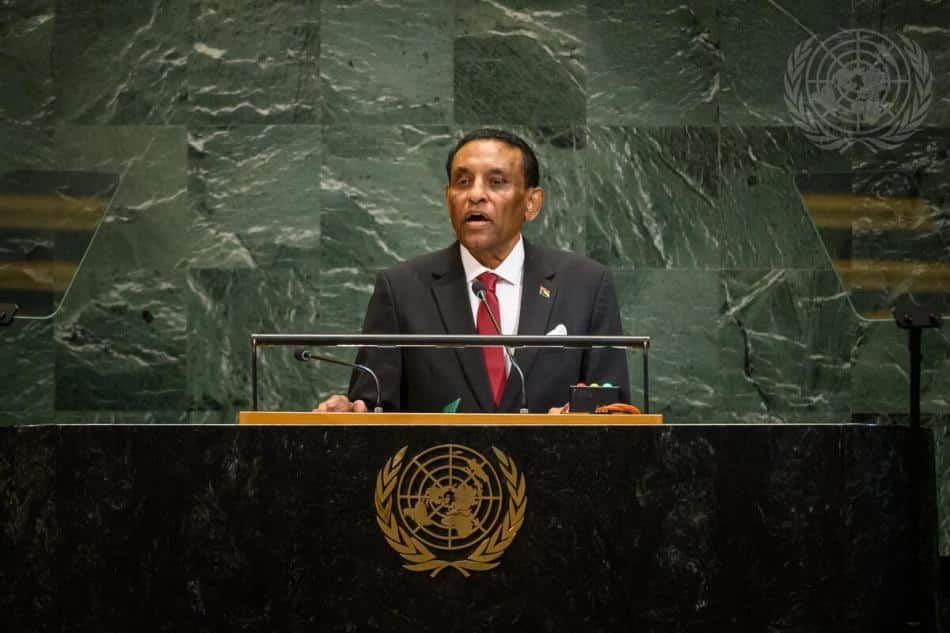
September 26, 2025 (NEW YORK) – Sudan’s Prime Minister, Kamil Idris, on Thursday condemned the “continued international silence” regarding the crimes of the “rebellious terrorist militia,” its siege of El Fasher, its shelling of displacement camps, and its destruction of civilian life, in an address to the United Nations General Assembly.
Idris painted a grim picture of the last three years in Sudan, accusing the Rapid Support Forces (RSF) of subjecting the Sudanese people to “existential dangers and threats.”
“Sudanese people have been forced from their homes and homeland under the weight of systematic killing, torture, looting, rape, humiliation, and the savage destruction of all essentials for life,” Idris stated. He asserted this was intentional and part of an “integrated project to control Sudan, plunder its wealth, and alter its demographic makeup.”
The war erupted in April 2023 when the army and the RSF, then partners in power, clashed over plans to integrate their forces.
The prime minister’s accusations echo the findings of a U.N.-mandated investigation mission which, on September 5, accused the paramilitary Rapid Support Forces of committing multiple crimes against humanity during the siege of El-Fashir in the western Darfur region.
The mission said in its report that those atrocities come on top of abuses committed by both the RSF and its enemy, Sudan’s army, in the broader civil war. “The RSF has further committed crimes against humanity, including large-scale killings, sexual and gender-based violence, looting, and the destruction of livelihoods — at times rising to persecution and extermination,” the chair of the fact-finding mission, Mohamed Chande Othman, said in a statement.
The 18-page report, ‘A War of Atrocities’, says the RSF and its allies have used starvation as a method of warfare, depriving civilians of relief items such as food and medicine.
Against this backdrop, the prime minister issued a direct appeal to the international community to stop the flow of advanced, lethal weapons and mercenaries to the militia. He called for the RSF to be condemned, criminalised, and officially classified as a terrorist group, warning that violations of Resolution 1591 threaten to prolong the war and destabilise the entire region.
Stressing that preserving state sovereignty is an “existential issue” for the Sudanese people, Idris outlined his government’s roadmap for peace, insisting it must be a Sudanese-led process “far from foreign interventions or influences.”
The plan’s key components include a ceasefire accompanied by the withdrawal of the RSF militia from occupied cities and a lifting of the siege on El Fasher, in accordance with Security Council Resolution 2736. The roadmap also prioritises the dignified and safe return of displaced persons and refugees and securing humanitarian access for all those in need.
Idris informed the assembly that his “Government of Hope,” a civilian government of technocrats, has already been formed to oversee the transitional period. “This government,” he said, “will engage in a comprehensive Sudanese-Sudanese national dialogue for all political and societal forces, to lay the groundwork for free and fair elections.”
He affirmed his government’s commitment to international humanitarian law, noting that a comprehensive national plan to protect civilians had been presented to the Security Council. “The government renews its commitment to facilitating, protecting, and ensuring the passage of humanitarian aid through all agreed-upon crossings identified by the Government of Sudan,” he added.
Among the top priorities for the new government, Idris listed achieving peace, establishing the rule of law, activating transitional justice, providing basic services, and beginning reconstruction efforts, with a focus on increasing the participation of women and youth in the national dialogue.