
Al Jazira scheme, landowners clash over property rights proposal

December 23, 2025 (WAD MADANI, Al Jazira) – Sudan’s largest irrigated agricultural project, the Al Jazira scheme, remains at the centre of a deepening dispute between the government and landowners over land expropriation, financing, and administrative reform.
A fresh debate emerged following a proposal by Abdel Monem Bella, head of the Al Jazira State Judiciary, to expropriate private freehold lands and convert them into state property. Speaking at a workshop on the scheme’s regulatory framework, Bella argued that government ownership would streamline reforms and resolve long-standing legal disputes over land tenure and management.
While proponents claim the move aims to modernize the struggling project, it has drawn sharp criticism from farmers and development experts who warn it could further destabilize an initiative already suffering from years of decline. Farmers speaking to Sudan Tribune insisted that private freehold lands are legally protected from seizure and that the proposal is unenforceable.
Battle for freehold ownership
Mortada Abdallah Saad, a local farmer, described freehold land rights within the scheme as a red line that successive governments have failed to cross. He noted that the administration of ousted President Omar al-Bashir attempted to sell freehold land to commercial entities, including United Capital Bank, but the courts repeatedly blocked these efforts.
Saad dismissed the feasibility of the current expropriation plan, noting that the state lacks the financial resources to compensate owners. He further criticized the judiciary’s involvement in the proposal, arguing that as the authority responsible for resolving disputes, the chief justice should maintain neutrality rather than advocating for policies that infringe on private rights.
Freehold land accounts for approximately 895,000 acres of the scheme’s 2.2 million total acres, representing roughly 40 per cent of the project area. This ownership is divided between the Al Jazira section, with 513,000 acres, and the Al-Manaqil section, which holds about 382,000 acres.
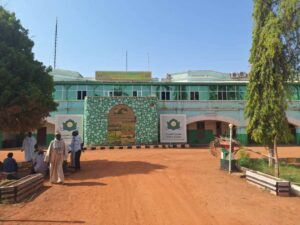
Narrative of a non-binding proposal
Prominent farmers’ leader Al-Tayeb Al-Imam Jouda characterized the judicial official’s comments as a personal opinion rather than a binding policy. He confirmed that workshop participants would not include land expropriation in their final recommendations to the Ministry of Justice’s registrar for agricultural production organizations.
Khaled Ibrahim, a development expert, suggested that the recent push for expropriation intensified following the withdrawal of Rapid Support Forces (RSF) from the region. He pointed out that land registrations currently fall under the jurisdiction of the scheme’s own survey department rather than the state land registrar, making the judicial proposal a significant shift in administrative oversight.
Ibrahim warned of what he termed a legal conspiracy linked to the controversial 2005 Al Jazira Act, suggesting that elements within the state administration may be seeking to exploit current instabilities to seize private property. He urged the government to activate the Landowners Committee and adopt a 2021 draft law designed to protect the scheme’s integrity.
Demands for centralized management
The Al Jazira Conference, a civil rights body, has also rejected the transfer of land ownership to the government. Mohammed Abdel Rahim Abu Razan, a member of the group’s central committee, argued that the central government in Khartoum has forfeited its right to supervise the project after failing to meet its financial obligations and withdrawing funding.
Abu Razan said that as long as the centre is no longer a financier, it has no right to supervise or legislate, adding that turning ancestral landowners into labourers for the state would be a grave injustice to future generations. The Al Jazira Conference is instead calling for a strong centralized management system funded by the state treasury, a disciplined crop rotation system tailored to global market needs, and the training of a new generation of local youth to lead the scheme’s administration.

Table 1: Comparison of positions on land ownership and reform
| Feature | Current Status / Landowner Position | Proposed Change / Judicial Position |
| Land Ownership | Private freehold (approx. 40% of total area) protected by existing property laws. | Conversion of all freehold land into state-owned public property via expropriation. |
| Legal Authority | Managed by the scheme’s own survey department; seen as beyond state seizure. | Registration to be transferred to the state’s judicial land registrar. |
| Objective | Protecting ancestral rights and maintaining private control over production. | “Streamlining reforms” and resolving ongoing legal disputes over tenure and management. |
| Management | Demand for a strong centralized administration funded by the state treasury. | Government-led management focused on “correcting” land purposes (e.g., preventing residential encroachment). |
| Political Stance | Accusations of “legal conspiracy” by remnants of previous administrations. | Argument that state ownership is necessary for disciplined agricultural rotation. |
Table 2: Distribution of freehold land in the Al Jazira scheme
As mentioned in the text, freehold land accounts for approximately 40% of the project’s total 2.2 million acres.
| Region | Freehold Area (Acres) | Percentage of Total Freehold |
| Al Jazira | 513,000 | ~57.3% |
| Al-Manaqil | 382,000 | ~42.7% |
| Total Freehold Land | 895,000 | 100% |
Legal legacy and the battle for Sudan’s agricultural heartland
The current dispute over the Al Jazira scheme is rooted in a decades-long struggle between state-led modernization and private property rights. Central to this tension is the controversial 2005 Al Jazira Act, a piece of legislation that experts and farmers now describe as the catalyst for the project’s long-term decline.
The 2005 Act was originally designed to transition the scheme toward a market-oriented system. However, in practice, it weakened the traditional protections afforded to freehold owners by replacing them with ambiguous “land use rights.” This era also saw the systematic dismantling of the scheme’s backbone, including the liquidation of the Al Jazira Railway and various cotton ginneries. By shifting the burden of irrigation maintenance from the state to underfunded local farmer associations, the law allowed the once-pristine canal network to fall into disrepair.
In response to this deterioration, agricultural experts like Khaled Ibrahim are now championing the 2021 draft law as a necessary corrective. This proposed framework seeks to restore the government’s role as the primary financier of agricultural operations, moving away from the high-interest private loans that have burdened producers. Most importantly, the 2021 draft explicitly recognizes freehold titles, serving as a legal bulwark against the state expropriation currently suggested by judicial officials.
The crisis is further complicated by a jurisdictional tug-of-war between local municipalities and the project’s central management. Corrupt executive directors within local councils have been accused of illegally repurposing agricultural tracts for residential use, often under the guise of housing displaced populations. Landowners argue these actions not only bypass the project’s authority but also permanently fracture the “agricultural cycle” essential for the scheme’s productivity.
As the Al Jazira Conference and other civil groups push for a new generation of leadership, the debate remains a fundamental test of Sudan’s ability to balance national food security with the sacredness of private land ownership.