
Sudan’s “Lords of Spoils”: how security forces seized civilian cars after “liberation”
by Hipa Abdalazeem
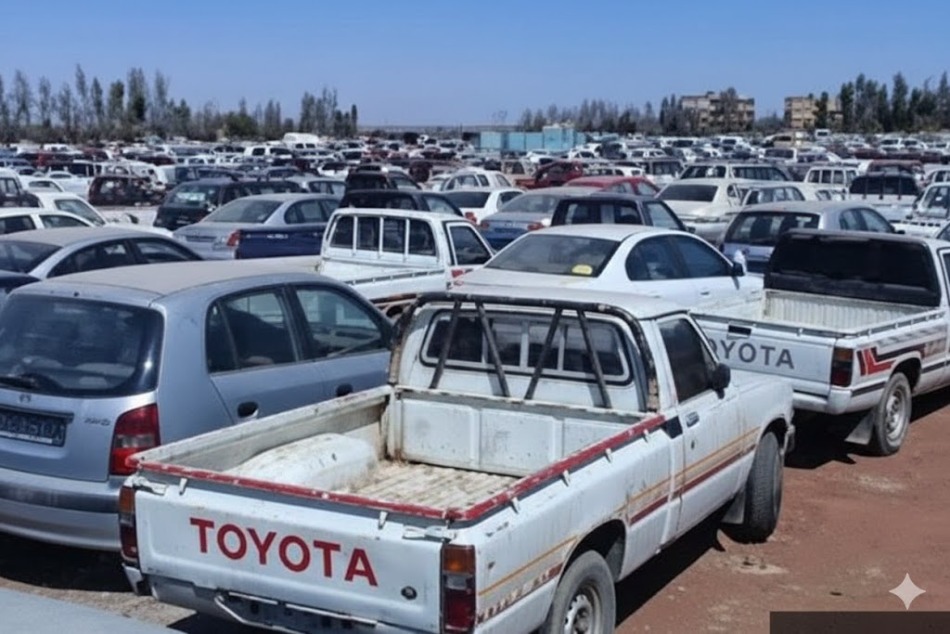
KHARTOUM (February 4, 2026) – Mourtada al-Hadi speaks in measured tones, but his words carry the weight of someone who has lost everything. The pseudonym masks a man now stripped of his livelihood, his car seized by a soldier after Sudan’s army reclaimed territory from paramilitary forces.
“It was the toil of a lifetime,” al-Hadi told Sudan Tribune, describing the vehicle he purchased after years of labour. His story, corroborated by documents and interviews, illustrates a pattern emerging across Sudan: as the military pushes back the Rapid Support Forces (RSF), some uniformed personnel are themselves looting civilian property.
Al-Hadi returned to Al-Jazira State in March 2025, following the army’s declaration that the area was “liberated.” He filed criminal complaints for two missing vehicles. Witnesses soon spotted one at Wad Madani’s land port, “new and distinctive”, before a warrant officer allegedly towed it away.
A workshop owner provided the tow truck’s number. With detectives from Madani Eastern Division, al-Hadi traced the vehicle to the soldier’s house in East Nile. The serviceman admitted that the car wasn’t his, stating that he had stripped it for parts, and then refused police orders to surrender the chassis.
Al-Hadi escalated to the military command’s legal department. The legal advisor endorsed prosecution. He gave the soldier a final chance. The car never came back.
Sudan Tribune interviewed 28 car owners with similar accounts. Six involved army colonels. All the described expensive vehicles were found intact, then withheld despite police and prosecutors’ intervention.
Legal Black Hole
The seizures persist despite emergency laws requiring proof of ownership for all property transfers—invoices, search certificates, or sworn affidavits. Joint security cells were mandated to confiscate undocumented movables and file criminal cases for “dealing in stolen property.”
Yet the law cuts both ways. The 2013 Armed Forces Act defines seizure of civilian property as “disgraceful conduct” warranting dismissal and imprisonment. The 1991 Criminal Code provides for up to three years’ imprisonment, plus fines, for abuse of power. During armed conflict, the Fourth Geneva Convention categorically prohibits military exploitation of civilian assets.
Military sources, speaking on condition of anonymity, acknowledged “undeniable cases” but framed them as individual abuses rather than as a systemic policy. “Legally, any car seized without official documents is ‘illegal custody,'” one officer said, citing the Armed Forces Act and Criminal Code.
The Paperwork Shield
Investigators identified two primary methods of seizure.
First: “Form 12 S,” a military logistics document obtained by Sudan Tribune. Originally intended for warehouse expenditures and equipment transport, the form is now being used to move civilian cars past checkpoints. A military source called this “a double crime — exploiting authority to possess what does not belong to him.”
Second: “The Cable” — police terminology for forged search certificates and stickers matched to stolen license plates. The Sudan Tribune documented 13 cases across Port Sudan, Khartoum, Kassala, and Dongola in which owners confronted personnel who were driving their cars with altered documentation.
One case reached court after an army colonel refused to surrender a vehicle until the vehicle was detained near Dongola, 55 km north of the Northern State capital. The officer’s documents proved forged. The matter settled out of court “in consideration of the officer’s future.”
Police spokesperson Brigadier General Fath al-Rahman Muhammad al-Tom told Sudan Tribune that forgery cases are “limited,” with arrests and convictions secured. He said constant vehicle inspections and frozen ownership transfers have helped curb abuses.
The scale of RSF looting dwarfs subsequent military seizures. Al-Tom said 89,089 vehicle theft reports were filed electronically by January 2026; unofficial estimates suggest over 200,000 cars were taken by paramilitaries. RSF “militia” committed “systematic and widespread violations,” he said.
The Dismantling Industry
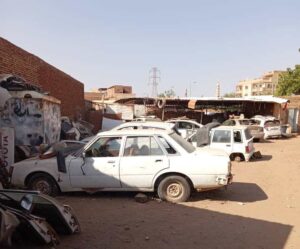
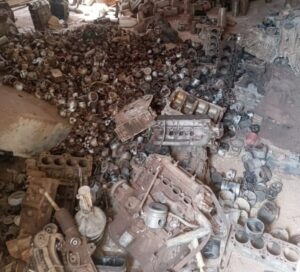
A third seizure model operates in El Haj Yousif, Khartoum. Personnel allegedly towed cars from homes in the Street 1 area, citing collection orders that military units later denied. Tracking revealed vehicles dismantled, parts sold to maintenance workshops in Hilla Koko, Al-Saqai, and Al-Wahda Market — businesses that flourished after Khartoum’s “liberation.”
In January, Governor Ahmed Osman established a joint security committee to review workshop operations. East Nile locality alone seized 41 stolen cars in a single axis. Committee member Engineer El-Naji Imad El-Din Hassan reported over 7 tonnes of undocumented spare parts recovered. Sixty-seven workshop owners faced prosecution.
“One committee is tasked with monitoring workshop violations,” Hassan told Sudan Tribune. “We found wonders.” The committee imposed strict sector controls, intensive campaigns, and court-ordered workshop closures.
The Silence
Sudan’s Armed Forces spokesperson, Brigadier General Assim Awad Abdel Wahab Muhammad, did not respond to three weeks of requests for comment. The Public Prosecution’s media office also remained silent on data regarding personnel seizure reports.
Retired Major General Mutasim Abdel Qader condemned the seizures as illegal. “No citizen or member of the forces has the right to seize or use another citizen’s car without consent, nor demand money for its return,” he said, urging police reports, prosecution, and military judiciary intervention if necessary.
He acknowledged early-war resource shortages when forces requested civilian vehicles and housing in Omdurman — but noted those were returned post-liberation. Current transgressions, he insisted, are “isolated cases” unauthorized by military or police hierarchy.
On the exhausted streets of Sudan, a car represents more than metal. For families displaced by war, it embodies years of savings, expatriate remittances, and fragile security. The scenes documented here pose a test — not merely of legal procedure, but of whether “liberation” can deliver anything beyond a change of uniform over the same old spoils.