
Sudan condemns Iranian missile strikes but excludes UAE from statement
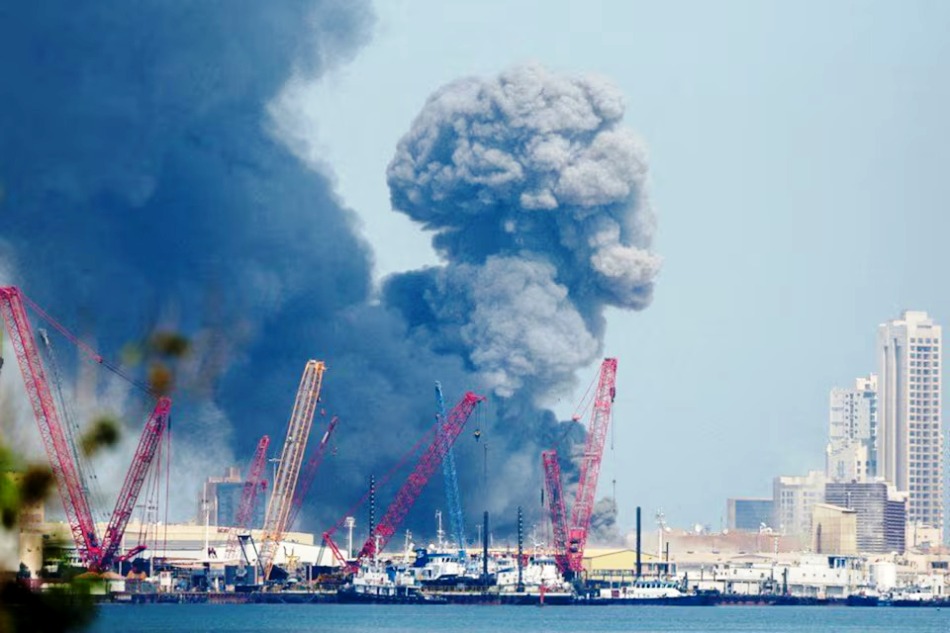
February 28, 2026 (KHARTOUM) – Sudan’s Ministry of Foreign Affairs issued a strong condemnation on Saturday of Iranian missile strikes targeting Qatar, Kuwait, Jordan, and Bahrain, while notably excluding the United Arab Emirates from its official diplomatic response.
The omission underscores the deep-seated friction between Port Sudan and Abu Dhabi. The Sudanese government has repeatedly designated the UAE as a “hostile state,” accusing it of fueling Sudan’s internal conflict by providing the Rapid Support Forces (RSF) with advanced weaponry, including combat drones and sophisticated air defence systems.
Tehran’s massive ballistic missile assault targeted U.S. military installations across Kuwait, Bahrain, Jordan, Qatar, the UAE, and Iraq. The strikes were launched in retaliation for a coordinated series of deep-penetration raids by Israel and the United States on Iranian strategic sites, which reportedly included the residence of Supreme Leader Ali Khamenei.
“The Government of Sudan condemns in the strongest and clearest terms the blatant and illegal Iranian aggression against the State of Qatar, the Kingdom of Bahrain, the State of Kuwait, and the Hashemite Kingdom of Jordan,” the Foreign Ministry statement read, affirming support for the sovereignty of what it described as “sisterly states.”
Political leaders denounce “regional terrorism”
Sudanese political groups and leaders issued a more inclusive and forceful condemnation of the attacks. The Civil Democratic Alliance “Somoud” expressed solidarity with all targeted nations, including the UAE and Saudi Arabia, calling for an immediate halt to the “brutal aggression” and the protection of civilians.
The Sudan Founding Alliance (Tasis) led by Mohamed Hamdan Daglo characterized the strikes as “regional and international terrorism,” explicitly linking Tehran’s actions to a history of destabilization in Sudan. The group accused Iran of supporting the former Islamist regime and providing military aid to Sudanese army fuelling Sudan’s civil war.
Prominent political figures, including Yasir Arman, leader of the SPLM Revolutionary Democratic Current warned that escalation in the strategic Gulf region threatens global energy security and trade.
The regional volatility follows a 12-day conflict in June 2025 between Israel and Iran, which only subsided after U.S. strikes on Iranian nuclear facilities. While the immediate impact on U.S. bases remains limited, the closure of regional airspace has forced international airlines to cancel flights across the Middle East.