
Sudan’s displaced return to a ‘capital of ruins’ as savings dry up
March 11, 2026 (KHARTOUM) – The “timid” trickle of displaced Sudanese returning to Khartoum is not a sign of recovery, but a “return of the desperate”, driven by exhausted savings in exile, only to face a paralyzed economy and looted homes.
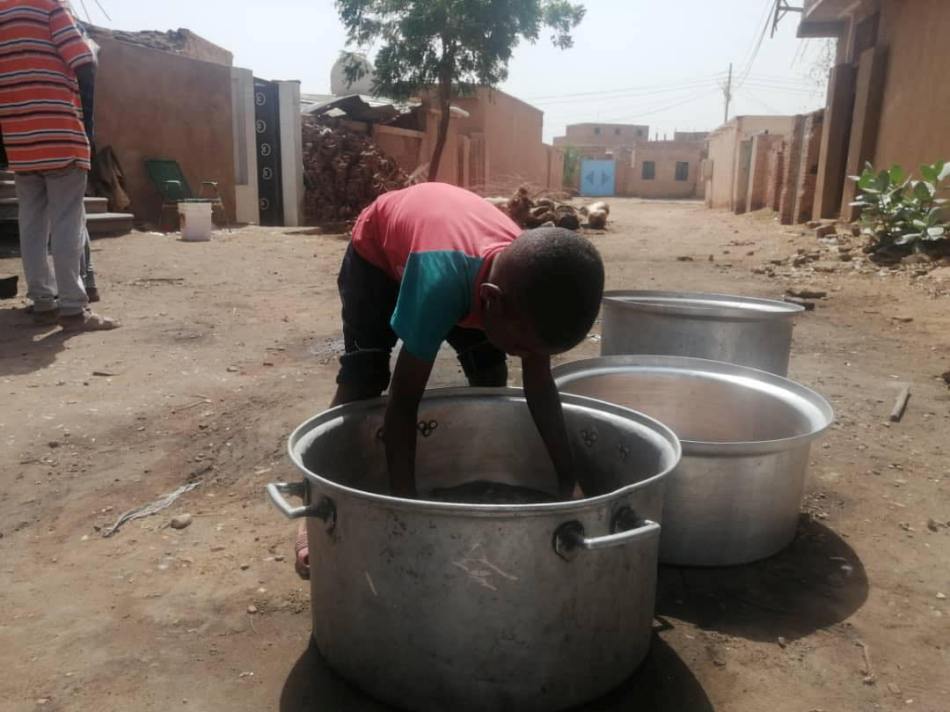
While the government has intensified calls for residents to return, those arriving in the capital find a city stripped of basic services. Their survival now hinges on a network of “Takaya,” or charity kitchens, that are themselves beginning to collapse under economic pressure.
Reports indicate that more than 60% of the capital’s residents have lost their jobs and life savings since the conflict began. Omar Abdel Hay, a former civil servant who returned in January, said he was forced into marginal labour during his displacement and now finds no work available in a city where business has ceased.
The situation is equally bleak for business owners. Nasser Abdallah, who owned a shop in the Al-Sahafa neighbourhood, returned to find his premises destroyed and empty. Despite the loss, his landlord is demanding repayment of rent accrued during the war.
While some neighbourhoods in Omdurman and Khartoum North see a relative return, major districts like Jabra, Al-Amarat, and Al-Taif remain ghost towns. Those who have returned report disease outbreaks and soaring prices, prompting some to consider a “reverse migration” from the capital.
Psychological and economic toll
Psychiatrists warn of “place attachment syndrome,” where returnees suffer deep trauma upon finding their homes reduced to empty shells. Dr Lamia Ahmed Hamad, a sociology specialist, noted that the loss of personal property carries a sentimental weight that authorities are currently ignoring.
On the economic front, crushing inflation has turned once-prosperous families into “beggars for a morsel of food,” according to Mohammed Suleiman Mohammed, a professor of economics. With the exchange rate at 3,700 Sudanese pounds per dollar, a family now requires roughly 900,000 pounds per month just for essentials.
Mohammed criticized recent remarks by Finance Minister Gibril Ibrahim, who stated the government would not provide compensation for home reconstruction. He argued that the government’s claim that conditions are ripe for return is based on a superficial view of the streets rather than economic data.
Data show that food and drink now account for nearly 53% of individual income, while the combined costs of housing, transport, and health create a 17% financial deficit for the average person, pushing them immediately below the poverty line.
A fragile safety net
The city’s most vulnerable—widows and the elderly—are the most dependent on the charity kitchens. Ahmed Bashir Abdel Majid, a member of the local Emergency Response Rooms, said most returnees are from these fragile groups who could no longer afford life as refugees.
Environmental experts also warn of a “catastrophic” situation due to collapsed infrastructure. Khartoum’s outdated land distribution and lack of modern sewage or water networks make the city difficult to rehabilitate following the war’s massive destruction.