
UN envoy urges de-escalation in Sudan to end conflict after Burhan talks
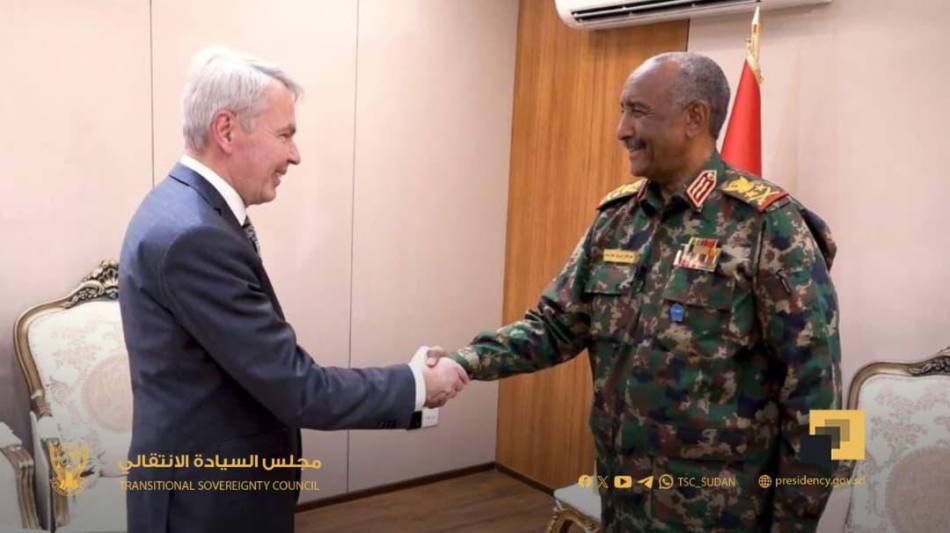
March 25, 2026 (PORT SUDAN) – The United Nations Personal Envoy for Sudan, Pekka Haavisto, called on Wednesday for a reduction in tensions to pave the way for a cessation of hostilities following a meeting with Sovereign Council head and army chief Abdel Fattah al-Burhan.
Haavisto arrived in Port Sudan on Monday for his first visit since being appointed in February to succeed Ramtane Lamamra.
The Sovereign Council said the meeting addressed the current situation in the country and efforts to enhance security, stability, and achieve a comprehensive peace.
The envoy emphasized the critical importance of dialogue and de-escalation as essential steps toward a comprehensive halt to hostilities, according to the council’s statement.
Haavisto reaffirmed his commitment to supporting efforts to secure a ceasefire and to finding a peaceful, lasting, and sustainable solution to the conflict.
The conflict is nearing the end of its third year, with all peaceful attempts to end the fighting having stalled. The war has triggered a worsening humanitarian crisis and widespread food insecurity.
The UN envoy called for continued engagement in processes that prioritize the protection of civilians and the exploration of confidence-building measures to create a favourable environment for progress.
He stated that the UN remains fully engaged with all parties to promote peace and deliver humanitarian aid. He added that his visit provides an opportunity to listen directly to the views of major political and civilian actors.
Haavisto reiterated the UN Security Council’s and the Secretary-General’s commitment to the unity and territorial integrity of Sudan.
He said the international body remains dedicated to working with global partners to support serious steps to end the fighting and chart a course toward lasting peace through inclusive dialogue.
The UN works within a five-party mechanism alongside the African Union, IGAD, the Arab League, and the European Union to contain the crisis and bridge gaps between political forces ahead of a process on the country’s future governance.